A front-row seat to the destruction of home
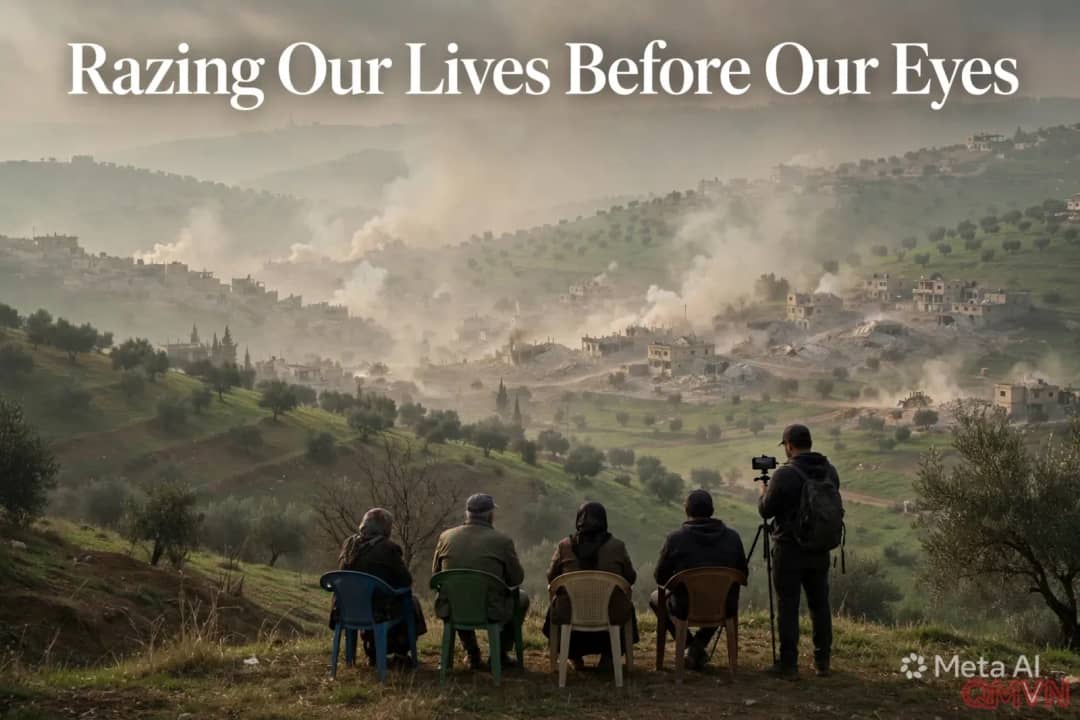
The road to Hanniyeh, a hilltop village still open to Lebanese civilians, ends with a clear view of Mansouri across the valley — and of the Israeli positions beyond it. Every day, residents of Mansouri who have lost their homes, their jobs and their fields come here to watch. Ahmad, 47, has propped his phone on a tripod behind a tree to livestream the scene on Facebook for a few dozen viewers. He points to a yellow house, his own and the last one still standing on its street, and admits that waiting for it to be next is almost unbearable.
Ali, whose house was destroyed during the war, says he feels humiliated watching, yet he refuses to move farther away; below the village, smoke rises from the farmland that once fed his family. Ibtissem, 38, describes a grim routine: air strikes one day, bulldozers the next, and in between, explosive charges planted inside homes going off.
*“It's torture; they are razing our lives before our eyes.” — Ibtissem*
Around them, some 30 neighbors sit on chairs and pass around videos from recent days. One clip shows an Israeli drone slowly lowering explosives on a cable onto a rooftop; minutes later, the area explodes. When a cloud of dust moves down a village street, everyone falls silent. An older man jokes that the tanks must be resting today. Here, laughter is a way of surviving the unbearable.