MAIN ARTICLE
A skyline disappearing into hazardous air
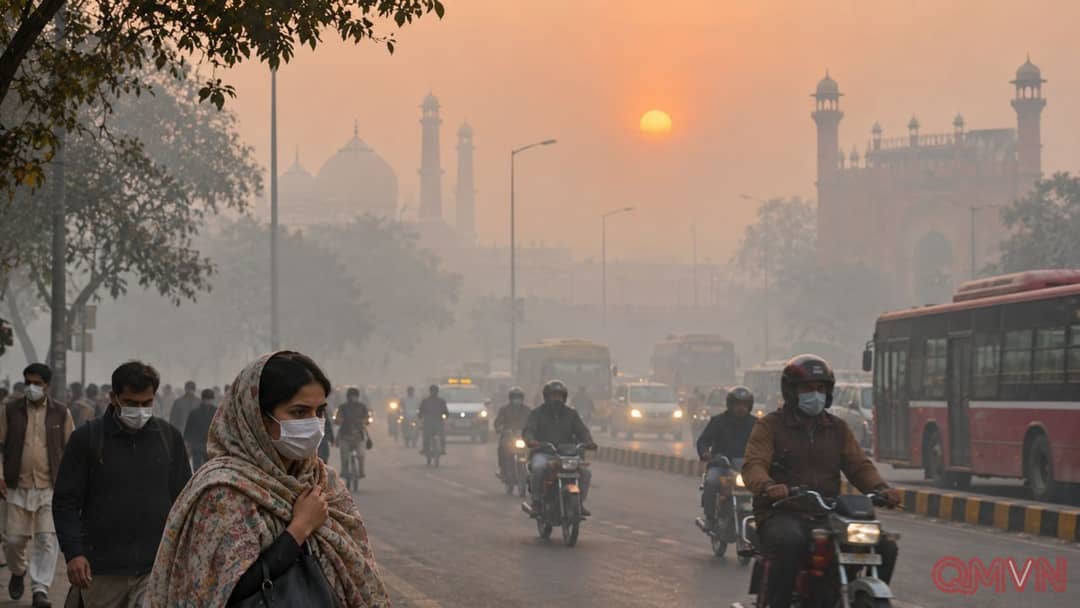
On November 10, dense gray haze obscured Lahore’s crowded streets. According to the live IQAir ranking cited by Reuters, the city registered an air quality index of 263, classified as “very unhealthy” on the U.S. AQI scale. This was a reading for a particular time, not necessarily the day’s average; different monitoring networks and methods can also yield different numbers. Delhi, India’s capital, registered an IQAir reading of 188 in the same account, demonstrating that the emergency reached well beyond a single city or national boundary.
The most concerning component is PM2.5, fine particulate matter that can enter deep into the respiratory system. IQAir put Lahore’s measured concentration at 37.2 times the World Health Organization’s annual guideline. That comparison is to a long-term health benchmark, not an instantaneous safe-or-unsafe threshold. Sustained exposure poses particular concerns for children, older people, patients with heart or lung conditions, and those whose work requires them to remain outside during the worst hours.
Wind can cross a border; attribution requires more evidence
Marriyum Aurangzeb, the environment minister in Pakistan’s Punjab province, argued that light winds had transported pollutants from India following Diwali fireworks on November 8. She expected conditions to ease when the winds shifted.