ARTICLE
How an import fashion caught fire
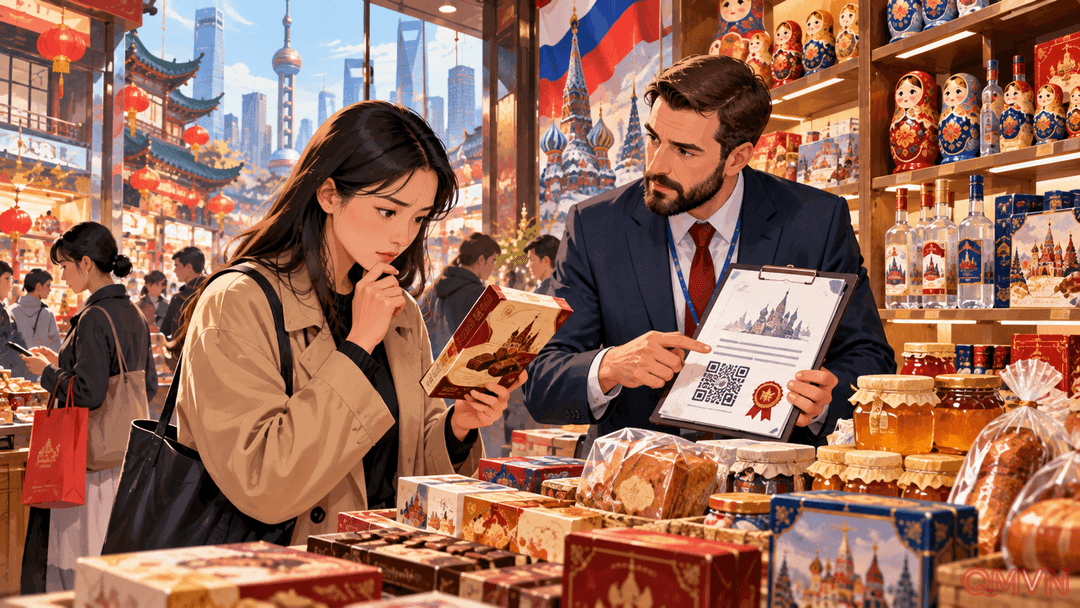
In 2024, the Russian flag’s familiar colors, Cyrillic lettering and matryoshka dolls became prominent features of storefronts in Chinese shopping malls. So-called Russian goods halls offered sweets, processed meats, drinks and souvenirs. Online livestreams, including those on Douyin, extended the appeal beyond the physical shops and made the new retail trend appear ubiquitous.
The economic backdrop was substantial. After Russia’s full-scale invasion of Ukraine in 2022 and the Western sanctions that followed, Chinese and Russian businesses sought new commercial routes. China–Russia trade reached a record $244.8 billion in 2024, according to customs figures reported by Reuters. But higher legitimate trade volumes did not guarantee that everything sold with Russian imagery actually originated in Russia.
Authentic exporters inherit the damage
At a Hong Kong trade exhibition, Vera Nikitina, representing confectionery maker Belyov Pastila Manufacture, found herself explaining that the company’s products really were Russian. Having explored the Chinese market in 2019 and begun regular shipments in 2022–23, the firm benefited from the 2024 craze.