MAIN STORY
A narrow result with global resonance
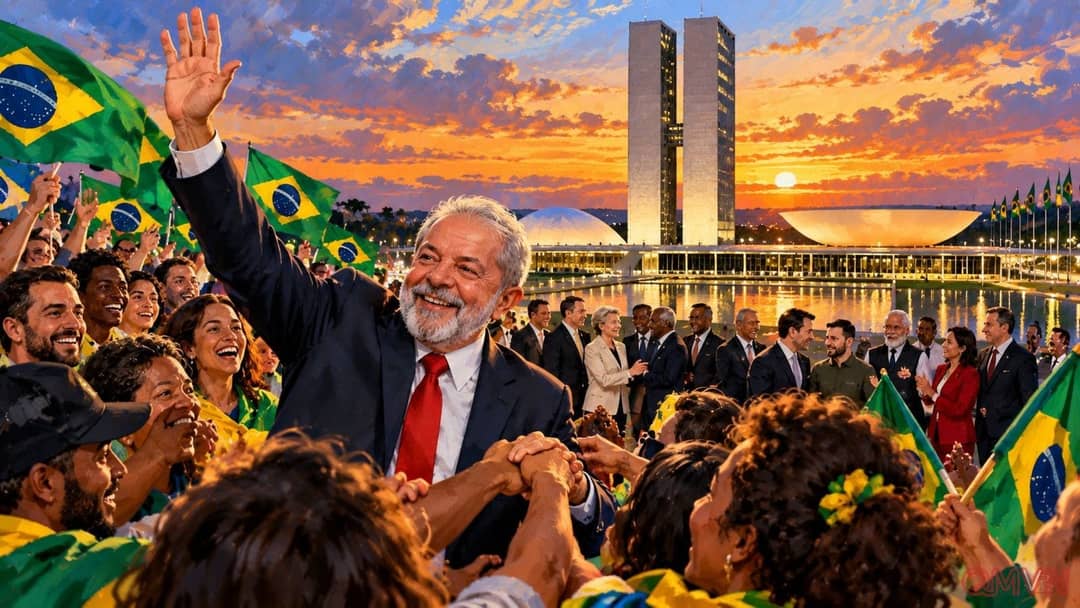
Brazil’s Superior Electoral Court (TSE) reported 64,256,232 votes for Lula, or 51.79% of valid ballots, against 59,826,041, or 48.21%, for Flávio Bolsonaro. The margin of more than 4.4 million votes established a clear winner without suggesting broad national consensus. That tension makes the tone of the post-election transition particularly consequential.
Lula enters his fourth nonconsecutive term with considerable diplomatic experience, but also renewed expectations for growth, sound administration and public trust. Reactions abroad reflect Brazil’s influence as Latin America’s largest economy, a G20 and BRICS member, and home to much of the Amazon rainforest.
Europe looks to trade and climate cooperation
European Commission President Ursula von der Leyen cast Lula’s victory as a positive moment for democracy and multilateral cooperation. She pledged to work with Brazil on open trade, international rules and ambitious climate policies. French President Emmanuel Macron likewise emphasized strengthening strategic ties and the relationship between the two countries.
These endorsements are also signals of concrete policy interests. Relations between the European Union and Mercosur are intertwined with export opportunities, environmental protections and supply chains. Diplomatic progress therefore depends not simply on ceremonial meetings but on resolving disagreements involving agriculture, industry and deforestation.