A happy day in Gyeyang
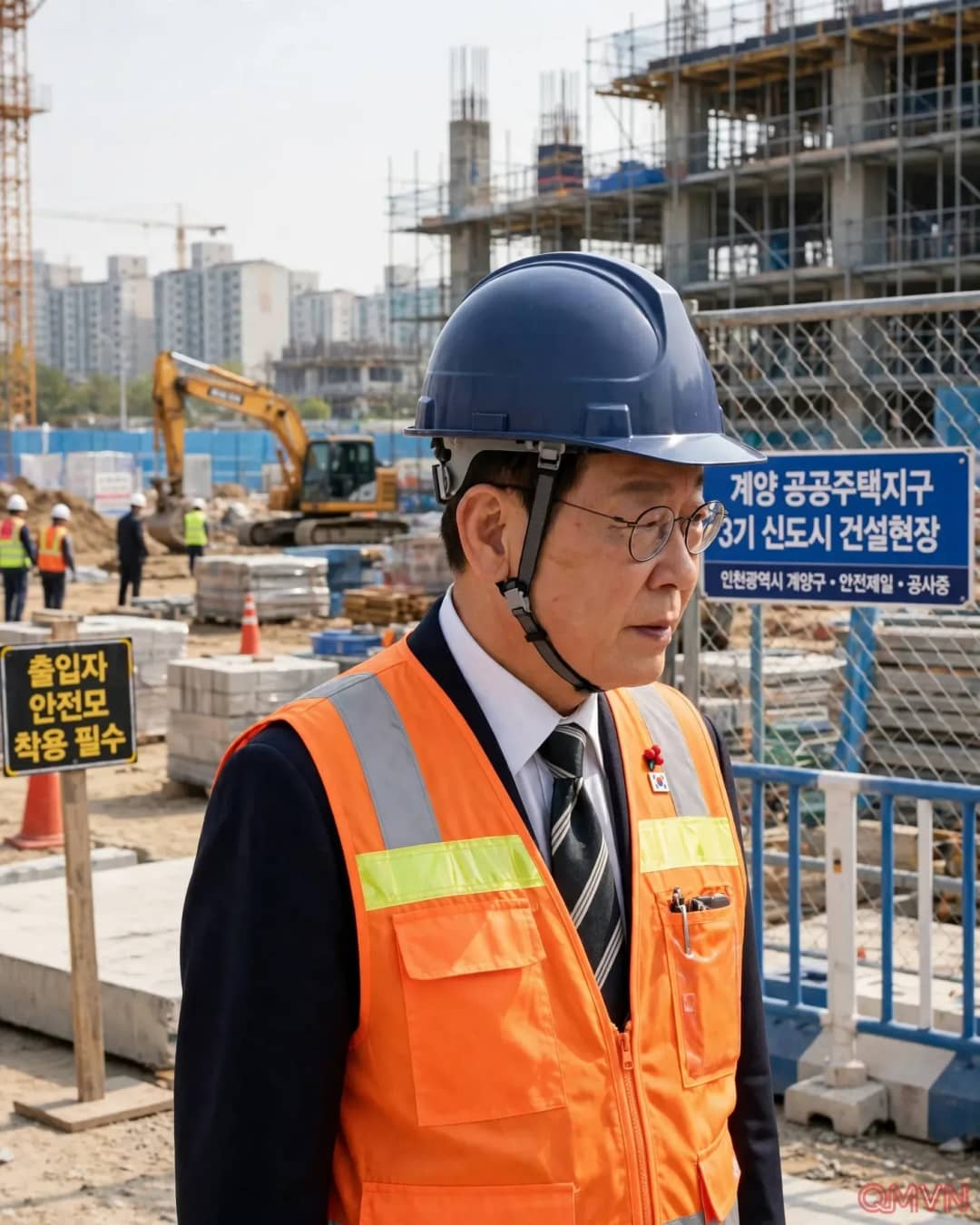
At the Gyeyang public housing district west of Seoul, Lee welcomed the first residents moving into the earliest completed complex among South Korea's third-generation new towns. He described it as a turning point for the government's entire real estate policy.
The rapid supply of housing in the third-generation new towns will be a critical turning point that determines the success or failure of our real estate policy. Above all, what matters most is speed.
A supply gap emerges
Lee pointed out that housing permits and construction starts fell by nearly half between 2022 and last year. Because a housing project typically takes about three years from approval to completion, the earlier slowdown now threatens to turn into a shortage of finished homes.
He urged the Ministry of Land, Infrastructure and Transport, the Korea Land and Housing Corp. (LH) and other agencies to break ground on about 90 percent of planned public housing units in the new towns by 2030. The target is part of the August 13 housing supply package, which adds more than 230,000 homes in the capital region on top of an existing plan for 1.35 million units between 2026 and 2030.