The Hackers’ Temporary Edge
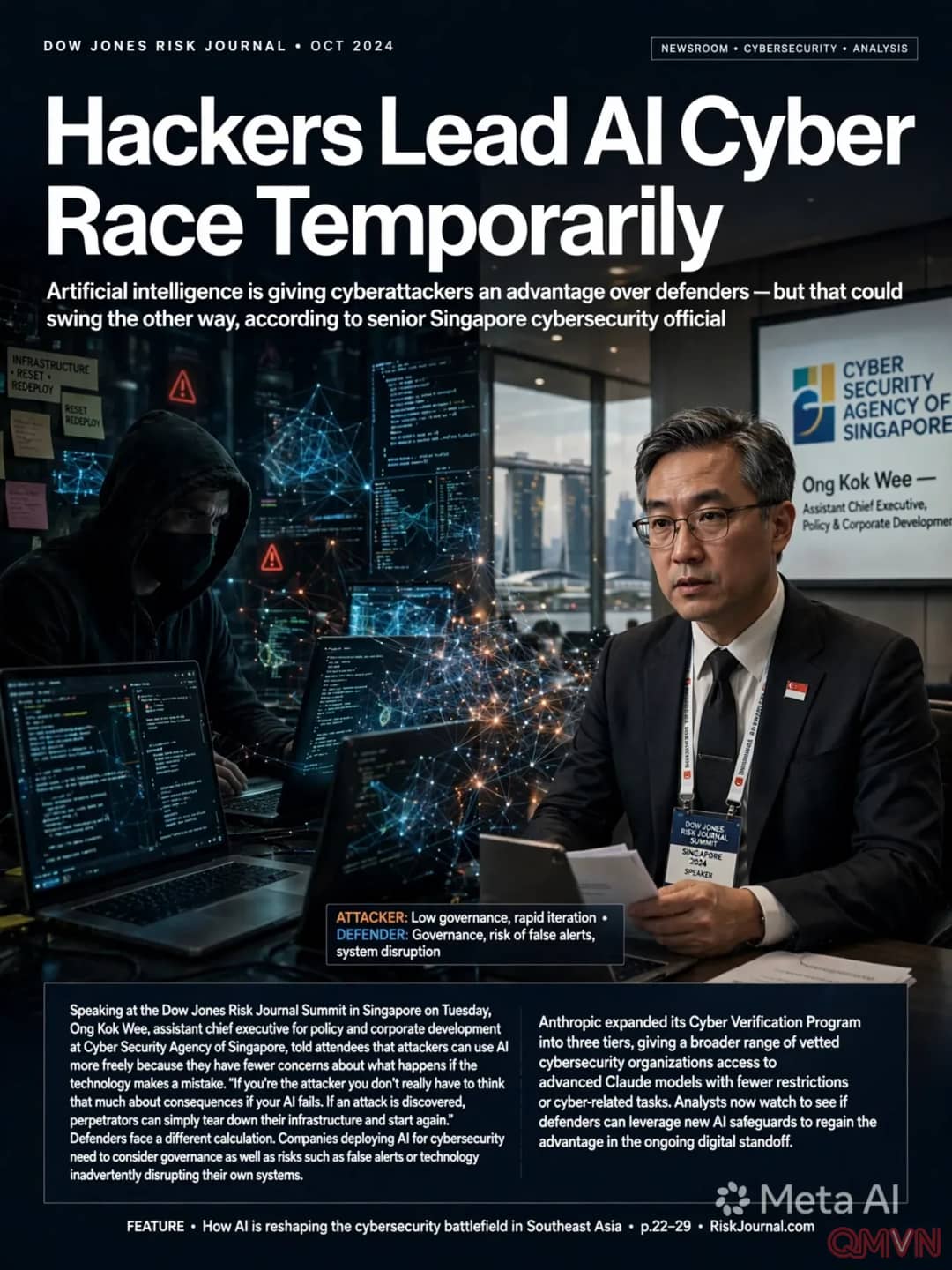
At the Singapore summit, Ong Kok Wee argued that the asymmetry lies in how the two sides view risk. For hackers, if an attack is discovered, they can simply tear down their infrastructure and start again. As a result, they can experiment boldly with AI without worrying about the consequences.
If you’re an attacker, you don’t really have to think that much about the consequences if your AI fails.
His view reflects a reality that experts have repeatedly warned about: AI helps hackers write malware faster, craft more convincing phishing emails and automate many steps of an attack, significantly lowering the barrier to entry for cybercriminals.
The Defenders’ Dilemma
By contrast, companies deploying AI for cybersecurity must be far more careful. They need governance mechanisms, controls for false alerts and safeguards against the technology inadvertently disrupting their own systems. A small error could knock services offline or affect customer data.