ARTICLE
A signature under the shadow of family detention
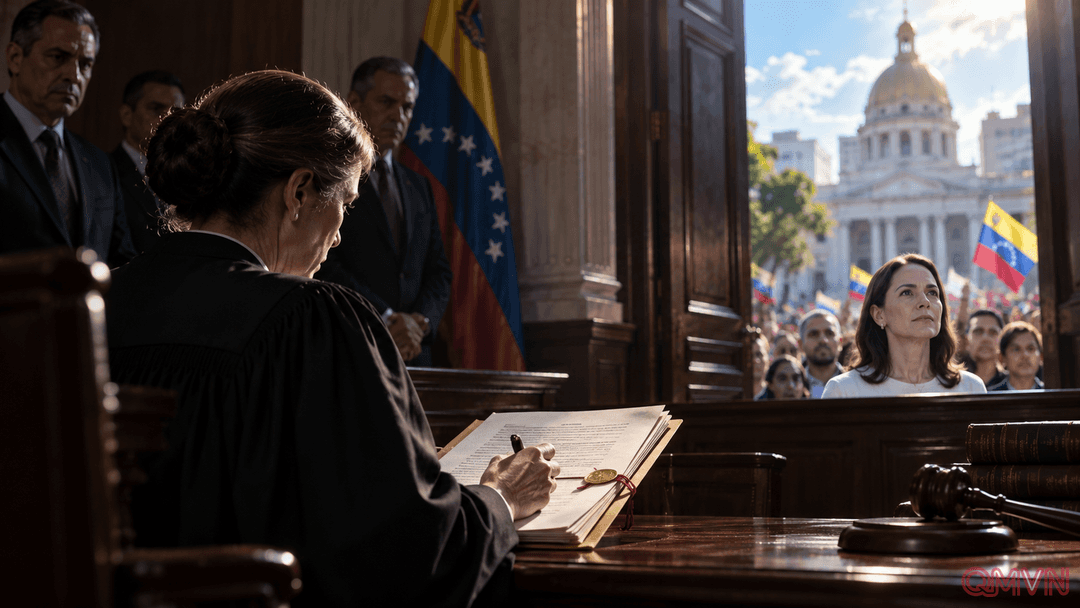
Bárbara César Siero served on Venezuela’s Supreme Court from December 2014 to February 2024. In her account to AFP, two brothers and a sister-in-law, all military personnel, were arrested in December 2023. She said she was subsequently presented with nine orders to sign, among them one concerning the exclusion of María Corina Machado from presidential politics. The sequence turns an apparently procedural question into a human one: how independently can a judge act if the safety of loved ones is, as she alleges, being used as leverage?
According to César Siero, one brother remains imprisoned while the other two relatives have been released under judicial supervision. She maintains that accusations linking them to a supposed plan to kill Nicolás Maduro and the governor of Táchira were fabricated. These are her allegations, not findings independently established in court. That distinction matters: documents, detention records and testimony from all sides would be needed to reconstruct the events and examine responsibility without presuming the outcome.
What makes the testimony troubling is not simply a retired judge reconsidering a contentious ruling. It is the allegation that a family’s liberty became an instrument for influencing a judicial decision. If substantiated, such conduct would undermine impartial adjudication at its source. It would also raise questions about who ordered the alleged pressure, who carried it out and why safeguards failed to protect judicial independence.