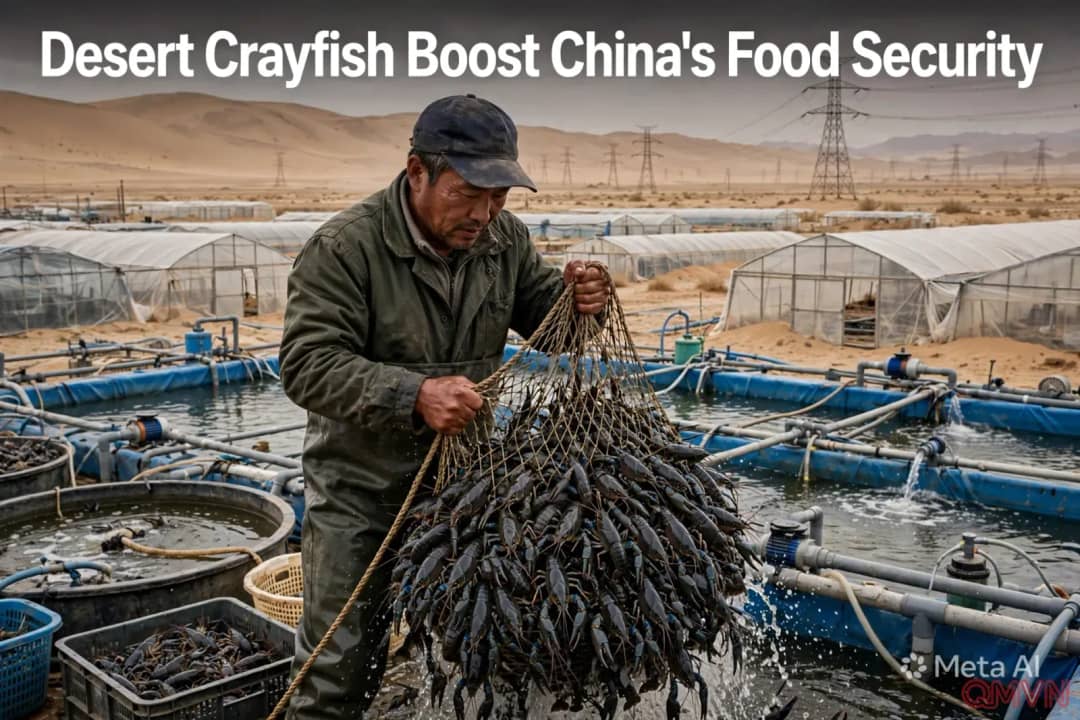
A harvest in the desert
In Maigaiti county, Kashgar prefecture, where sand covers 90 per cent of the land, a farm is hauling 250 to 300kg of freshwater crayfish from its ponds every day, just as China enters its National Day “golden week” holiday. Native to Australia’s rivers and streams, the premium crustacean is now raised in one of the most remote and arid corners of China.
The project is part of a wider government push to develop saline-alkaline aquaculture and inland fisheries, diversify food supplies and make use of abandoned land and water. As a result, aquatic foods once rare in southwestern Xinjiang are increasingly appearing on local dinner tables.
From abandoned saline pits
Wu Zhijun, who runs the farm with his brother, said this was his fourth year raising crayfish under the “East Crayfish Move West” technology-transfer programme, which brought know-how from Rizhao, a modern marine aquaculture hub in Shandong province.
At first, a local official assigned to support Xinjiang noticed a lot of abandoned saline-alkaline pits and ran an experiment to see if they could be used. Once they managed to keep the crayfish alive, we started learning how to do it.