Seven highlights in two weeks
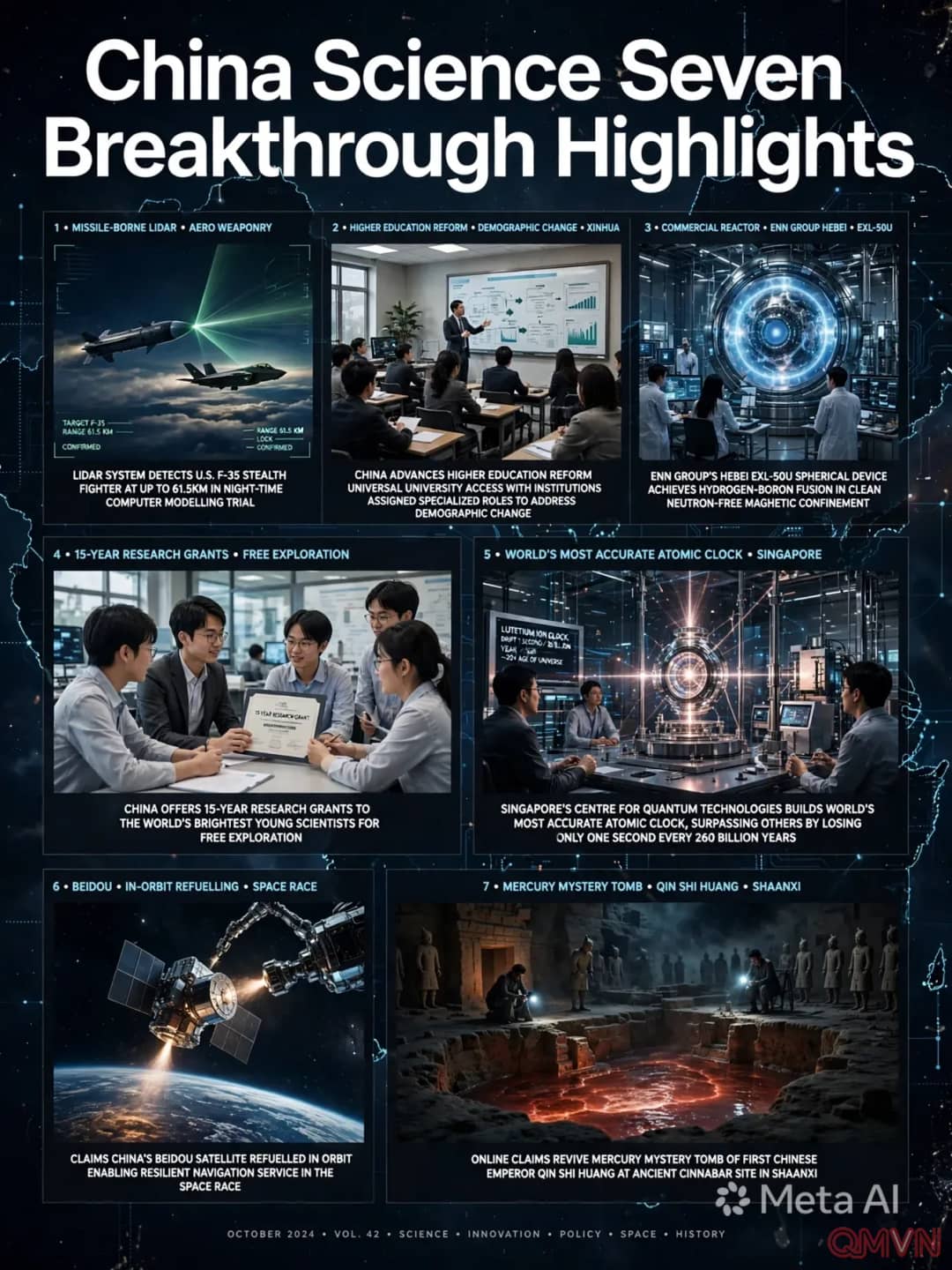
The standout science stories span defence, energy, space, education and archaeology:
- A missile-borne lidar model that could detect an F-35 at up to 61.5km
- A higher education reform aiming for a future where “everyone can attend university”
- Fusion with clean hydrogen-boron fuel at a commercial reactor
- 15-year research grants for the world’s brightest young scientists
- Singapore builds the world’s most accurate atomic clock
- Claims that a BeiDou satellite was refuelled in orbit
- A revived mystery over mercury in the tomb of Qin Shi Huang
A military race and stealthy skies
According to Chinese researchers, a computer simulation suggests a new-generation lidar system mounted on a missile could detect and track an F-35 stealth fighter at up to 61.5km at night. Unlike radar, lidar uses laser beams, which are not defeated by the radar-absorbing coatings on stealth aircraft. However, this is only a theoretical model, not yet tested in the field, and lidar performance still depends heavily on weather and cloud cover.