MAIN ARTICLE
Two injuries, two very different recoveries
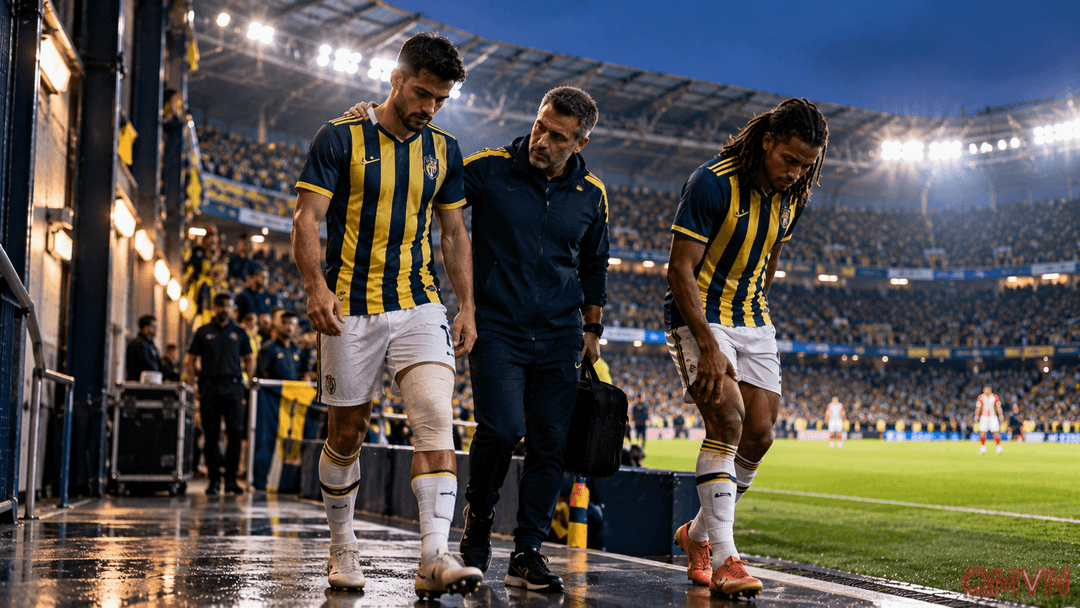
Fenerbahce said Asensio underwent successful arthroscopic surgery in Spain under the supervision of a club doctor. The procedure addressed a cartilage lesion in his left knee. An approximately three-month recovery period is a projection, not a promise that he will be match-ready on a particular day. The response of the joint to loading and the player’s confidence in movement will need to be assessed during rehabilitation.
Aké’s setback occurred during the October 20 draw against Slavia Prague. An MRI at Ataşehir Medicana Hospital, alongside the club doctor’s examination, identified a moderate strain and swelling in the muscles at the back of his right leg. The club expects treatment and rehabilitation to take roughly three weeks but has not announced a firm return date.
What the absences could change on the pitch
Without Asensio, Fenerbahce may have fewer options for connecting midfield and attack, threading passes through crowded areas and creating chances close to goal. Aké’s absence presents a different problem, potentially affecting defensive spacing, individual duels and protection of areas behind the back line.
Because the two roles are not interchangeable, the coaching staff must solve separate tactical questions at the same time.
The answer may not be to identify identical replacements. Creative duties can be divided among several players, while defenders may need tighter collective spacing and more cautious transitions. Such choices carry trade-offs: additional defensive security can slow attacks, whereas pushing numbers forward can expose vulnerable spaces when possession changes.
A Champions League draw brings a domestic test into focus
The 2-2 home result against Slavia Prague offered a reminder of the pressure to compete on several fronts. Turkish broadcaster beIN SPORTS reported that both men would miss the forthcoming Galatasaray derby. It is an awkward moment for a club seeking rhythm, with immediate competitive demands pulling against the need for patient medical decisions.
Crucially, the club’s announcement gives estimated rehabilitation windows rather than an exhaustive list of fixtures the players will certainly miss. Subsequent assessments of strength, training response and readiness for contact will shape the actual timetable. A precise comeback day would therefore be speculation, not a fact established by the medical update.
The longer game is protecting the players
An elite club’s depth is tested not just by winning without important footballers but by caring for them properly while they cannot play. Recovery after joint surgery and recovery from a muscle injury both require coordination among clinicians, conditioning specialists, coaches and players. The anxiety of supporters is understandable; a sustainable return should still take precedence over one urgent fixture.
For Fenerbahce, the episode illustrates a familiar sporting paradox. Matches follow an uncompromising calendar, but bodies do not recover to order. If the team responds through disciplined organization, sensible workload decisions and patience, a difficult period might also demonstrate a strength that is less visible than goals or clean sheets.