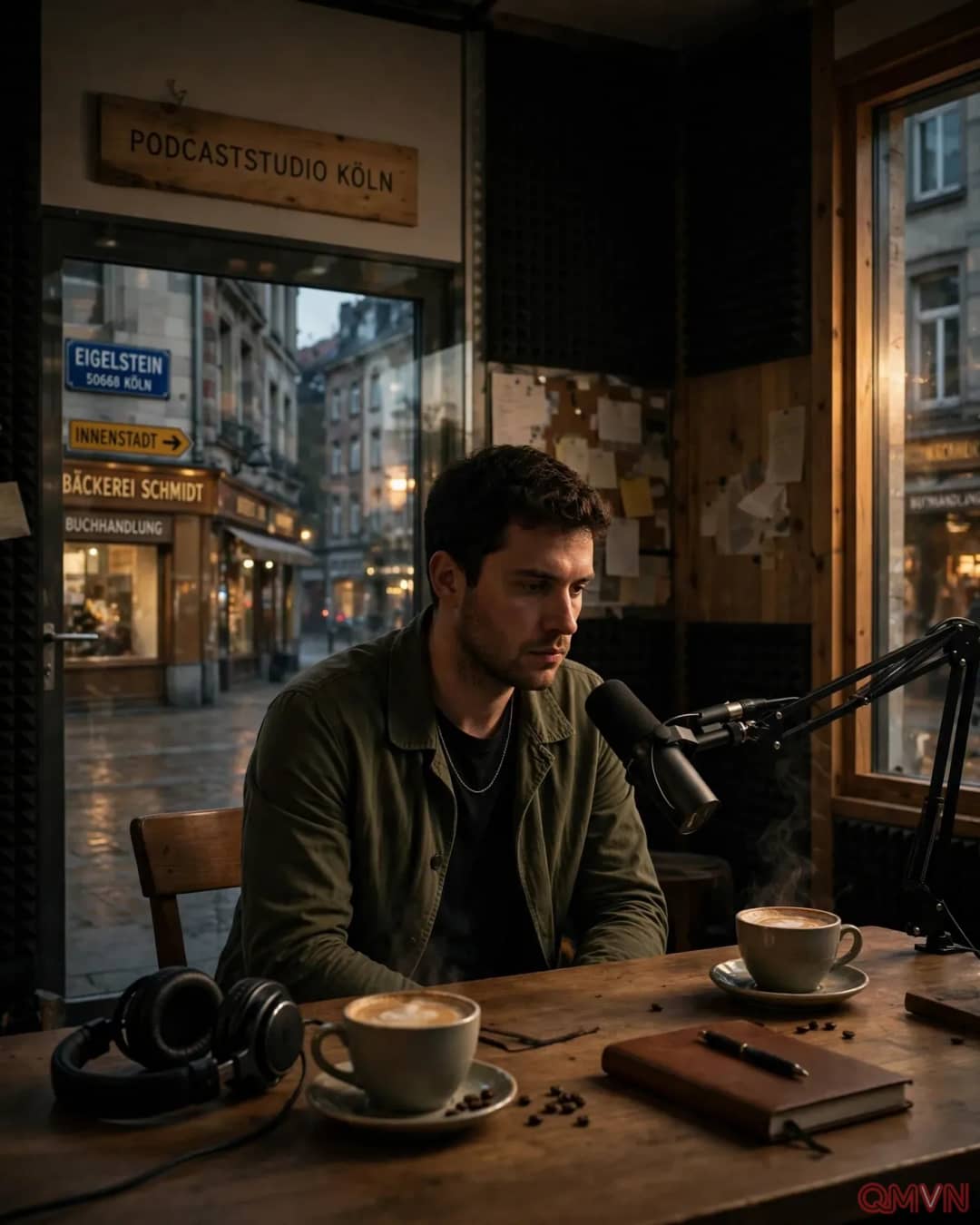
Four and a half hours of conversation and one disputed remark
Benjamin Berndt, a business graduate, has run “ungeskriptet” since 2022, chatting in a relaxed style with controversial guests and rarely asking probing questions. In early May he hosted Björn Höcke, the AfD leader in the state of Thuringia. According to the newspaper taz, the four-and-a-half-hour conversation has drawn more than 6.8 million views on YouTube.
During the show, Höcke claimed that the SA, the Nazi party's paramilitary force, had never had a slogan. The detail is especially sensitive because Höcke himself has twice been convicted for publicly using the phrase “Alles für Deutschland” (Everything for Germany), an SA slogan. In mid-June, LfM NRW sent a notice arguing that Berndt should have contradicted the claim or at least put it in context. Responding on X, Berndt wrote:
The state wants to censor me.
At the end of September, the authority closed its review. It upheld the finding of a breach of diligence but issued no reprimand or ban, arguing that the public debate that followed had effectively supplied the missing context. Berndt rejected that conclusion and filed suit, saying he is prepared to take the case all the way to the Federal Constitutional Court.
The legal basis for oversight
LfM NRW's power to review stems from the Interstate Media Treaty (Medienstaatsvertrag), which took effect in November 2020. It sets out several key principles:
- Journalistic online services, including podcasts, must observe the same duty of diligence as traditional media (Section 19).
- Oversight lies with the state media authorities (Section 109); LfM NRW is responsible because Berndt's company is based in Cologne.
- Formal measures may include a reprimand, a ban or the blocking of content.
LfM NRW classified “ungeskriptet” as a journalistically and editorially designed online service. Berndt denies being a journalist, saying he simply talks as if over a cup of coffee.
Steinhöfel leaves that question open but invokes press freedom, arguing that placing only podcasters under state oversight, while newspapers and broadcasters face no comparable mechanism, amounts to discrimination.
The line between interviewing and endorsing
At the heart of the case lies an unresolved legal question. According to LfM NRW, when a guest makes an obviously false claim, the interviewer should correct it or provide context, especially when several days pass between recording and publication; a simple on-screen caption would suffice. The authority stresses that its aim is to protect the public from demonstrably false information.
There is no general duty to comment on, correct or distance oneself from an interviewee's statements.
As taz points out, German case law has so far recognised a duty to correct only a journalist's own false claims, including content adopted from others, but not the words of an interviewee. In effect, LfM NRW is seeking to establish a new and stricter standard – and if the court accepts it, that standard would reach every journalist, not just podcasters.
A precedent that could shape journalism
Even so, it is too early to speak of a crackdown on German podcasters. Since November 2020, LfM NRW has sent only 38 notices over breaches of journalistic diligence; in most cases the content was subsequently adjusted, and only two led to formal proceedings. Berndt's case is therefore likely to become the first real precedent.
Berndt's supporters see the dispute as a fight against a state-run “ministry of truth”. LfM NRW, by contrast, argues that a platform with millions of listeners cannot stand aside while false information about Nazi history spreads unchallenged. The ruling of the Administrative Court in Cologne will show where Germany chooses to draw that line.