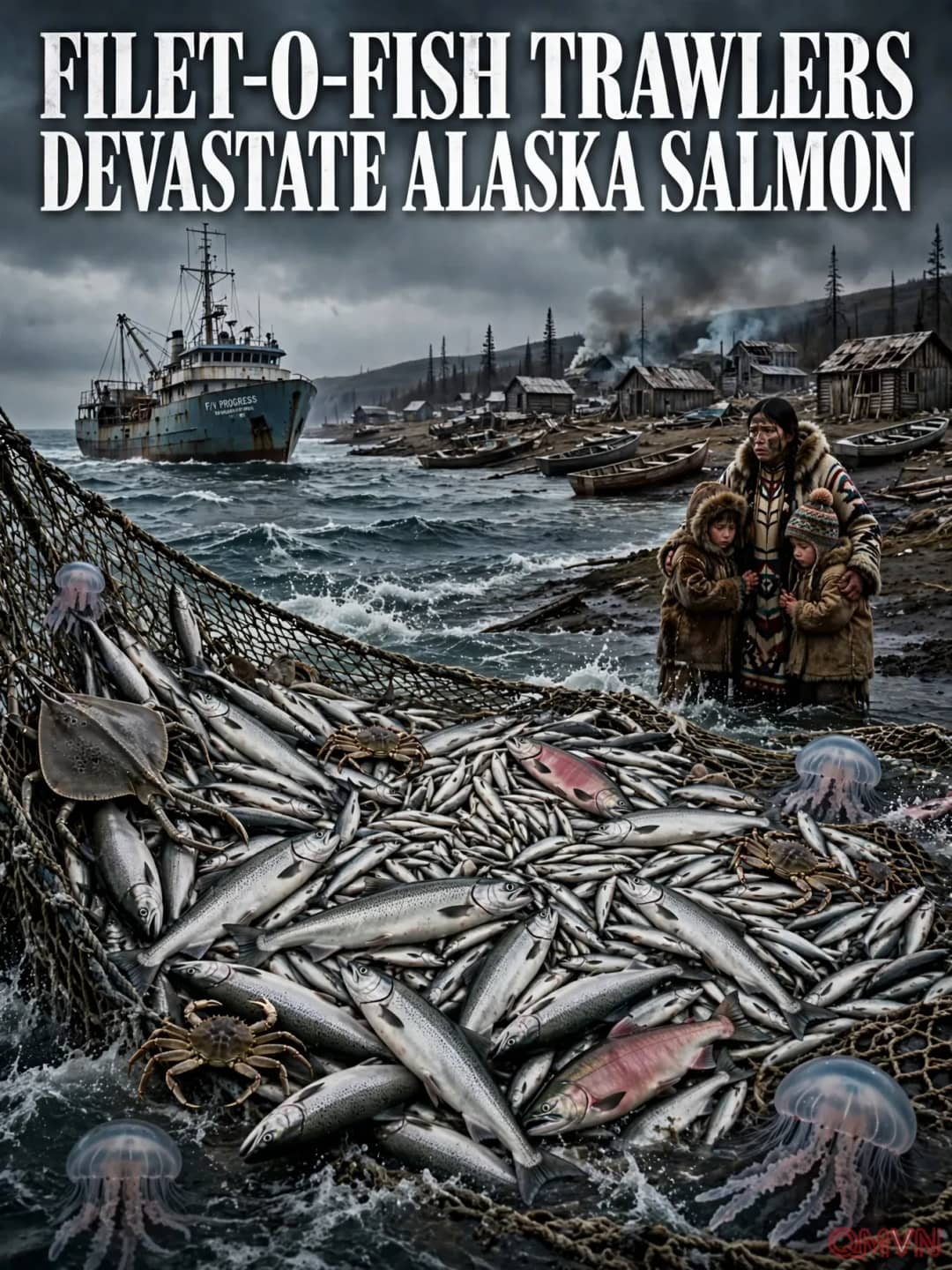
A net full of more than pollock
Aboard the trawler Progress, captain Maverick Blake watched a net so full of pollock that fish heads poked through the mesh. Among them were skates, crabs, jellyfish and salmon. Blake, a 13-year veteran, says avoiding salmon is a top priority: moving to cleaner grounds on one trip cost nearly 3,000 gallons of fuel, when staying put would have filled the hold in half a day.
Industry representatives say every salmon caught by Bering Sea pollock boats is recorded, trawlers carry independent observers or cameras, captains share real-time salmon sightings, and weekly area closures guide the fleet. All vessels use excluder devices that let some salmon escape. The At-Sea Processors Association calls the scientific and management effort behind the fishery virtually unprecedented.
Silence on the Yukon
Inland, the picture is very different. In the Alaska Native village of Rampart, about a dozen boats sat idle on a July morning when families would once have been pulling nets and filling smokehouses.