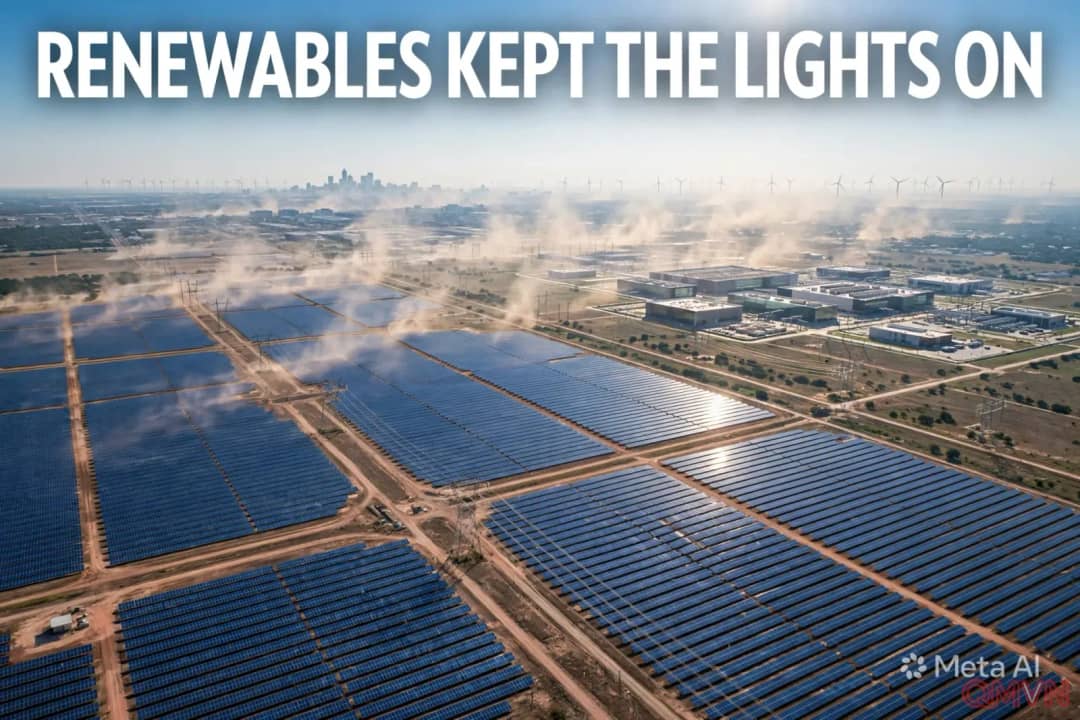
The summer test
Critics of renewable energy have long argued that grid reliability ultimately depends on fossil fuels. In their view, wind and solar can reduce emissions when conditions are right but cannot shoulder the load at times of peak demand.
The summer of 2026 offered a real-world test of that argument. Temperatures soared in the largest US power markets, air-conditioning demand surged and utilities grappled with rapidly growing consumption from data centres. Yet rising demand did not bring a matching increase in fossil-fuel generation.
Lessons from Texas
Texas, which combines rapid population growth, expanding industry, huge oil and gas basins and some of the country’s largest data-centre plans, offers the clearest evidence. Data from the Electric Reliability Council of Texas (ERCOT) for the first nine months of 2026 show:
- Load grew about 4% from a year earlier, while clean-power generation rose more than 11%.
- Solar generation expanded by about 26% and wind output by more than 8%.
- As a result, fossil-fuel generation grew by less than 1% even as consumption hit record highs.
Because ERCOT is often seen as a bellwether for national demand trends, the result matters far beyond the state, offering a model for how other systems can meet growing demand while limiting emissions.