Seoul's prime office market bucks broader investment slowdown in South Korea
In Seoul, the prime Grade A office market in the South Korean capital bucked a broader commercial real estate investment slowdown on Wednesday, October 28, 2026, recording multi-hundred-billion-won trophy asset transactions despite persistent borrowing headwinds. Driving the high-volume liquidity, Samsung SRA Asset Management selected Igis Asset Management as the preferred bidder to acquire the prestigious K-Twin Towers in the central Gwanghwamun district for 1.05 trillion won ($782 million), establishing a new Central Business District benchmark at 12.52 million won per square meter. Simultaneously, institutional investor Mirae Asset Global Investments initiated marketing procedures for State Tower Namsan with target bids exceeding 800 billion won, as metropolitan vacancy rates across Seoul's three primary commercial nodes compressed to an ultra-tight 3.1 percent.
ADMIN PHAN ĐANG KHOA·2 min read · 4 min listen·28 October 2026, 06:29 EDT·
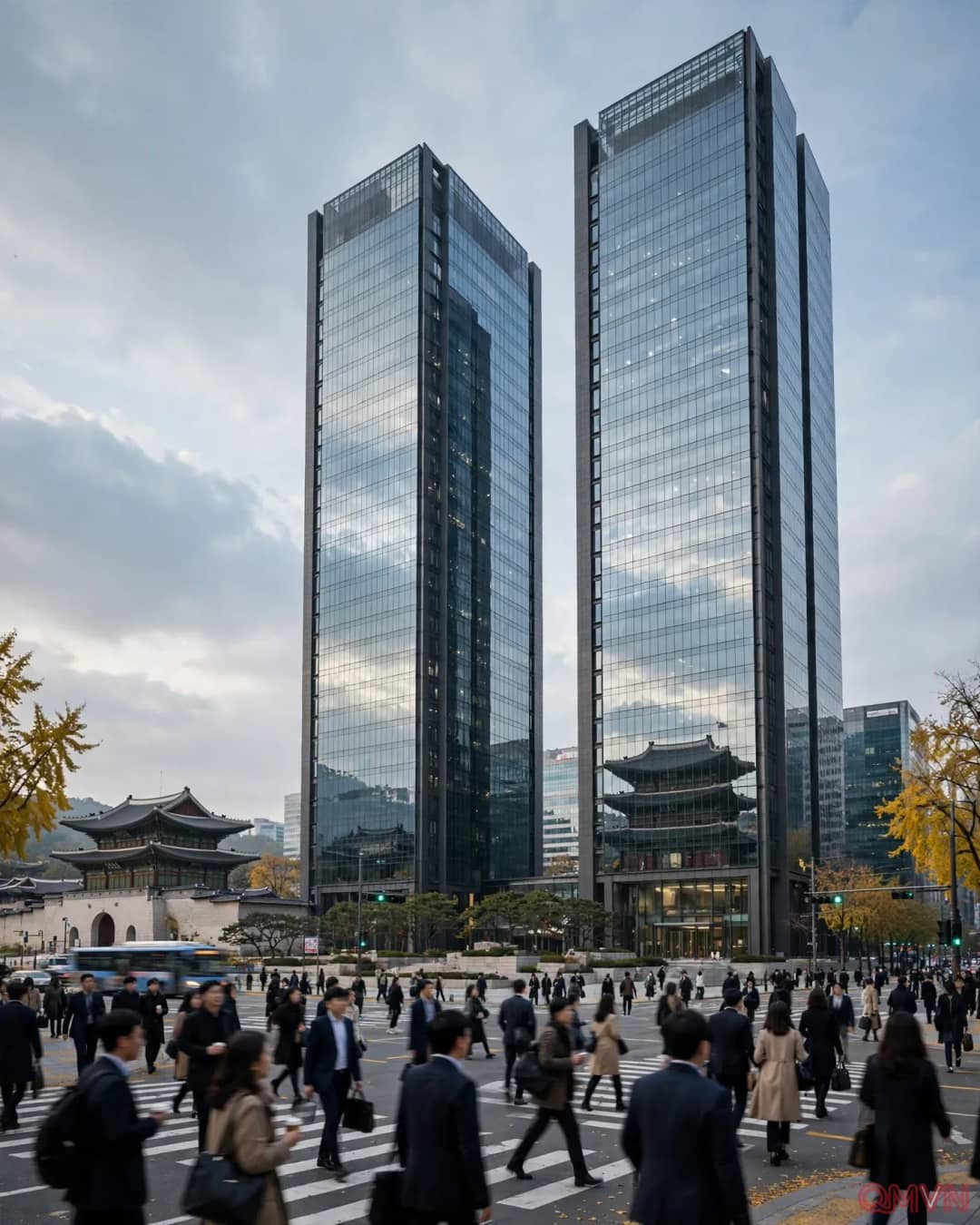
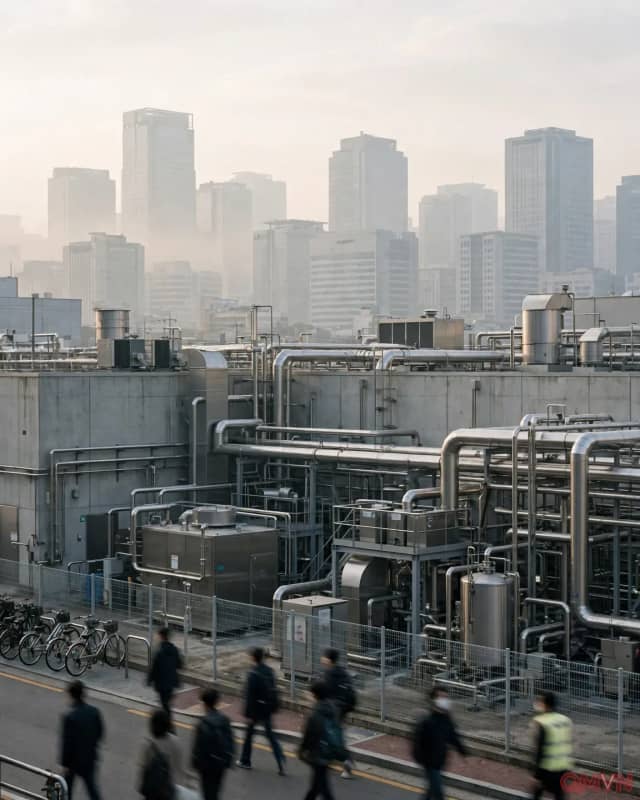
AI-generated illustration
Record K-Twin Towers transaction and CBD benchmark valuations
Despite restrictive monetary conditions maintained by the Bank of Korea, transaction velocity for premier Grade A commercial office towers in central Seoul accelerated noticeably in late October 2026.
The premier transaction centered on K-Twin Towers, a flagship corporate complex situated directly opposite Gyeongbokgung Palace in the historical Gwanghwamun corridor. Samsung SRA Asset Management designated Igis Asset Management as preferred bidder to purchase the property for 1.05 trillion won ($782 million).
Advertisement300 × 250
The acquisition price of approximately 12.52 million won per square meter represents the highest recorded valuation for an office asset with a gross floor area exceeding 33,058 square meters in Seoul's Central Business District (CBD), generating over 330 billion won in capital gains for Samsung SRA relative to its 2018 purchase price of 713.2 billion won.
This quarter confirmed the resilience of occupier demand in Seoul's office market, as the absorption of newly supplied space in the CBD progressed and leasing activity continued at prime properties in Gangnam and Yeouido.
State Tower Namsan tender, ABL Tower disposal, and market polarization
Institutional fund managers are capitalizing on robust occupier demand to divest core office towers and optimize portfolio capital structures.
Mirae Asset Global Investments invited domestic and foreign property consultancies to advise on the sale of State Tower Namsan, with formal bidding slated for early November and target bids projected to surpass 800 billion won ($12.1 million won per square meter).
Opened in 2011 near the Shinsegae Department Store flagship branch, State Tower Namsan houses institutional tenants including the sovereign wealth fund Korea Investment Corp., Bain & Co., Pfizer Korea, and BMW Korea.
In the Yeouido financial center, life insurer ABL Life designated Koramco REITs Management and Trust as preferred bidder for ABL Tower at a valuation of approximately 346 billion won (8.8 million won per square meter).
Quarterly research published by CBRE Korea verified that Grade A office vacancy across Seoul's three major commercial districts fell 1.1 percentage points to 3.1%, indicating near-total occupancy.
Conversely, broader transaction statistics from the Ministry of Land, Infrastructure and Transport revealed that aggregate Seoul office transaction value dropped 27% month-on-month in August to 718 billion won from 983.4 billion won in July.
Acute structural supply constraints combined with full occupancy from blue-chip multinational tenants continue to insulate Seoul's trophy office stock from macro debt financing pressures.
Market differentiation is also likely to become more pronounced, with greater emphasis on individual asset fundamentals, including location and tenancy stability.
BACKGROUND
This commercial real estate divergence materialized on October 28, 2026, across central Seoul, South Korea. Throughout 2025 and 2026, aggressive benchmark rate hikes enacted by the Bank of Korea to stabilize the currency and contain household credit escalated debt financing costs for commercial property acquisitions, driving down overall Seoul office sales by 27% in late summer. However, Seoul's Grade A office sub-sector demonstrated profound counter-cyclical strength across its three primary business districts: the Central Business District (CBD), the Gangnam Business District (GBD), and the Yeouido Business District (YBD). The structural crux preserving prime asset values lies in extreme supply scarcity coupled with resilient corporate leasing demand: with zero land availability in historic core areas and prolonged construction lead times, prime vacancy contracted to an anemic 3.1%. Premier assets like K-Twin Towers—anchored by global enterprise tenants such as Microsoft Korea and Woori Card—enjoy long-term lease covenants that generate predictable operating yields. As a result, domestic institutional giants including Igis, Koramco, and Mirae Asset actively channeled liquidity into landmark trophy assets, establishing record valuations above 12.5 million won per square meter even as secondary office properties experienced valuation compression.
Key takeaways
Core landmark properties with prime central locations and multinational blue-chip tenancies effectively decouple from macro borrowing rate headwinds.
Near-zero vacancy rates (3.1%) driven by severe structural supply constraints provide durable cash-flow protection and capital appreciation for Grade A office towers.
Tight monetary environments accelerate market polarization, redirecting institutional capital from peripheral commercial assets into top-tier CBD trophy holdings.
Subscribe to the QMVN newsletter
A daily morning digest - only stories worth reading, no spam.