MAIN ARTICLE
An extra day before danger arrives
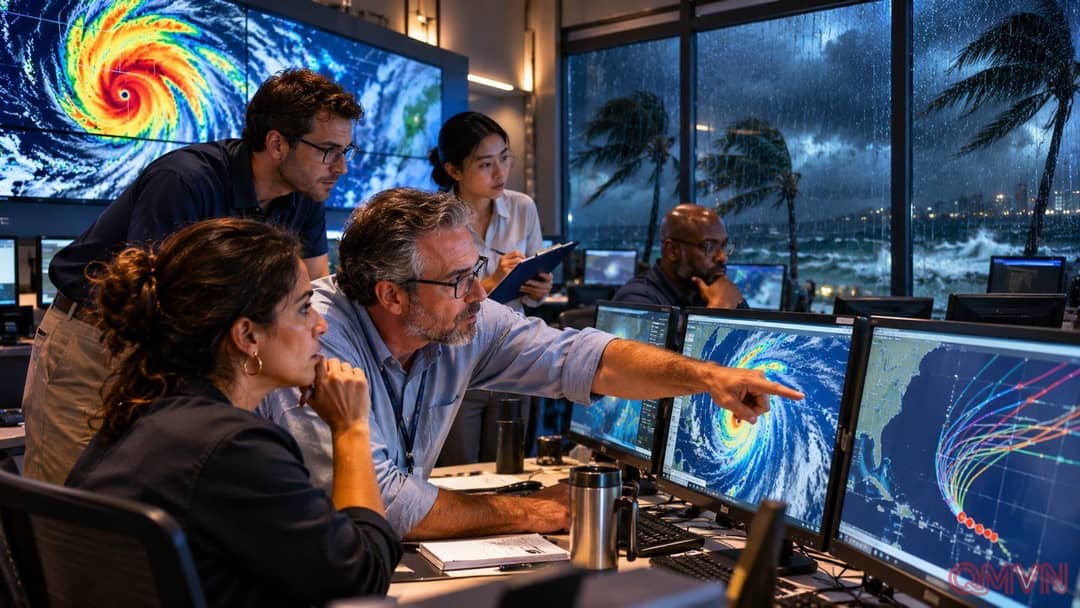
In hurricane forecasting, an additional day is more than a technical achievement. It can give hospitals time to secure backup power, ports time to suspend operations safely and families time to leave flood-prone neighborhoods. Google DeepMind says WeatherNext predicts cyclone tracks, intensity and wind structure with strong accuracy in evaluations of storms from 2023 to 2025. The Nature study published in August 2026 found that a three-day forecast could match the accuracy previously achievable at only a two-day horizon.
That does not mean every storm can be pinpointed a week in advance. An AFP report carried by The Straits Times highlighted Hurricane Isaias in 2026, when the AI system identified potential cyclone development early. Such examples illustrate promise, but the reliability of a warning still varies by region, forecast cycle and the observations available as a storm evolves.
From physical equations to a thousand possibilities
Traditional numerical weather prediction uses supercomputers to solve equations governing atmospheric motion, heat and moisture. AI learns patterns from extensive historical and global reanalysis datasets, recognizing complicated relationships at speed.