MAIN ARTICLE
A result without a clear governing majority
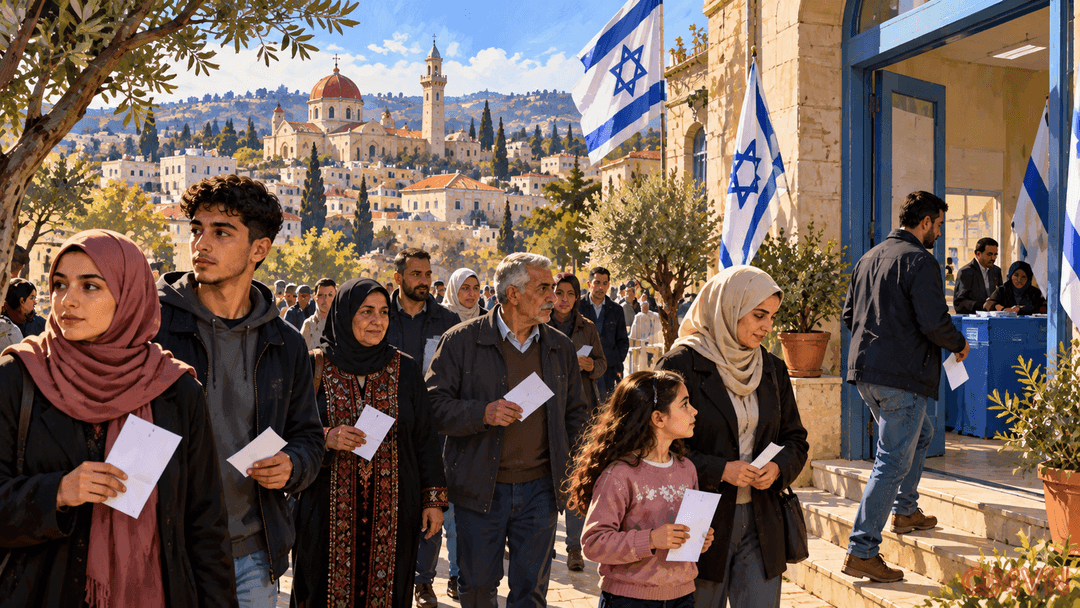
After the October 27 vote, neither of Israel’s main camps could claim a majority. Projections published as most ballots were counted put Netanyahu’s parties at 53 seats, Eisenkot’s grouping at 48 and the two leading Arab lists at roughly 19. These are provisional figures, not a certified final result, and outstanding ballots could still change individual allocations.
The Knesset contains 120 seats, with 61 needed for a conventional governing majority. Combining the opposition’s projected 48 with the Arab parties’ 19 produces an apparent path beyond that threshold. But a parliamentary sum is not a coalition agreement: the parties must still negotiate policies, trust, political red lines and whether support comes from within the cabinet or from outside it.
Two Arab parties, different strategies
Yousef Jabareen’s Joint List was projected to win around 12 seats. He told Reuters he wanted to help end Netanyahu’s rule but could not join an Eisenkot government because of its position on military operations in Gaza and Israel’s presence in southern Lebanon. He left open the possibility of supporting a minority government from outside, where votes on confidence and key legislation could carry considerable weight.