A pricier cup of coffee
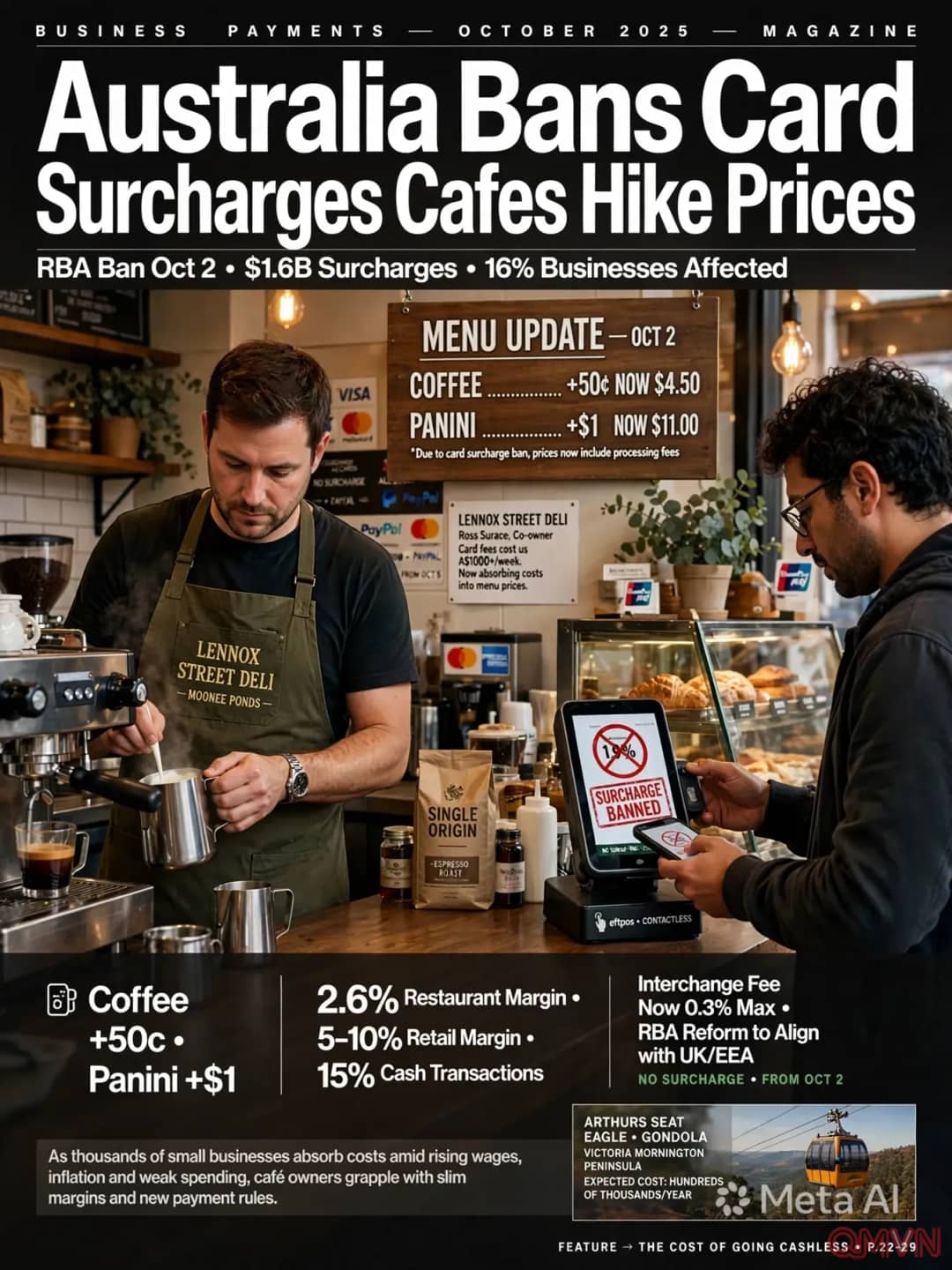
Ross Surace, co-owner of Lennox Street Deli in Melbourne's Moonee Ponds, is preparing to raise the price of a coffee by 50 cents and a panini by A$1. He says bank-imposed card fees already cost the cafe more than A$1,000 a week, even after it recoups some of the expense with a 1.9% surcharge. Once the ban takes effect, costs could rise by a further A$1,200 to A$1,500 a week.
"The coffee and panini price increase just covers the surcharge that we're losing." — Ross Surace
Thousands of other small Australian businesses face a similar choice: absorb the cost and squeeze already thin margins, or build it into prices and risk losing customers.
The biggest payments shake-up in decades
The ban, led by the Reserve Bank of Australia, is seen as the biggest overhaul of the country's payments system in decades, with these key elements:
- Merchants can no longer impose surcharges on Visa, Mastercard and eftpos debit and credit card payments.
- American Express and China's UnionPay are also removing surcharges, while PayPal follows from October 5.
- About 16% of businesses currently surcharge, costing consumers around A$1.6 billion a year.