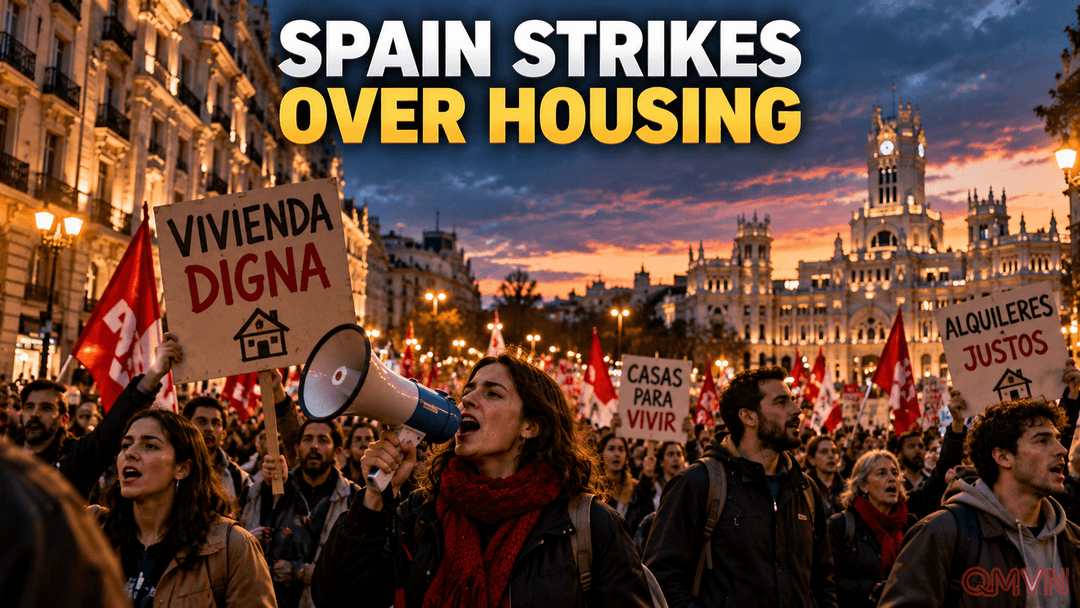
A November strike links housing to workers’ livelihoods
On October 7, the UGT and CCOO labor confederations endorsed a nationwide general strike scheduled for Wednesday, November 11. Europa Press reported that a coalition including the Tenants' Union Confederation, CGT, Solidaridad Obrera and Co.Bas agreed on a 24-hour action. It is the first general stoppage in 14 years jointly backed by the country's two largest unions, giving a movement led by renters the organizational muscle of established labor groups.
General strikes are usually associated with salaries, benefits and workplace conditions. This time, the central demand is affordable housing. Supporters say improvements in pay achieve little when rent rises faster than earnings. They are reframing what can seem like an issue for the property market as a question about the real purchasing power, security and dignity of working households.
The action is set ahead of the November 29 election, close to the start of official campaigning. Unions describe it as a necessary response to a social emergency; political critics fear the demonstration could be drawn into an electoral struggle. Its practical impact on transport, public services and businesses will depend on participation on the day and the arrangements made by individual sectors.