“Solid electricity”
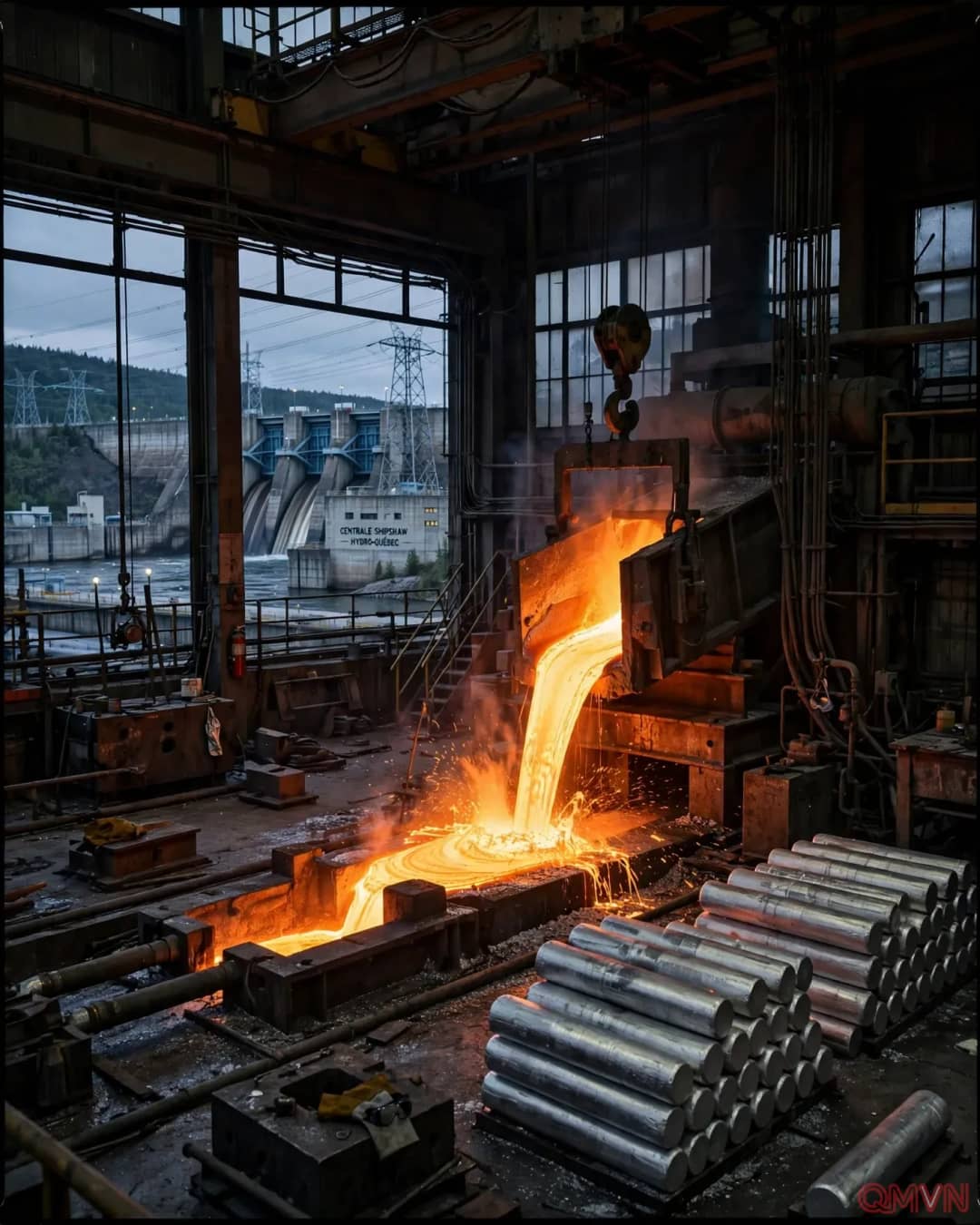
Electricity accounts for about 40% of the cost of making aluminum; a single smelter can use as much power as a city the size of Boston. Thanks to abundant hydropower that has kept electricity prices from rising as sharply as in the United States, Canada became the main supplier. Rio Tinto, owner of the Saguenay complex, ships about 70% of its output there across the border.
“We always call aluminum ‘solid electricity.’” — Jérôme Pécresse, Rio Tinto
Rio Tinto generates more than 90% of the electricity it uses in Saguenay through water rights secured a century ago. The Shipshaw hydro station, built during World War II, has run nonstop since 1943 with 13 turbines – the last link in a chain of stations that uses the same water five times. According to Pécresse, it is the cheapest power available to any of Rio's smelters worldwide.
A 50% tariff and rising prices
During parts of his first term, Trump exempted Canada from a 10% aluminum tariff. After returning to the White House, he removed the exemption and raised the rate to 50%, citing national defense and the goal of boosting domestic production; he has also said Canada treated the United States unfairly. The effects have spread: