MAIN STORY
A small county, a revealing proportion
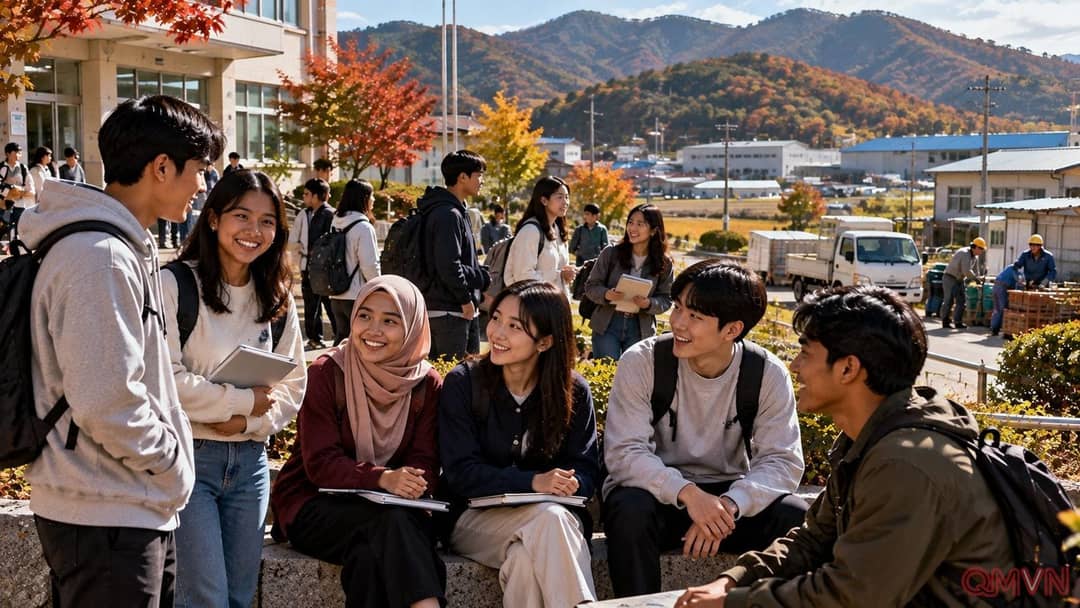
Goseong counted 1,204 younger residents who were foreign nationals and another 198 who held South Korean citizenship but qualified as having migrant backgrounds. The measure concerns individuals’ or families’ migration histories; it does not mean everyone recently arrived from abroad, nor does it identify the personal identity of any particular resident.
The county’s 31.7% figure is especially striking partly because its total population under 25 is small, at 4,429. Yeongam registered 28.8%, Eumseong 26.9%, and Busan’s Jung-gu 23.3%. Although these places differ in their economies and settlement patterns, each illustrates the growing contribution of people who arrive to study, work or establish families.
Industrial cities lead in absolute numbers
In headcounts rather than percentages, cities in Gyeonggi Province dominate. Ansan had 24,986 children and young adults with migrant backgrounds, followed by Suwon at 19,057, Hwaseong at 18,974, Siheung at 16,647 and Bucheon at 15,340. Integration is therefore not only a story about isolated rural districts; it is also part of daily life in large manufacturing and residential centers.