MAIN STORY
1. A trade imbalance becomes a political test
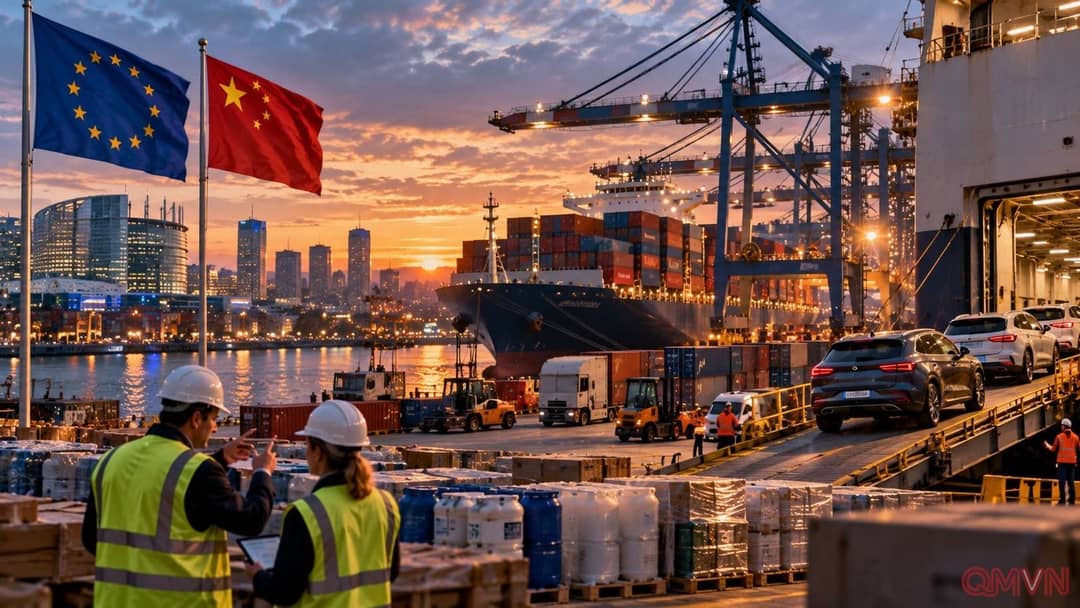
The message from Dublin was not that Europe should stop trading with China. Ministers instead sought a mechanism to moderate pressures on industries struggling with low-priced imports. Irish Foreign Minister Helen McEntee suggested that recent automobile discussions might provide a model for addressing imbalances in other sectors.
Council of the EU figures published in September show imports from China of about €571.3 billion in 2025 and exports to China of about €199.5 billion, implying a deficit of more than €370 billion, or over €1 billion a day. Statistical comparisons require care: an earlier April Eurostat publication, using a different dataset, reported a deficit of €359.8 billion. Neither figure should be presented without identifying its source.
A bilateral deficit alone does not establish wrongdoing. Production costs, consumer demand, exchange rates, market access and international supply chains all shape trade flows. Governments are especially concerned when adjustments arrive faster than companies and workers can respond.