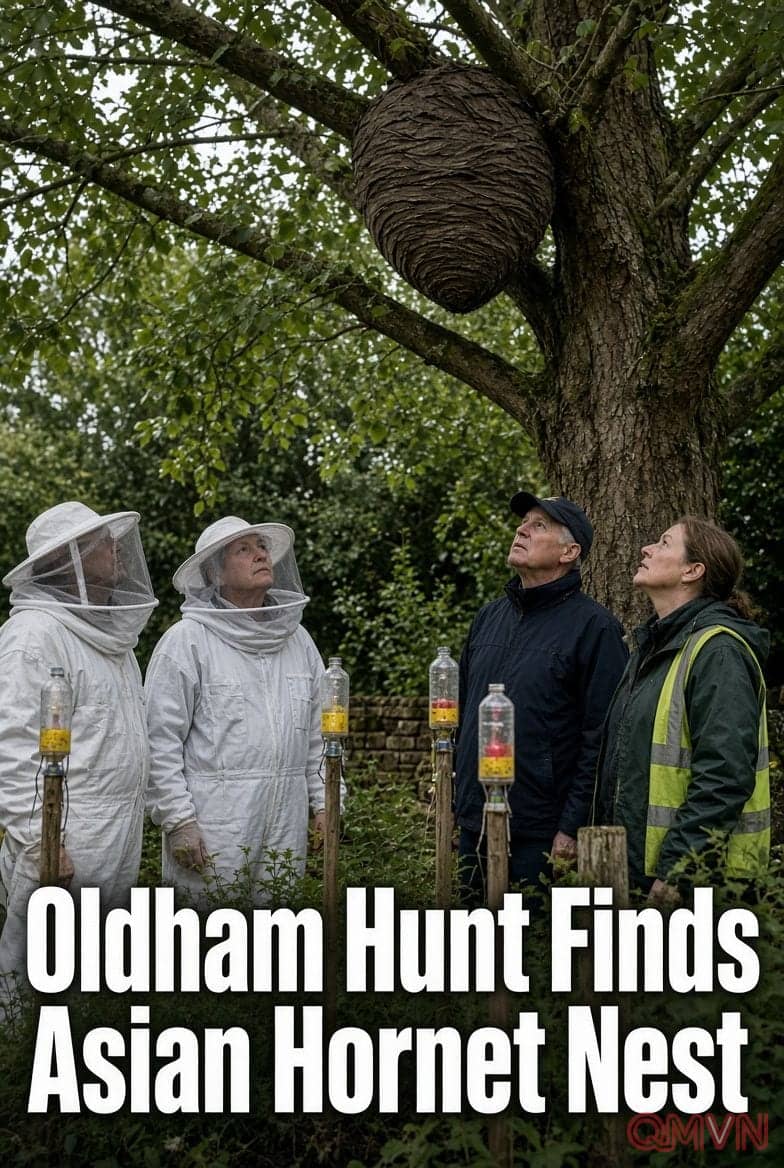
Invasive Predators Threatening Natural Pollination Pathways
The unexpected emergence of the invasive Asian hornet in Oldham initiated immediate concern across British apiculture and conservation networks. Characterized by relentless predatory habits, a single Asian hornet can kill up to fifty honeybees daily, decimating commercial apiaries and directly disrupting the fundamental pollination processes of local agriculture.
The unprecedented northward expansion of this predatory insect poses a broader structural threat to local biodiversity, as their expansive seasonal feeding requirements also consume significant populations of hoverflies, spiders, moths, and other beneficial indigenous insects.
Tracking Elusive Hornets Through Science and Dedicated Patience
Mobilized by the immediate danger threatening honeybee populations, dedicated local beekeepers Cath Charnock and Les Latham implemented specialized bait stations across strategically dispersed locations to observe flight trajectories and evaluate travel times.
"We did not expect to see hornets appearing so early in our area." Cath Charnock