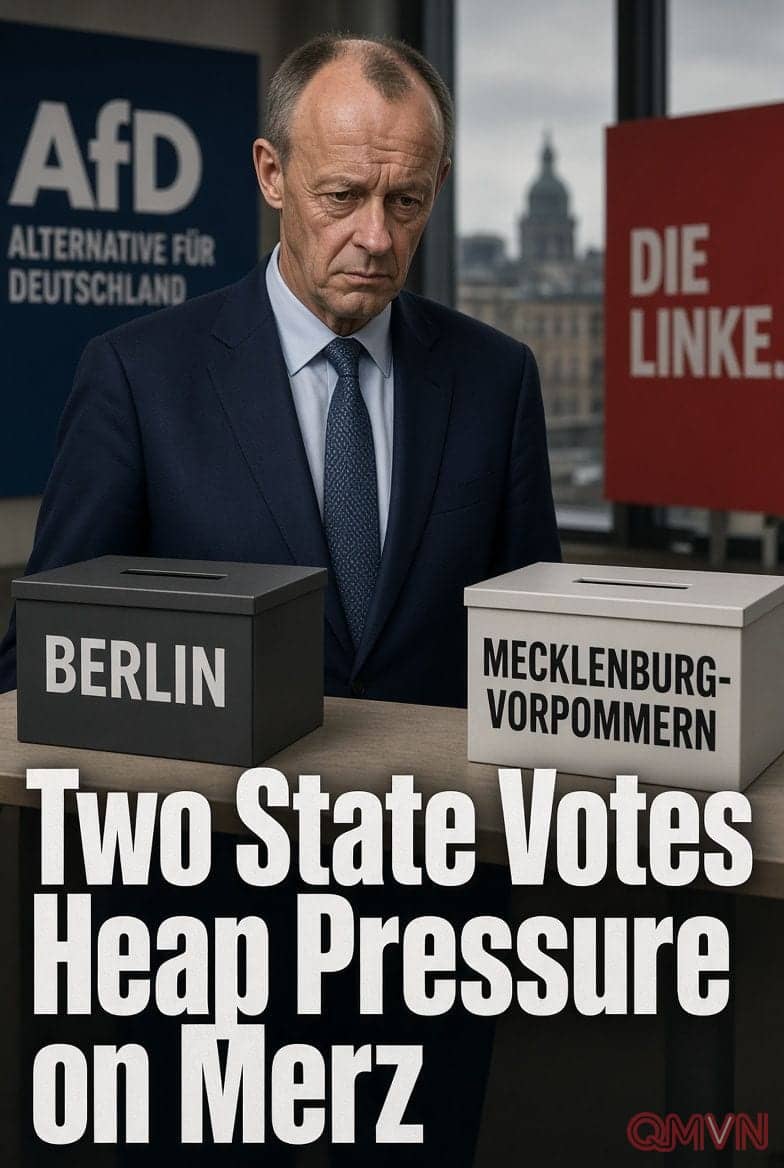
Intense Electoral Confrontation Across Two Strategic States
The domestic political atmosphere across Germany grew exceedingly strained as citizens throughout Berlin and the northeastern state of Mecklenburg-Western Pomerania cast their ballots. In Berlin, recent polling conducted by Forschungsgruppe Wahlen shows the radical Left party moving ahead to 22%, relegating the conservative CDU of Chancellor Merz to second place at 20% in an election dominated by the urgent search for affordable housing. Even within this traditionally progressive urban center, the AfD advanced significantly to claim third place with 18% of intended votes.
Concurrently, the electoral outlook in Mecklenburg-Western Pomerania threatens the CDU with its worst performance in regional history, plummeting to roughly 6% and barely hovering above the statutory 5% threshold required for legislative representation. The contest in the east has narrowed into a fierce duel between the Social Democrats (SPD) led by state premier Manuela Schwesig at 37% and the surging AfD at 36%.
The Growing Divide Between National Policy and Everyday Life
The dramatic deterioration in leadership support stems directly from a widening psychological gulf between high-level legislative ambitions and the tangible economic strains felt by regular families. The chancellor's ambitious structural reforms met intense skepticism as controversial adjustments to taxation, pension allowances, and public health provisions generated widespread public grievance across diverse demographics.