Google’s AI chips reach orbit for the first time
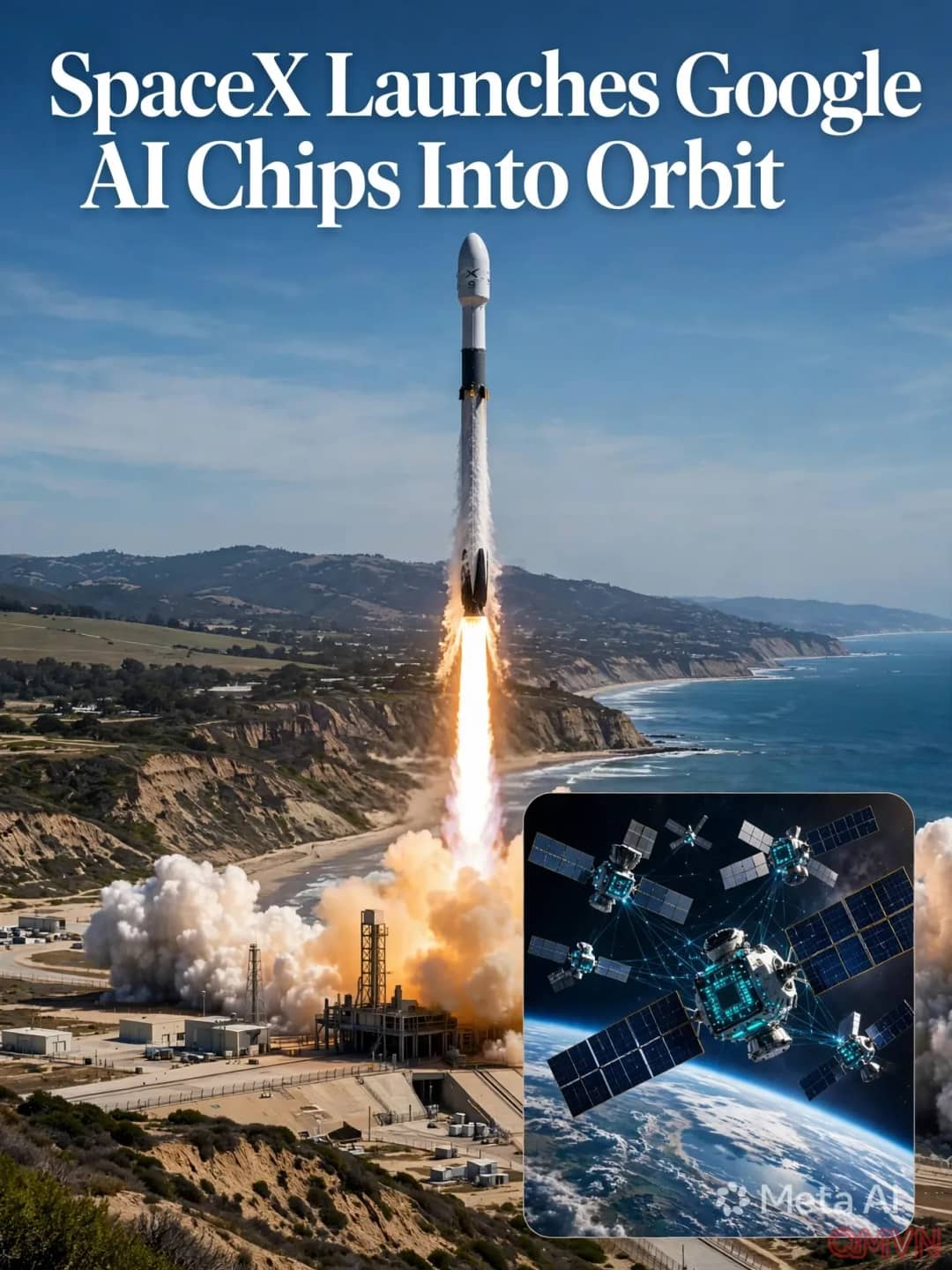
The launch window opened at 11:15 a.m. Pacific time at Vandenberg in Santa Barbara County, and liftoff went smoothly. By 1 p.m. local time, SpaceX had successfully deployed all payloads on board. On the uncrewed Transporter-18 mission, the rocket carried Planet Labs satellites, including the prototype equipped with Google’s TPUs.
“Our team has confirmed contact with the satellite and it is operating as expected.” — Travis Beals
The senior director of Project Suncatcher called it the first step in a long-term research effort exploring whether space could one day host scalable machine learning infrastructure.
Why space?
According to Alphabet, putting AI computing infrastructure in orbit offers several potential advantages:
- Satellites in low Earth orbit can access near-constant sunlight.
- They can generate up to eight times more solar power than on Earth.
- In the future, multiple constellations could be linked to handle larger AI workloads.
- SpaceX promotes space as “infinite real estate,” a way to escape the backlash against data centers on the ground.