An appeal to the highest court
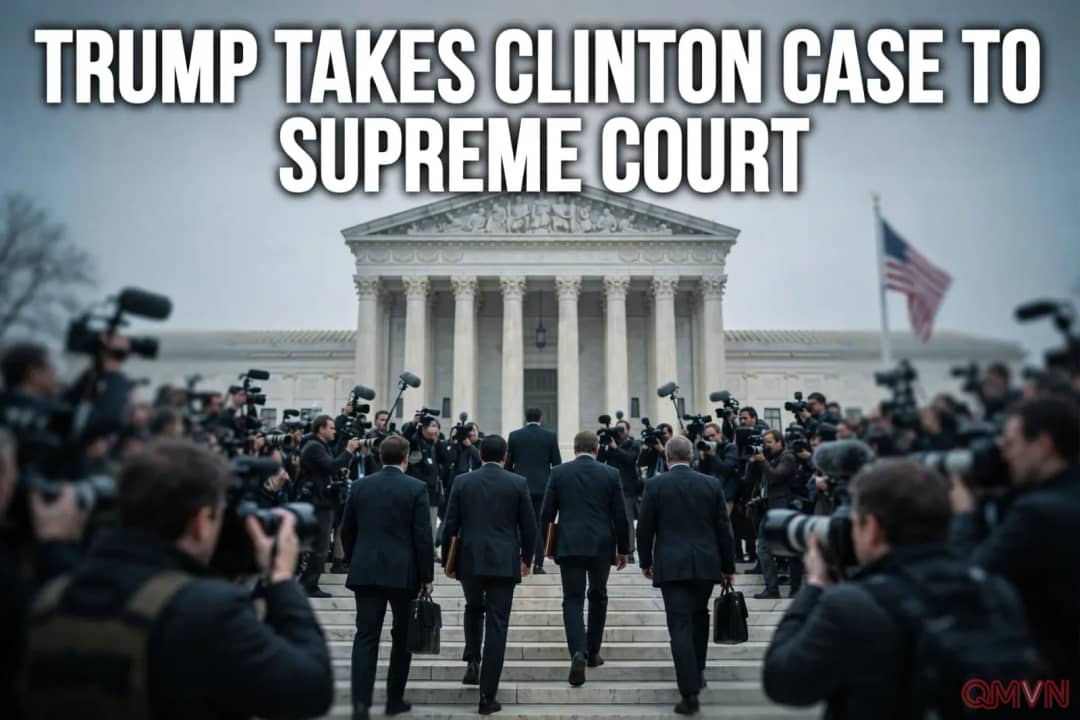
On Friday, Trump formally asked the Supreme Court to revive the dismissed lawsuit. In it, he accuses Clinton, former FBI Director James Comey and others of trying to manipulate the 2016 election by linking his campaign to Russia.
The appeal came after a federal judge threw out the case and imposed nearly $1 million in sanctions on Trump and one of his lawyers, and an appeals court then upheld those decisions. In court papers, lawyers for Trump and Habba argue that the lower courts’ rulings are having a deep impact on the presidency and the country as a whole.
From “political manifesto” to nearly $1 million in sanctions
Judge Donald Middlebrooks dismissed the suit over numerous shortcomings, including that Trump waited too long to bring some of the claims. He compared the complaint to a two-hundred-page political manifesto listing Trump’s grievances against those who had opposed him.
The judge later ordered Trump and his lead attorney, Alina Habba, to pay nearly $1 million in fees and costs, finding that the case aimed to dishonestly advance a political narrative and reflected a continuing pattern of misusing the courts.
Many of Trump’s and Habba’s legal arguments were indeed frivolous.
Middlebrooks concluded that the suit relied on abusive litigation tactics, contained factual allegations its authors knew to be false and advanced baseless legal theories. In 2025, the Atlanta-based 11th Circuit upheld all of his rulings, including the sanctions.
What the lawsuit claims
Trump filed the suit in 2022, when he was out of office after losing the 2020 election. Its main points include:
- The defendants included Clinton, Comey, former British intelligence officer Christopher Steele, the Democratic National Committee and many others.
- The complaint alleged that Clinton’s camp built a false narrative that Trump and his campaign colluded with Russia.
- The claims included racketeering and a conspiracy to commit injurious falsehood.
Trump has a long history of suing those he regards as adversaries. In the 2016 election, he defeated Clinton despite losing the popular vote, and served his first term from 2017 to 2021.
Two investigations, two perspectives
US government officials have accused Russia of interfering in the 2016 election. Special counsel Robert Mueller’s 2019 report concluded that Russia interfered in a sweeping and systematic way, documented numerous links between the Trump campaign and Russian figures, and found the campaign expected to benefit. However, the investigation did not establish that campaign members conspired or coordinated with the Russian government. Trump has called the idea of Russian interference a “hoax.”
In 2019, then-Attorney General William Barr appointed special counsel John Durham to examine possible FBI missteps. Durham’s 2023 report concluded that the FBI lacked actual evidence to investigate Trump’s campaign and relied too heavily on tips from his political opponents. Meanwhile, the dossier compiled by Steele, funded through a research firm hired by a law firm on behalf of the Clinton campaign and the Democratic Party, contained allegations Trump has always denied.
Tests for the rule of law
Last year, Trump’s Justice Department indicted Comey on charges of making false statements and obstructing Congress. A federal judge later dismissed the indictment, finding that the prosecutor Trump had handpicked for the case had been unlawfully appointed.
The Supreme Court must now decide whether to take up the case, at a time when it agrees to hear only a very small share of the petitions it receives each year. Whatever the outcome, the case continues to raise questions about the line between a legitimate right to sue and using the courts as a political arena.