MAIN CONTENT
An agreement that could not cross the finish line
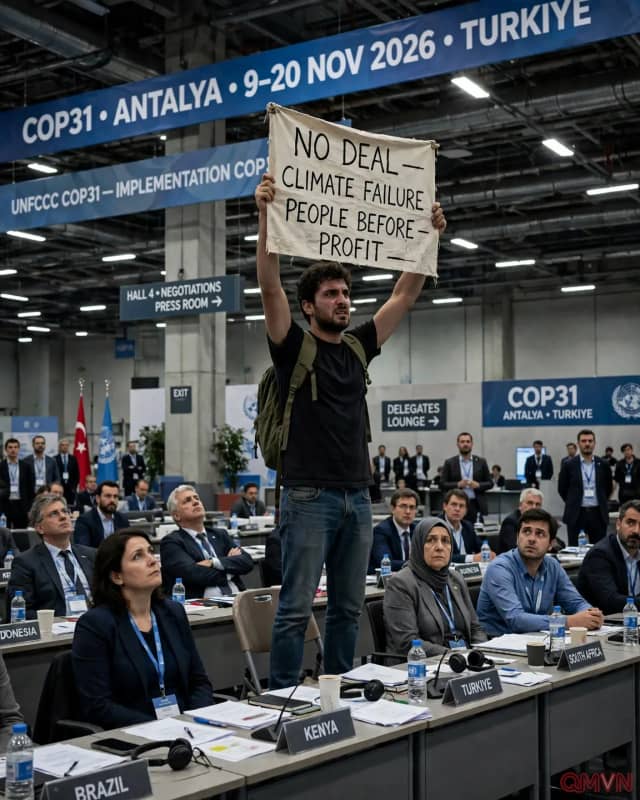
Delegates arrived at the closing plenary hoping a last-minute compromise would preserve a common position. Instead, objections multiplied. Ireland’s environment minister Darragh O’Brien, speaking for the European Union, argued that a declaration that ignored the principal fuels driving global warming could not credibly chart the next stage of climate action. Panama and other climate-vulnerable countries also questioned whether the language reflected the severity of the risks they face. Associated Press reporting identified the Marshall Islands among the objectors.
Kurum, Turkey’s environment minister and COP31 president, told delegates that no agreement had emerged and that his presidency would not circulate another version. The moment was especially consequential because United Nations climate decisions depend on consensus: a sweeping statement cannot simply pass by majority vote over the objections of parties. The result was a failure to adopt the proposed overarching political text, not a formal repeal of decisions taken at previous conferences.
The argument beneath the missing words
The central omission concerned fossil fuels. Burning coal, oil and natural gas is the largest source of human-caused carbon dioxide emissions, so wording on moving away from those fuels carries both scientific and diplomatic weight.