US Secretary of State Rubio defends nationalism in Athens, urging Europe to stop being ashamed of its history as the transatlantic alliance frays
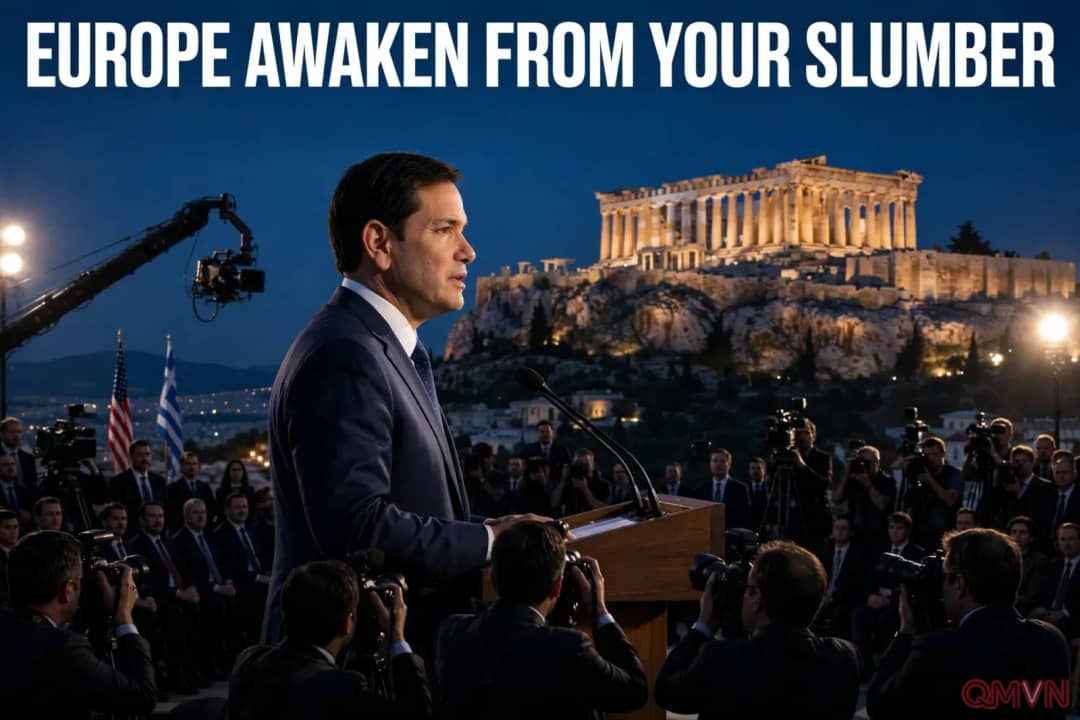
Speaking in Athens, Greece, on October 7, US Secretary of State Marco Rubio defended nationalism, arguing that the West had turned it into a dirty word, torn down its monuments and taught children to be ashamed of their countries. According to The Guardian, the speech was an apologia for President Donald Trump's “America first” policy and an appeal for Europe to follow America's path: reclaiming supply chains, reindustrialising and rebuilding defence. The message came as US-European relations are strained by the war with Iran, inconsistent support for Ukraine and Trump's demands over Greenland. Rubio borrowed Abraham Lincoln's words to urge preservation of transatlantic bonds, but also signalled that Washington has no intention of returning to the old ways, even after 2028.
Edite QUANG MINH·2 min read · 4 min listen·7 October 2026, 22:55 EDT·
AI-generated illustration
When nationalism became a dirty word
Before around 250 invited officials and journalists, Rubio delivered a forceful critique of the globalist politics that Trump blames for many of the ills of America and Europe, from illegal immigration to the outsourcing of manufacturing. He said:
The word nationalism became a dirty word, so we tore down our monuments.
In his view, the West condemned its own history and in many places taught children to be ashamed of the country they would inherit.
Advertisement
300 × 250
Now the West stands at a crossroads, and under Trump, the United States has chosen the unapologetic pursuit of national power.
An alliance with many cracks
The speech comes as US-European relations face multiple pressures. The main points of tension include:
The war with Iran:** the US war since late February has driven up energy prices and divided approaches on both sides of the Atlantic.
Ukraine and Greenland:** Washington's inconsistent support for Ukraine against Russia, along with Trump's recent demands for sovereignty over Greenland, have caused friction within NATO.
An ideological gap:** Vice President JD Vance last year warned Europe of a threat from within, accusing its leaders of fearing their own people.
Many European allies are unsettled by how the Trump administration wields national power, yet continue to seek compromises to keep Washington on board on major issues such as support for Ukraine and economic cooperation with the European Union.
Lincoln, Greenland and the “Greek model”
To ease tensions, Rubio borrowed from Abraham Lincoln's 1861 inaugural address on the eve of the US civil war, saying that although passions may at times have strained the bonds of affection between the United States and Europe, they must not be allowed to break them. He praised the recent agreement between the United States, Denmark and Greenland, claiming it would reshape the Arctic and bolster security across NATO.
He urged European countries to follow the example of the Greek government, which he called a model partner in everything from energy and migration to defence, while noting positive trends such as higher European defence spending, expanded manufacturing and a flurry of new partnerships. The same day, The Guardian reported that the European Union had dropped its sponsorship of a disinformation conference at the request of Trump administration officials.
A speech for two audiences
The speech appeared aimed at two audiences. For Europe, it was an invitation to “awaken” and join the United States against what he called civilisational erasure, in a less aggressive tone than Vance's. For American voters, it was a carefully staged performance, with four cameras and a personal story about his family, as a great-grandson of settlers who came to the New World from Spain.
According to The Guardian, the fact that the administration's two most prominent figures, both potential 2028 contenders, have declared there will be no return to the politics of the past suggests the change in how America uses its power may outlast the current presidency. For Europe, that means preparing for an alliance based more on interests and less on assumed shared values.
EVENT BACKGROUND.
The US-European alliance was built on the ruins of World War II, with the Marshall Plan rebuilding Europe and NATO founded in 1949. For more than seven decades, both sides of the Atlantic shared an order based on free trade, multilateralism and democratic values. In the 2010s, however, a wave of populism and nationalism challenged that order. In the United States, the debate over history flared in 2020, when many monuments, including statues of Christopher Columbus, were removed amid protests over racial injustice; conservatives saw it as a rejection of heritage, progressives as a reckoning with history. Since 2025, the Trump administration has imposed tariffs on Europe, pressed for higher defence spending and repeatedly expressed a desire to control Greenland. Supporters argue that healthy nationalism makes nations confident and self-reliant; critics fear it easily turns into xenophobia and whitewashing of the past. The knot is how to reconcile national pride with the responsibility to face history honestly.
Key takeaways
Loving one's country does not mean turning away from the painful pages of one's own history.
A lasting alliance needs both shared interests and respect for differences.
A call for unity carries weight only when the speaker is also willing to listen.
Subscribe to the QMVN newsletter
A daily morning digest - only stories worth reading, no spam.