Record applications
University bids accounted for more than half of the record 560 applications the ministry received this year, up from 340 last year. The rest came from public research institutes and companies.
The programme’s budget, sharply boosted in 2017, rose from 10.4 billion yen in 2024 to 11.4 billion yen last year and 12.9 billion yen this year, more than 40 times its initial allocation of about 300 million yen in 2015. Koizumi said civilian and defence technologies could no longer be clearly separated.
The attitude of universities has clearly changed. Closer cooperation with universities is essential to protecting Japanese lives.
From taboo to cooperation
Japan’s post-war constitution renounces war, and concerns rooted in its militarist past long limited cooperation between academia and the defence establishment. In 1950, the Science Council of Japan pledged never to conduct research for war, reaffirmed that stance in 1967 and again opposed military-linked research in 2017.
As a result, university applications fell from 58 in the programme’s first year in 2015 to just nine in 2019. China, meanwhile, has long drawn on universities and civilian institutes to support military modernisation through its military-civil fusion strategy.
The drivers of change
According to Sebastian Maslow, an associate professor at the University of Tokyo, the surge reflects an erosion of antimilitarist norms and institutional changes. He pointed to a younger generation of scholars with different perceptions of security and growing competition for civilian research grants.
Misato Matsuoka, an associate professor at Teikyo University, cautioned against seeing it as a sudden embrace of military research. In her view, barriers have weakened because of three mutually reinforcing factors: university funding pressures, the science council’s more nuanced stance on dual-use technology since 2022 and the ministry’s campus outreach. China’s military build-up is important context, but not necessarily the main explanation.
Dual-use projects
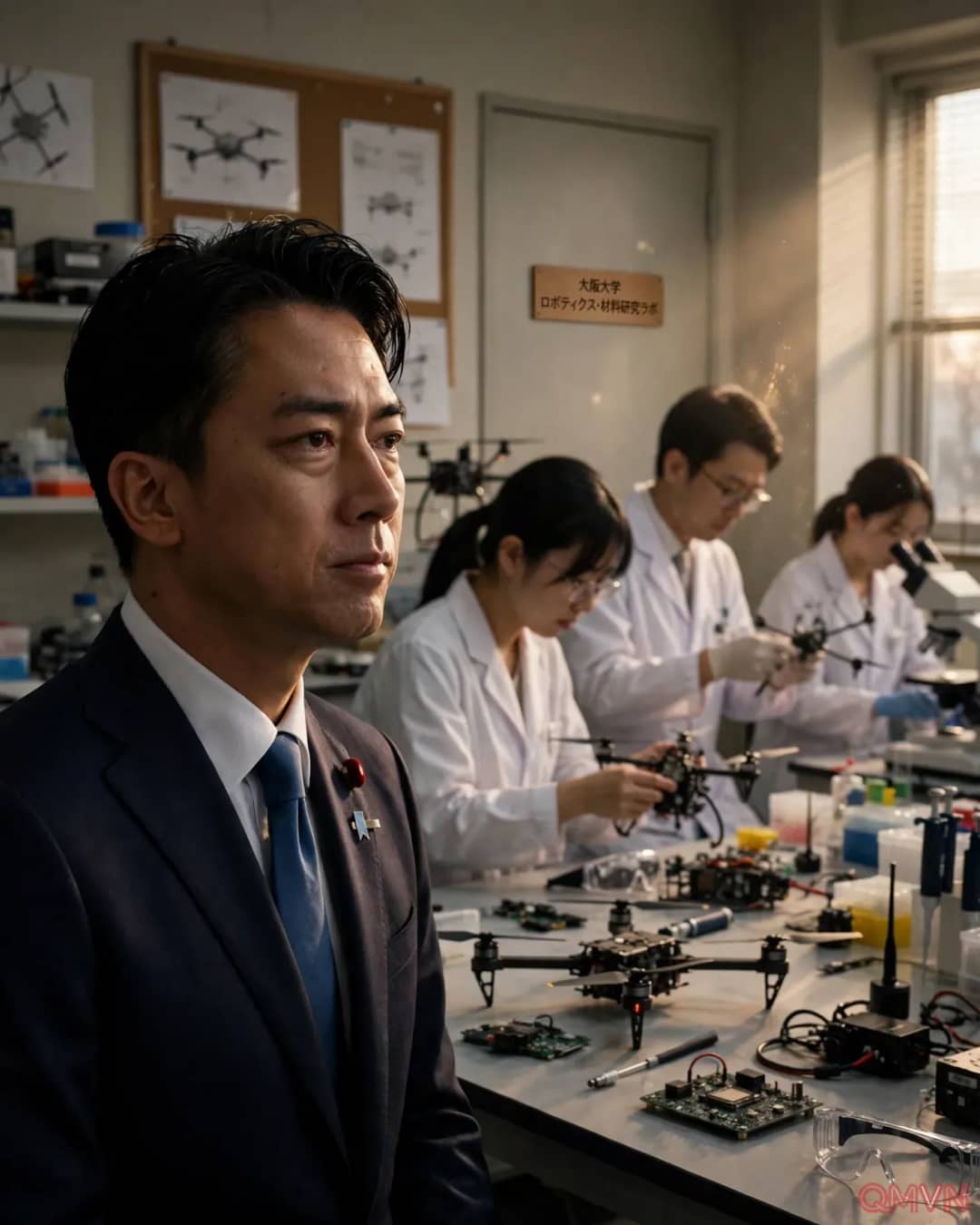
The programme supports basic research rather than weapons development. Hokkaido University is combining infrared and visible-light imagery with artificial intelligence; Nagoya University is developing millimetre-wave transistors; Gifu University is studying lightweight carbon fibres for drones, and Osaka University is developing high-output batteries. Other projects cover quantum communications, heat-resistant materials, satellite tracking and rare earth-free materials.
Matsuoka noted that turning research into military capability could take five to 10 years or longer.
The key question is whether Japan can translate that research into practical capabilities while maintaining the institutional autonomy and openness of its civilian research sector.