Beauty with a stench
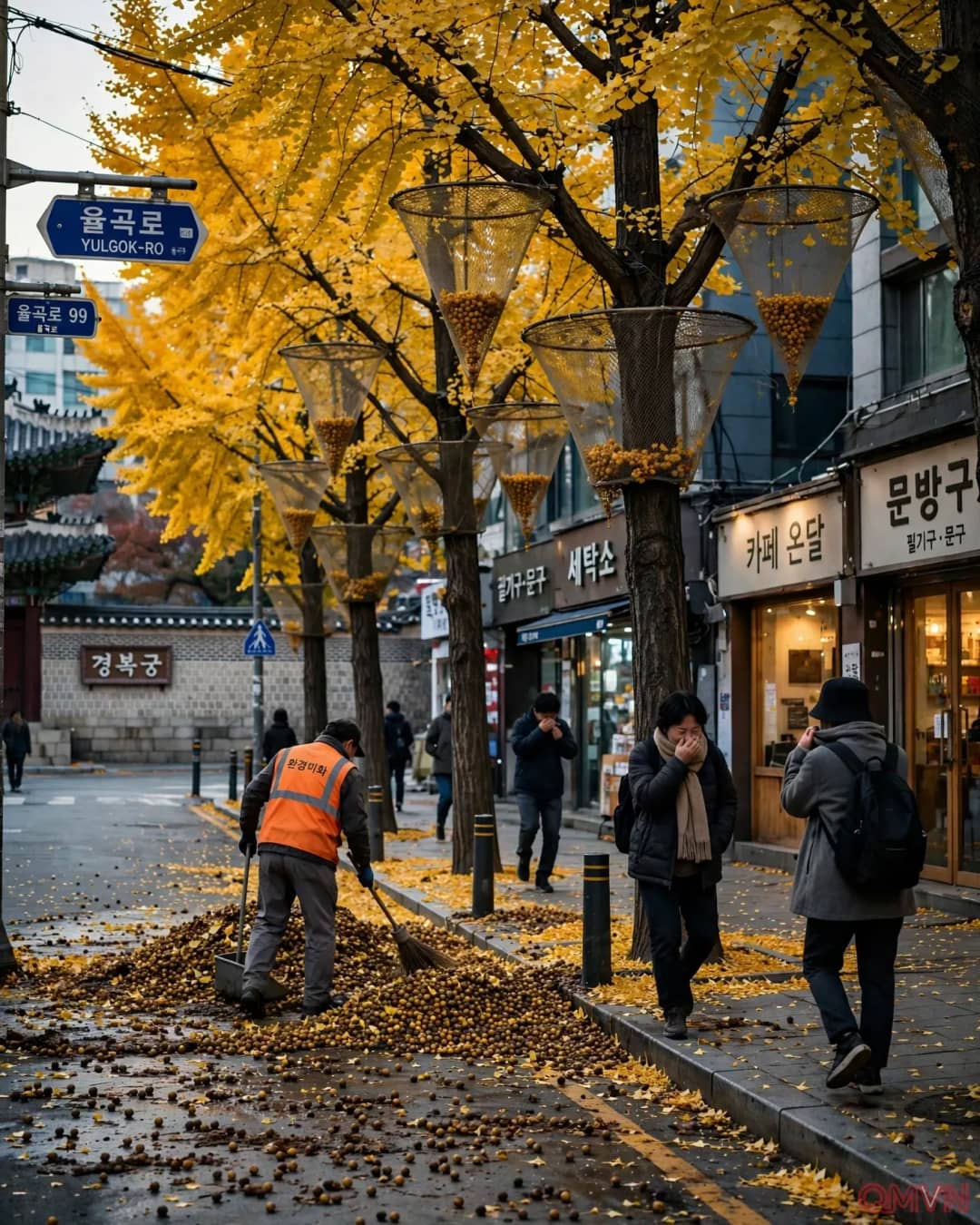
The foul odor comes from the fleshy outer coat of ginkgo seeds. When crushed, it releases butyric acid – found in vomit and rancid butter – and hexanoic acid, known for its cheesy smell. Inside the hard shell lies the edible ginkgo kernel, a familiar ingredient in many Asian dishes. Only female trees produce seeds, while male trees produce pollen.
Seoul made the ginkgo its official tree in 1971, symbolizing development and prosperity. At the time, however, it was impossible to tell male from female trees until they matured after 15 to 20 years. It was only in 2011 that South Korea’s National Institute of Forest Science developed a DNA-based technique to identify male trees at the seedling stage.
Replace or retain
According to the Seoul Metropolitan Government, the city had nearly 100,000 ginkgo street trees as of end-2025, with the share of female trees falling by 18.5% over the past four years. In July, the Seoul branch of the Korea Federation for Environmental Movements (KFEM) estimated that at least 792 trees would be removed this year.