MAIN CONTENT
Most want to stay home
The online survey, conducted annually by Macromill since 2024, ran from September 4 to 15 and drew 200,000 valid responses across Japan. Asked where they would shelter if their homes were not at risk of collapse or flooding after a disaster, respondents said:
- 5% would prefer to remain at home.
- 9% would go to a designated evacuation centre even if their homes were safe.
- 8% would stay with relatives or acquaintances or at a hotel.
- 8% would shelter in their cars.
Limited understanding of preparations
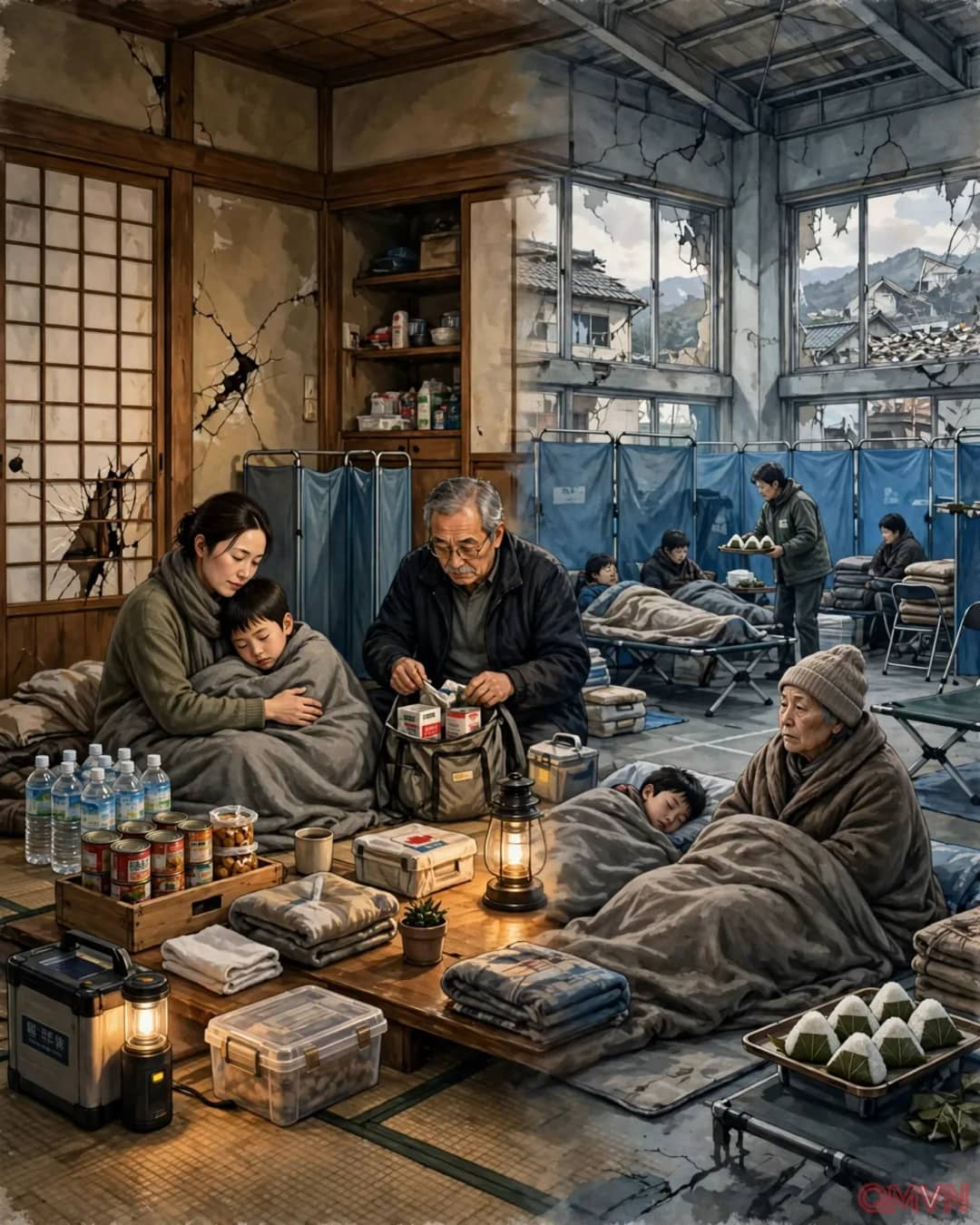
Central and local governments recommend sheltering at home when homes are safe, to ease overcrowding at evacuation centres and reduce stress among evacuees. Doing so requires adequate supplies of food, water and portable toilets, as well as alternative means of securing essential utilities.
Yet only 14.7% of respondents said they had a detailed understanding of the necessary preparations, while 50.1% had heard about them and 35.2% knew nothing. This gap between intention and real readiness could leave many households struggling when disaster strikes.
Marked regional differences
Prefectures that have experienced major disasters had higher shares of respondents with a detailed understanding. Kumamoto ranked highest at 26.5%, followed by Miyagi at 23.3% and Fukushima at 20.0%. Wakayama had the lowest share of Japan's 47 prefectures at 8.9%, followed by Tokushima at 9.0% and Okinawa at 9.3%.
People’s understanding of the specific preparations needed remains insufficient. Practical public awareness campaigns are needed.
Notably, Wakayama and Tokushima both lie on the Pacific coast, an area expected to be hit hard by a major Nankai Trough earthquake – underscoring the urgent need to raise awareness before disaster strikes, rather than learning only from painful experience.