MAIN ARTICLE
The fence, the forest and tunnels below
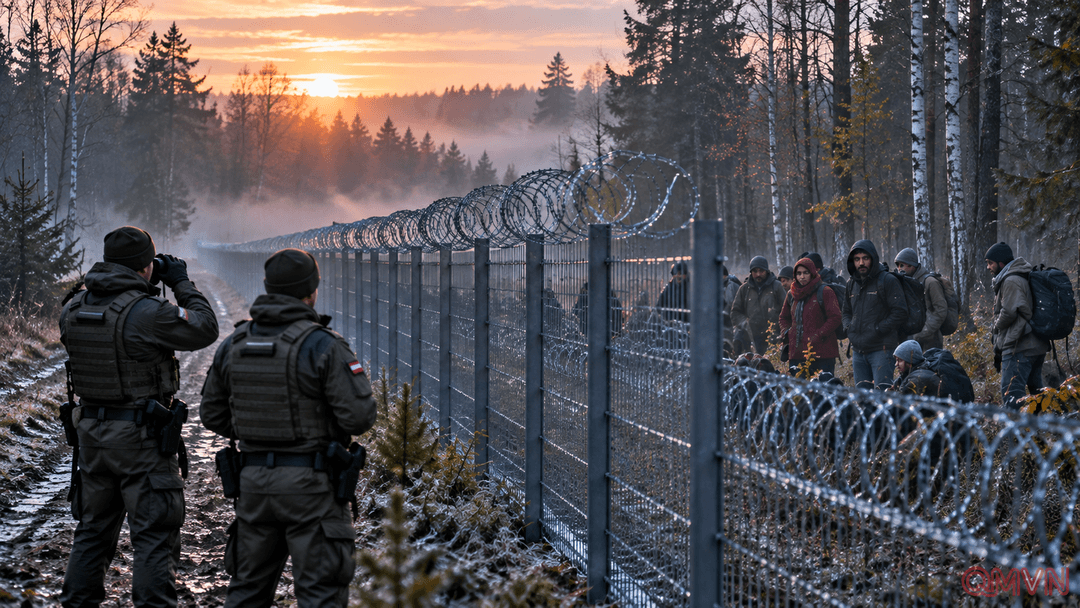
Latvia’s roughly 172-kilometre boundary with Belarus is now protected by wire-topped fencing, cameras, movement sensors and systems that help operators distinguish people from wildlife. The New York Times described footage from August showing a man cutting through a fence and damaging a surveillance camera before returning to Belarus. Latvian officials regarded the episode as part of a broader pattern of deliberate interference rather than an isolated act of vandalism.
Border guards say some groups have cut fencing, crossed difficult woodland and dug beneath the obstacles. Two recently discovered tunnels were estimated at approximately 40 and 20 metres. Soldiers patrol by all-terrain vehicle while others smooth dirt roads to make new footprints visible. Even a technologically sophisticated barrier depends on painstaking observation on the ground.
Latvia’s State Border Guard reported 10,872 attempts prevented at the Belarus border by September 11; the October 2 investigation put the yearly total above 11,000. These are interceptions or prevented attempts, not necessarily a count of 11,000 distinct individuals. That statistical distinction matters if some people attempt the crossing more than once.