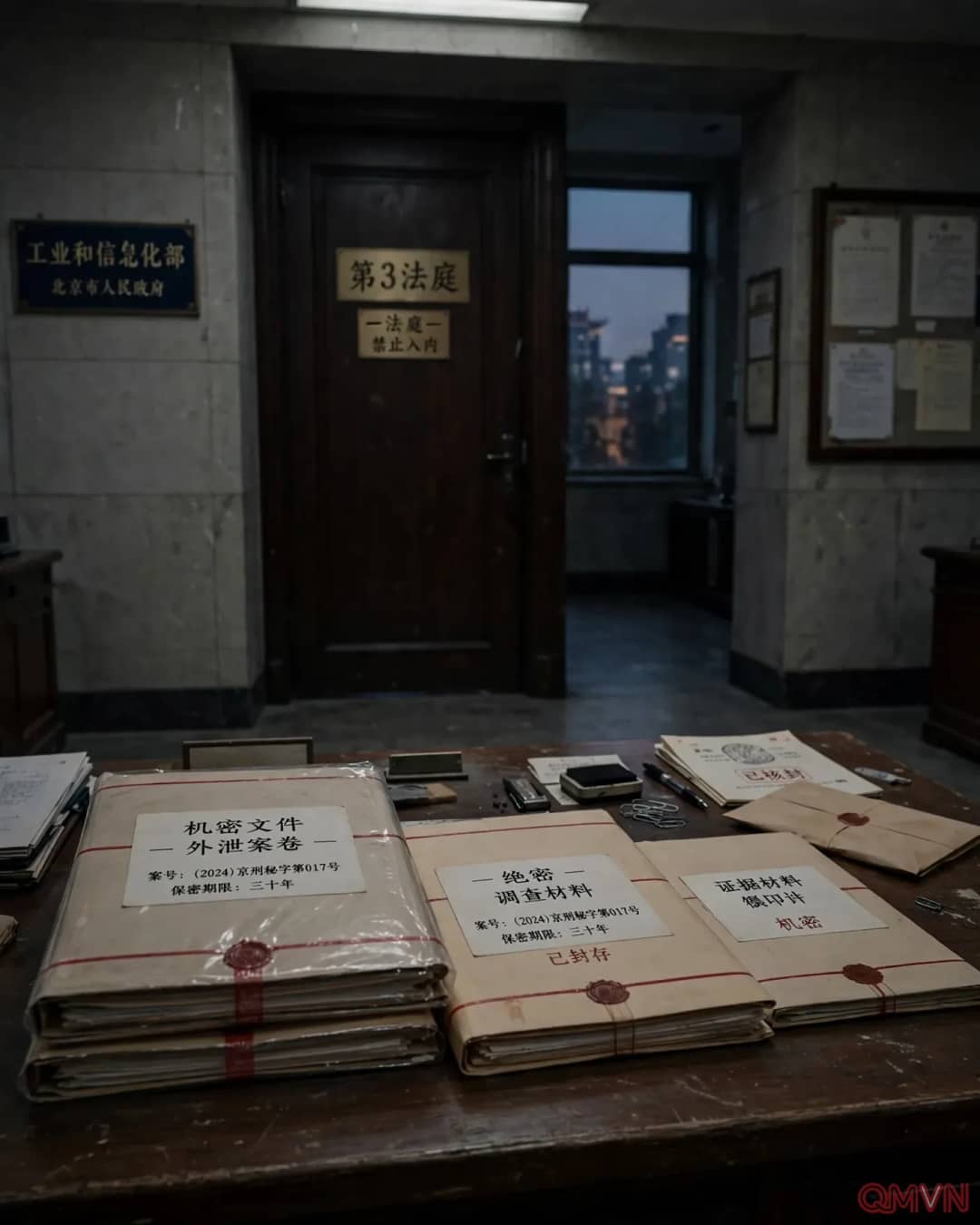
What the authorities disclosed
The account was published by Baomiguan, a social media channel run by Jincheng Press, the publishing arm of the National Administration of State Secrets Protection. It said Ma was convicted of espionage and received the death penalty along with lifelong deprivation of political rights and confiscation of all personal assets.
According to the report, Ma was cultivated by a foreign intelligence agency, then coerced through blackmail into handing over classified material. The foreign countries were referred to only as Country A and Country B.
Several important facts were left out:
- the date of the trial and the sentencing;
- the court that issued the verdict;
- the ministry where Ma worked and his rank;
- whether the sentence has been carried out or is subject to appeal.
A pattern of publicised cases
Public disclosures of death sentences for espionage are relatively uncommon in China, where national security cases are typically heard behind closed doors. However, they have become more frequent. In November 2024, the Ministry of State Security reported that a former employee of a state agency, surnamed Zhang, had been sentenced to death for leaking secrets to foreign spy agencies.
In March 2025, it said a former engineer at a research institute, surnamed Liu, had received the death penalty for selling classified material abroad. In September 2025, the ministry described another former ministry official who was lured into friendship with a foreign agent, blackmailed and given a suspended death sentence.
Two perspectives
Chinese authorities say such cases show that foreign intelligence services are increasingly targeting officials, researchers and ordinary citizens, and that strict punishment is needed to protect national security. The Ministry of State Security, which opened a WeChat account in 2023, regularly publishes cautionary stories about tactics such as financial inducements, emotional manipulation and blackmail.
Human rights organisations and many foreign governments, however, point out that espionage trials in China are held in secret, defendants have limited access to independent lawyers, and information about death sentences is tightly controlled. China classifies statistics on executions as state secrets, and groups such as Amnesty International estimate that the country carries out more executions than any other nation. Critics also note that the revised counter-espionage law of 2023 broadened the definition of spying, creating uncertainty for businesses and foreign nationals.
A wider climate of mistrust
The verdict comes amid deepening intelligence rivalry between China and Western countries, with both sides frequently accusing each other of espionage, cyber intrusions and covert influence operations. For ordinary officials, the message from Beijing is clear: personal vulnerabilities can be exploited, and the consequences of crossing the line can be the harshest possible.