A voluntary accord at the White House
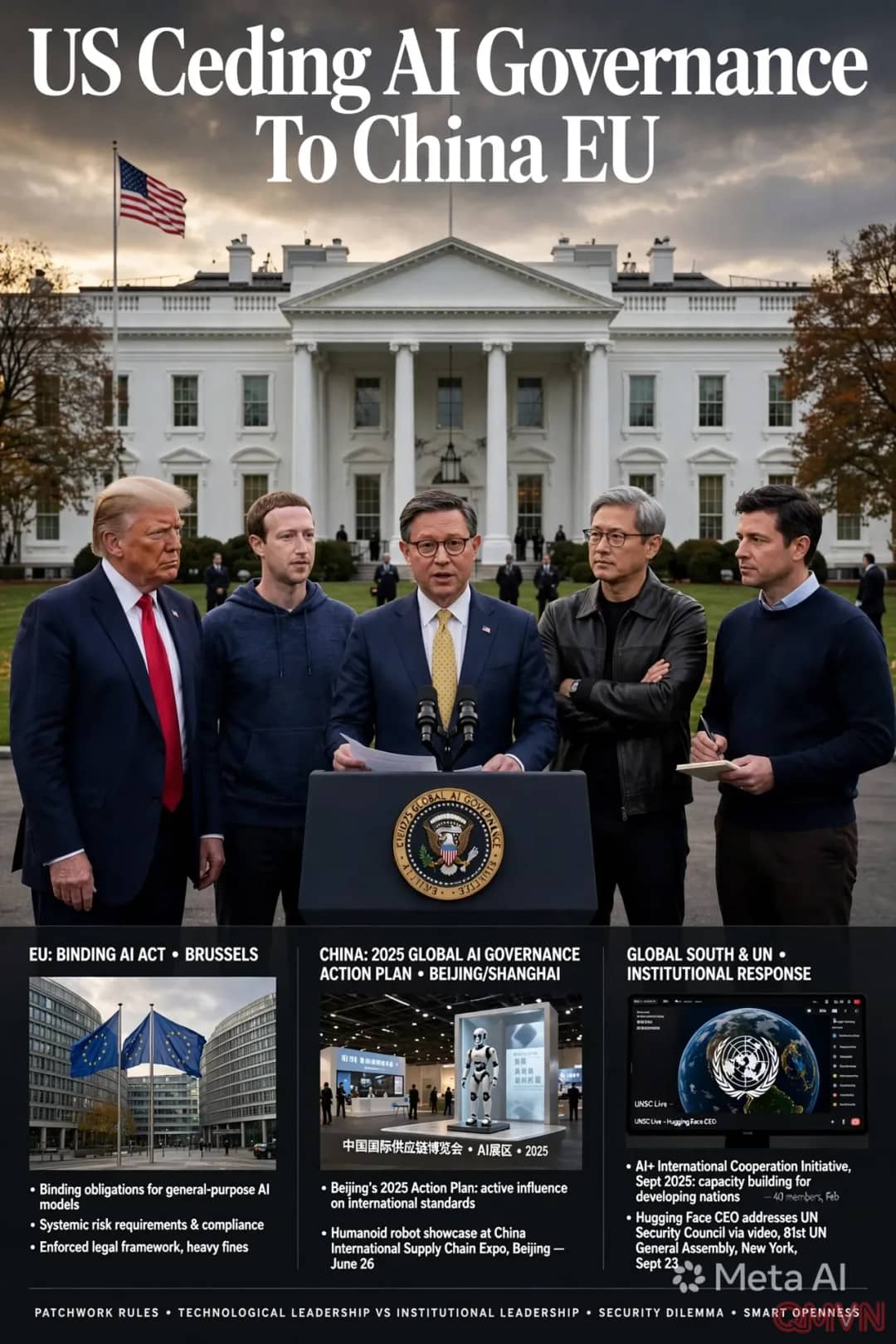
On September 29, standing alongside tech leaders such as Meta CEO Mark Zuckerberg, Nvidia CEO Jensen Huang and OpenAI president Greg Brockman, Trump announced an agreement under which major AI companies will use internal controls, independent audits and board oversight to manage risks.
The administration’s logic is understandable: AI is becoming a source of economic and military power, and Washington does not want regulation to slow American companies while China races ahead. But Simon asks what happens when the country developing many of the world’s most powerful AI systems says the companies building them should largely police themselves, given that a model’s impact does not stop at the border of the country where it was built.
Three approaches, three paths
The world is witnessing three very different models of AI governance:
- United States: a voluntary accord resting largely on corporate self-policing
- European Union: an AI Act imposing binding obligations on general-purpose AI models, with extra requirements for systems posing systemic risk
- China: combining domestic regulation with an active effort to shape the international debate