MAIN CONTENT
Four initiatives, one challenge of coordination
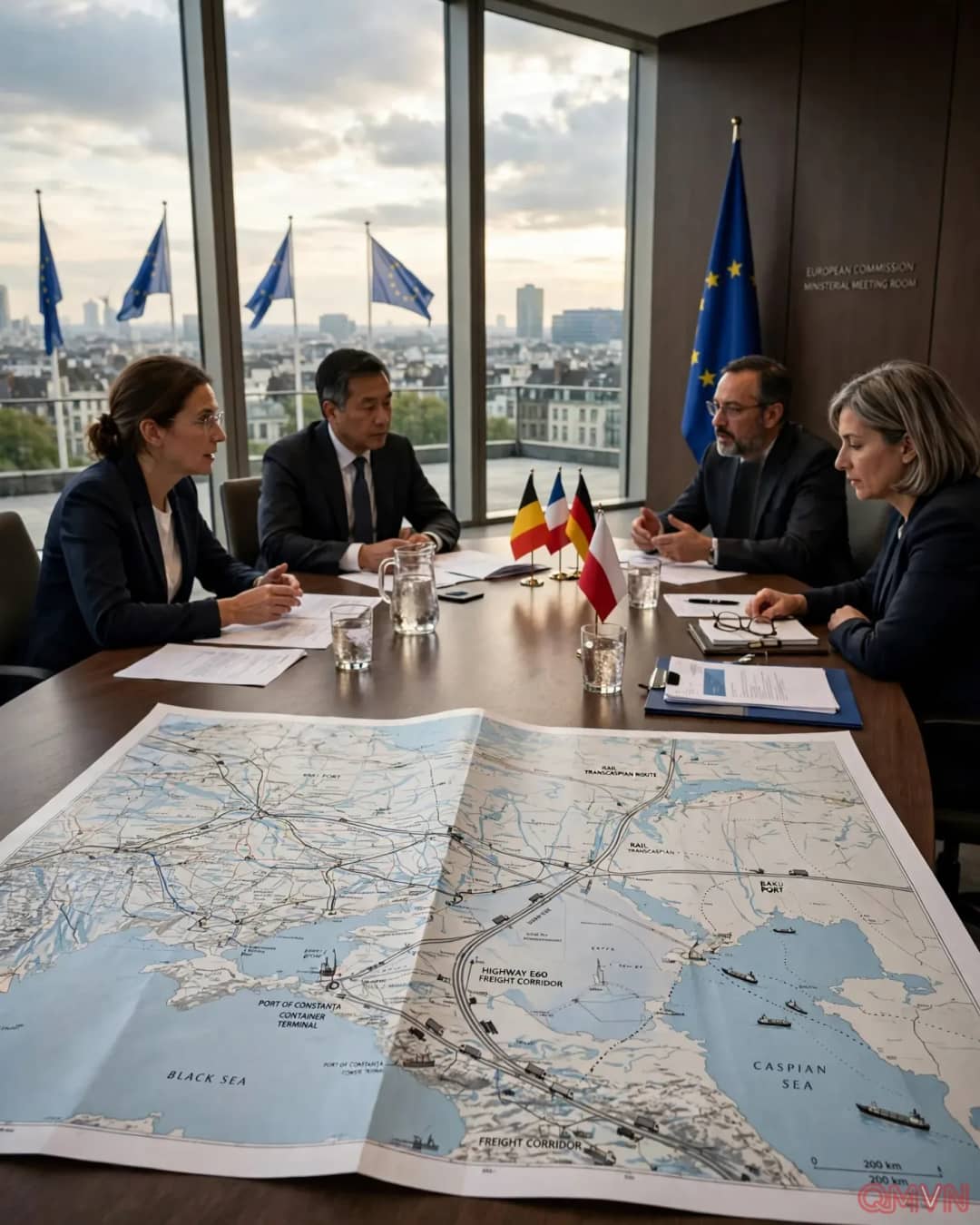
Fidan's message focused on making different connectivity schemes work together rather than simply multiplying infrastructure announcements. He named the Middle Corridor, Iraq's Development Road, the Three Seas Initiative and Global Gateway. Each has a different geographical footprint and institutional framework. Yet their potential overlaps in rail links, ports, logistics services and energy connections offer a chance to make routes between Asia and Europe more resilient. The immediate policy challenge is to coordinate priorities without treating these programmes as a single, already-agreed project.
The Middle Corridor connects Central Asia to Europe across the Caspian Sea and South Caucasus, with onward links through Türkiye or the Black Sea. Global Gateway is the EU's wider infrastructure investment strategy. The Three Seas Initiative focuses on improving connectivity among European countries between the Baltic, Adriatic and Black seas, while Development Road envisages a transport connection from Iraq through Türkiye. Combining their benefits requires practical choices about ports, border crossings, technical standards and funding, not only diplomatic endorsements.
For exporters, corridor performance depends as much on predictable procedures as on distance. Goods can lose days at borders because customs requirements differ, transport schedules fail to connect or terminals lack sufficient capacity. A new railway on one side of a frontier brings limited benefits if the onward network remains congested. That makes compatible customs processes, reliable logistics data and coordination between operators essential elements of any ambitious programme.