MAIN STORY
An accelerated vote and unanswered questions
The lower house began its first reading on Friday, sooner than many observers expected, and voted to extend debate into Saturday as opposition parties sought to slow proceedings. A bill must still navigate three readings. At this stage, the proposal is contentious legislation, not an enacted settlement about the future of broadcasting.
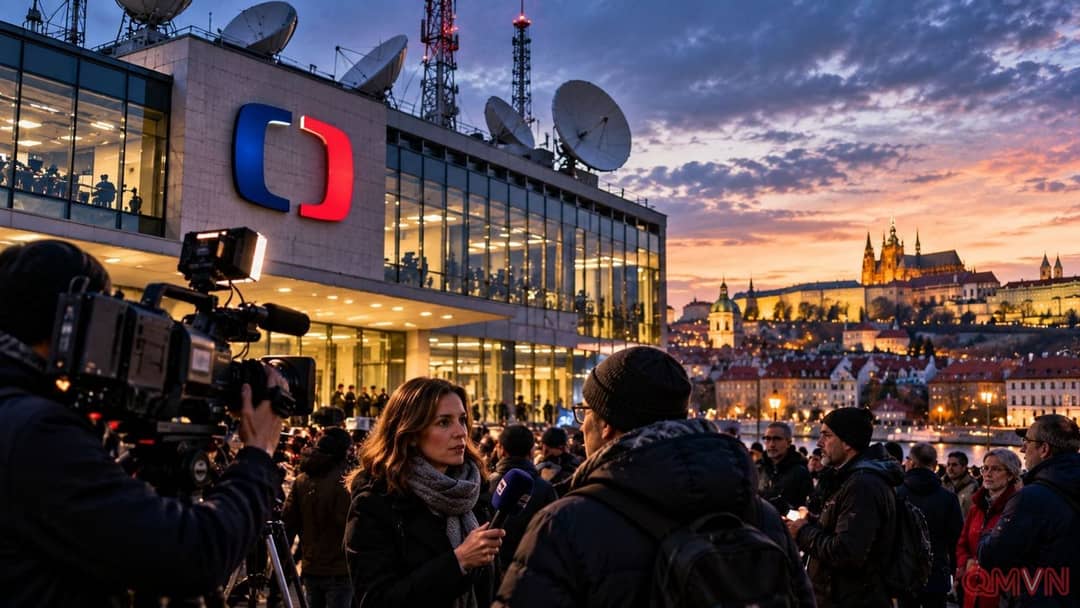
The core change is to end the current household licence payments, reported at a combined 205 crowns per month, and replace them with government appropriations. Funding would fall by roughly 15%, potentially next year. Czech Television, a leading broadcaster across audience groups, and Czech Radio would both have to plan for this substantial financial shift.
Funding reform or a new point of political leverage?
Babiš’s ANO party campaigned on removing licence fees. The coalition argues that more European countries are moving beyond direct household payments and that broadcasters can trim costs without compromising news coverage.
For families concerned about living expenses, removing a recurring bill offers an understandable political appeal.
Yet the mechanism used to replace that bill carries consequences of its own. If appropriations are reopened during each budget cycle, public broadcasters may face uncertainty precisely when they need to commission investigative reporting, maintain regional bureaus and invest in digital services. Such consequences are risks cited by opponents, not outcomes that have already been proved.
What broadcasters and European watchdogs fear
Opposition Pirate Party leader Zdeněk Hřib argued that the coalition was adopting an authoritarian trajectory, likening the atmosphere to disputes over media freedom in Hungary. His words represent a political accusation rather than a judicial finding. Reporters Without Borders, the International Press Institute and the European Broadcasting Union have separately raised concerns about consultation and safeguards.
The European Broadcasting Union points to the European Media Freedom Act, under which public media should have adequate, sustainable and predictable resources. State-budget funding is not inherently incompatible with independent journalism: the critical detail is whether spending rules stop governments from rewarding friendly coverage or penalizing scrutiny. Independent oversight, transparent allocations and a credible multiyear formula could make a decisive difference.
“We are seeing here that Andrej Babiš and his entourage ... have embarked on the trajectory of installing an authoritarian regime.” — Zdeněk Hřib
The practical test for lawmakers and audiences
Lawmakers also face a fiscal puzzle. The draft 2027 budget envisages a wider deficit but reportedly contains no allocation yet for the broadcasters. How much would be guaranteed, who would review the calculation and what would happen during spending cuts? Those unanswered questions matter beyond party politics.
For viewers and listeners, success should be judged by continued access to reliable reporting, cultural programming and scrutiny of those in power. A mature debate can acknowledge legitimate budget pressure without abandoning the distance that must exist between government finances and editorial judgment.