A Waterlogged Treasure in Wuwangdun Tomb
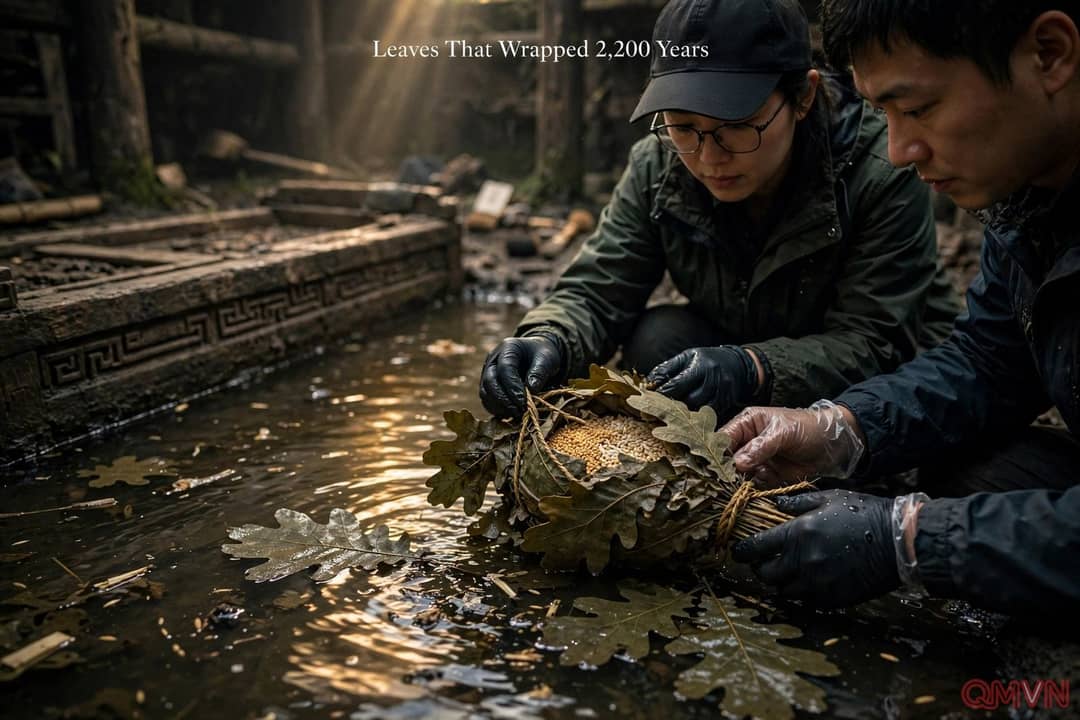
In March 2024, a team from the National Center for Archaeology excavated the outer coffin chamber of Wuwangdun Tomb in Huainan, Anhui. Deep burial, waterlogged conditions and isolation from air turned the tomb into what researcher Yong Ge calls a natural fridge, preserving plant material that normally disappears. On site, the bundles floated on the water surface, tightly wrapped in broad leaves and tied with grass cords from Poaceae.
Led by Dr. Fan Yang and Dr. Yong Ge, the team examined 12 bundles. Radiocarbon dating placed them at about 2,200 calibrated years before present, in the late Warring States period, when the Chu Kingdom was still a major cultural and political power before Qin unification. This period corresponds to a critical moment when the feudal Chu system disintegrated and beliefs that grains served as wealth for the dead became common.
Ancestor of Zongzi? Structure and Composition
Unlike modern zongzi made with sticky rice, the ancient bundles contained unprocessed grains. Analysis of 456 seeds showed rice made up 43.6 percent, broomcorn millet 26.1 percent and foxtail millet 28.5 percent, mostly in husks mixed with inflorescence material.