An industrial legacy from the 1970s
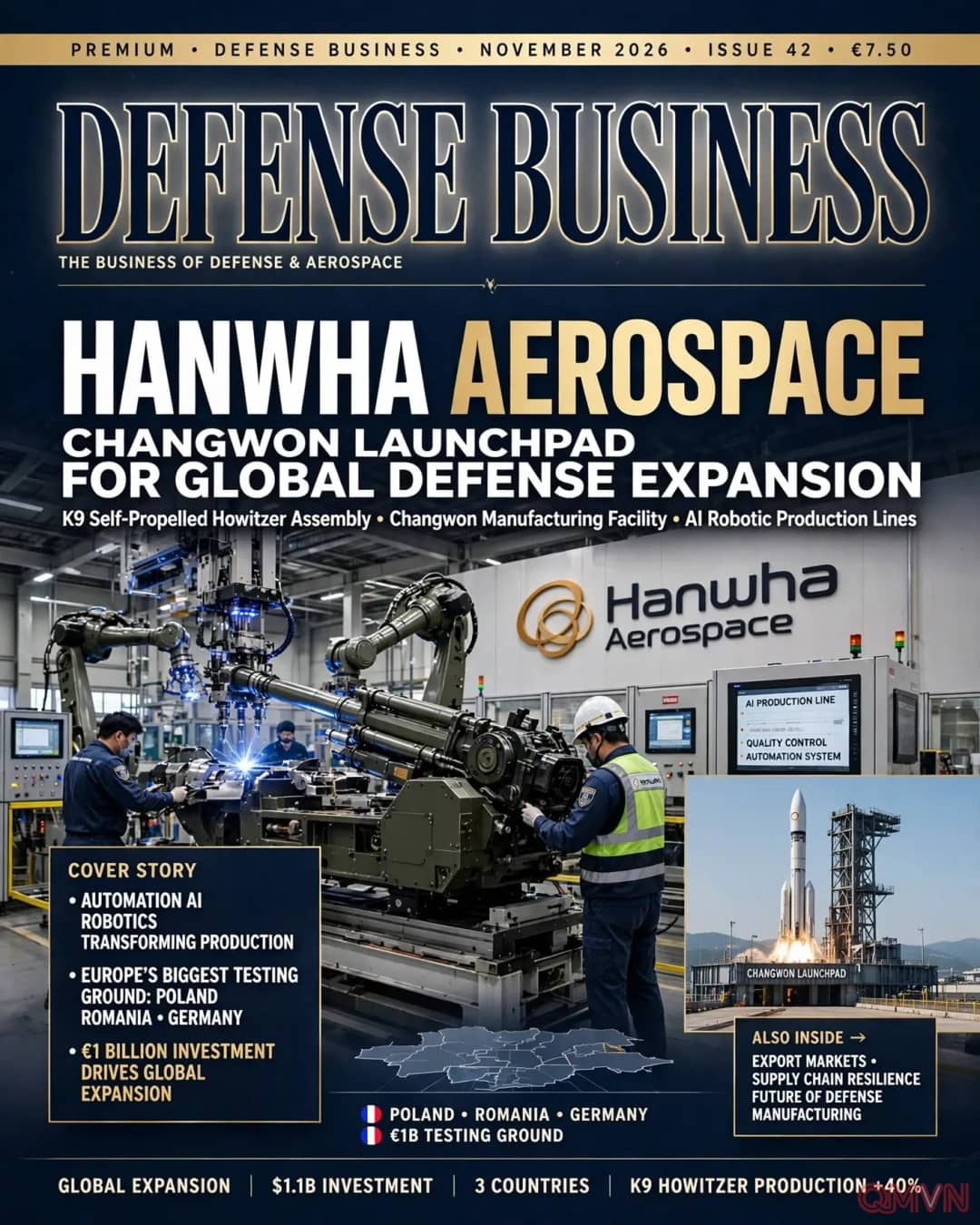
During a rare tour on Friday alongside international journalists from Germany and Sweden, The Korea Herald saw first-hand the assembly line for the K9 self-propelled howitzer, one of South Korea's most successful defence exports, as well as production halls where robots are increasingly taking over work once done by people.
Changwon was designated by then-President Park Chung-hee's government in the 1970s as a strategic centre for heavy machinery and arms production, as Seoul sought military self-reliance in the face of the North Korean threat and uncertainty over the long-term US presence. Five decades on, its dense network of precision engineering, metalworking and component suppliers remains one of Hanwha's biggest advantages. Plant 1 makes aircraft engines and propulsion parts, Plant 2 produces combat vehicles, launcher systems and CBRN defence systems, and Plant 3 with its R&D campus focuses on firepower systems such as the K9.
Hwang Dong-gyu, head of Plant 2 under the Land Systems Business Group, said Korea's strength in cars, shipbuilding, semiconductors, electronics and software gives defence makers an edge beyond the factory floor. The localisation rate of Korean defence products exceeds 96%, making it easier to transfer technology so client countries can produce locally.