US Federal Trade Commission settles with Southern Glazer's, America's largest wine and spirits distributor, over claims it discriminated against small retailers
In the United States, the Federal Trade Commission has reached a settlement with Southern Glazer's Wine and Spirits, the country's largest distributor of wine and spirits, resolving allegations that it discriminated against small and independent retailers. The agency sued the company in December 2024, accusing it of giving big chains such as Total Wine, Walmart and Kroger discounts and rebates that were denied to smaller shops, sometimes located just a few blocks away. The case relied on the Robinson-Patman Act of 1936, a rarely enforced law that allows volume discounts only when sellers can show genuine cost savings from selling in bulk. Under the settlement, Southern Glazer's must compensate smaller retailers if it engages in significant or recurring price discrimination compared with a nearby larger store, and an independent monitor will oversee its conduct for six years. The company, which distributes one in every three bottles of wine and spirits sold in the US, said it was pleased to resolve the case without a trial or any admission of wrongdoing. The outcome is a notable test of a Depression-era law designed to protect small businesses from the purchasing power of giants.
Tiếng Nói QUANG MINH·2 min read · 3 min listen·3 October 2026, 12:07 EDT·
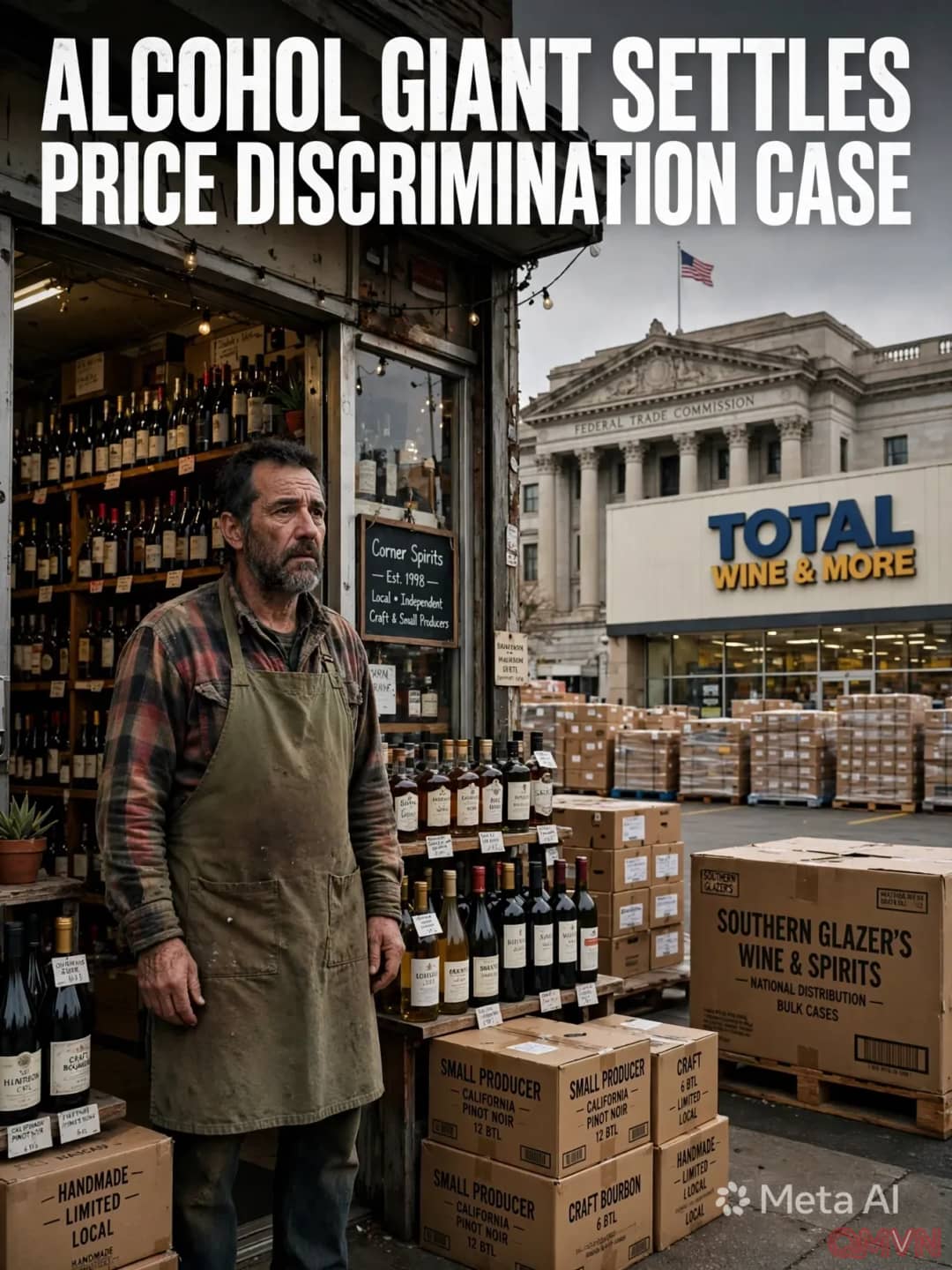
AI-generated illustration
A settlement after nearly two years
The FTC announced the settlement on Friday, nearly two years after filing suit against Southern Glazer's. The agency had alleged that the distributor systematically offered better prices to large retailers than to small and independent ones.
According to the FTC, big chains such as Total Wine, Walmart and Kroger received discounts and rebates that smaller stores could not access, even when the stores were located within a few blocks of each other and competing for the same customers.
Advertisement300 × 250
Southern Glazer's said it was pleased to have reached an agreement that resolved the case without a trial or an admission of wrongdoing.
The terms of the deal
The settlement sets out specific obligations for the distributor:
Southern Glazer's must pay a smaller retailer if it engages in significant or recurring price discrimination when selling the same products to a larger store nearby.
An independent monitor will oversee compliance with the settlement for six years.
The company must provide the monitor with detailed records twice a year.
Rather than banning volume discounts outright, the agreement aims to ensure that small businesses are not unfairly disadvantaged when competing with nearby chains for the same customers.
An old law brought back to life
The FTC's case rested on the Robinson-Patman Act, passed in 1936 to curb price discrimination that favoured large buyers. The law permits volume discounts, but only if a seller can demonstrate that selling in bulk produces real cost efficiencies.
For decades the act was rarely enforced, with critics arguing that it could keep prices higher for consumers by discouraging discounts. Supporters counter that it protects competition by preventing the biggest buyers from squeezing out independent rivals, and that its revival reflects growing concern about market concentration.
A giant of American distribution
Southern Glazer's is one of the largest privately held companies in the United States. It generated $26 billion in revenue from wine and spirits sales to retail customers in 2023, according to the FTC, and distributes one out of every three bottles of wine and spirits in the country.
For small liquor stores, which often operate on thin margins, access to the same prices as their larger competitors can determine whether they survive. The settlement offers them a new avenue for redress, while leaving open the wider debate over how far competition law should go in policing pricing between businesses.
BACKGROUND OF THE EVENT
The story behind the case begins in the 1930s, when the rise of national chain stores such as the Great Atlantic and Pacific Tea Company threatened thousands of small grocers. Congress responded in 1936 with the Robinson-Patman Act, which made it illegal for suppliers to charge different prices to competing buyers unless the difference reflected real cost savings. After Prohibition ended in 1933, the United States also built a three-tier system for alcohol, separating producers, distributors and retailers, which gave distributors a central role.
Over the following decades, enforcement of Robinson-Patman faded as economists argued it often hurt consumers by blocking discounts. Meanwhile, alcohol distribution consolidated sharply, and Southern Glazer's was formed in 2016 from the merger of two major distributors. The FTC's 2024 lawsuit marked a return to a long-dormant law amid renewed concern about the power of large corporations, and the case continued under the new administration. Supporters say reviving the law levels the playing field for independents; critics warn it could raise prices and complicate business. The central knot is how to protect small businesses from unfair treatment without undermining the efficiencies that bring lower prices to consumers.
Key takeaways
Fair competition means small shops should not pay more simply for being small.
An old law can still matter when the problem it was written for returns.
Settlements without admissions can still change behaviour when backed by close oversight.
Subscribe to the QMVN newsletter
A daily morning digest - only stories worth reading, no spam.