The call of “Lech Lecha”
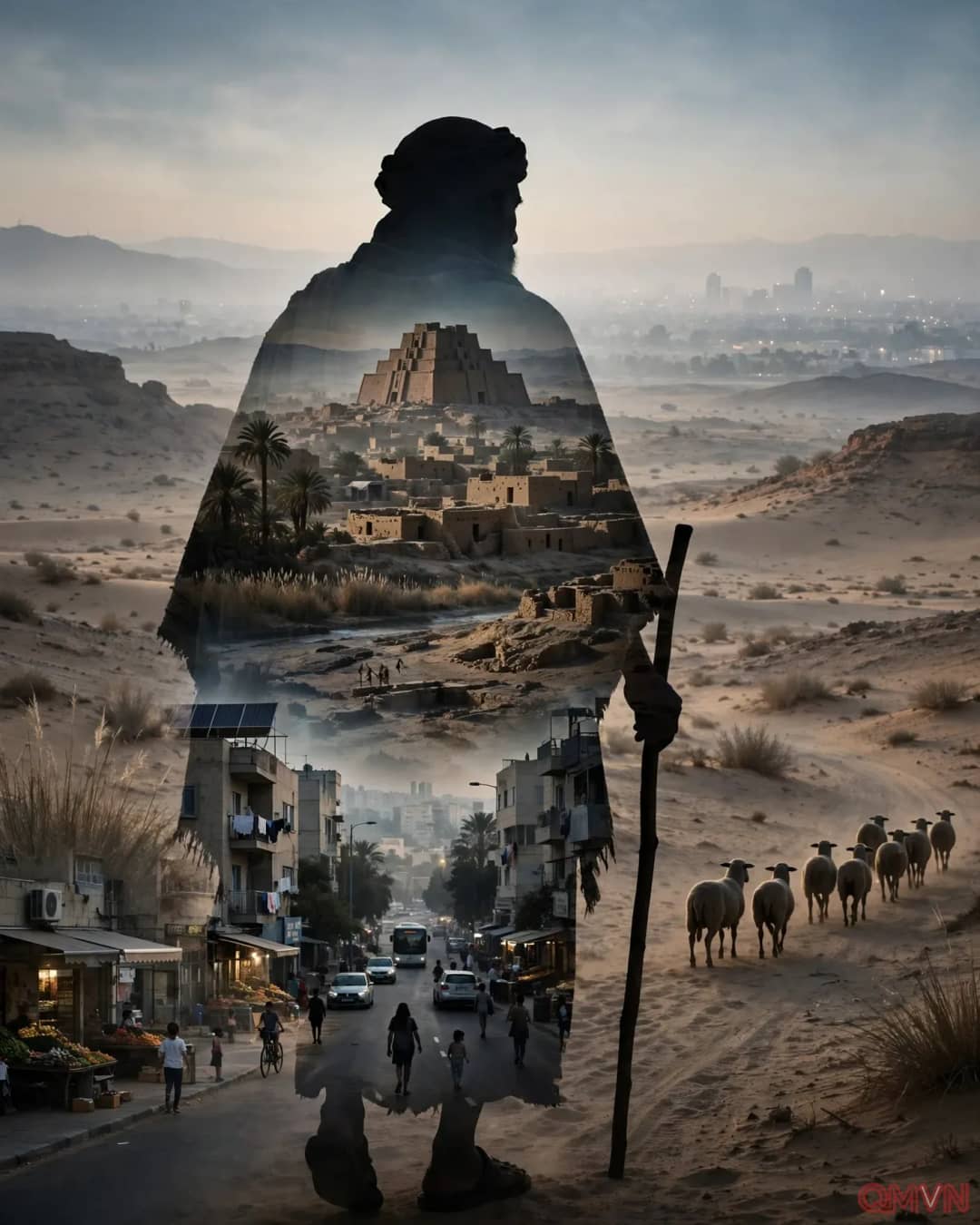
“Lech Lecha” in Hebrew means “go forth,” or “journey toward yourself.” According to the author, Abram’s departure was not merely geographical but the possibility of becoming someone whose identity cannot be entirely defined by ancestry, territory or the certainties of the past. The author extends the question from the individual to the collective, applying it to the State of Israel today.
The return was not the end of wandering, and sovereignty was not the end of vulnerability.
The author notes that Abram came from Ur and Haran, part of the Mesopotamian world where Sumerian and Akkadian civilizations helped shape writing, law and urban life. He left but did not erase his origins: his descendants still sought wives within the extended family, and the changing names, from Abram to Abraham and Jacob to Israel, marked an expanding vocation rather than the abolition of the earlier person.
A rebirth through “grafting”
According to the author, the founding of the State of Israel in 1948 was neither a simple restoration of an ancient political arrangement nor the invention of a people without a past. It was the reconstitution of Jewish political sovereignty after nearly two millennia, through the gathering of communities that had lived across continents with distinct cultural traditions.