MAIN STORY
A brighter month, not a uniform recovery
The statistics released on October 27 showed September profits growing 14.4% from a year earlier, compared with 4.2% in August. That was the strongest monthly year-on-year pace since June. Yet the cumulative January–September advance of 15.5%, compared with 15.7% for January–August, indicates that the broader nine-month performance has not accelerated in lockstep. The standalone September reading and the year-to-date figure describe different comparison periods; they should not be confused.
The survey covers industrial businesses with at least 20 million yuan in annual revenue from their principal operations. It offers a picture of relatively large manufacturers, not every small business or household. Profit growth also should not be mistaken for output growth: changes in selling prices, energy bills, wages and financing costs affect how much companies retain from sales.
The AI supply chain is capturing the biggest gains
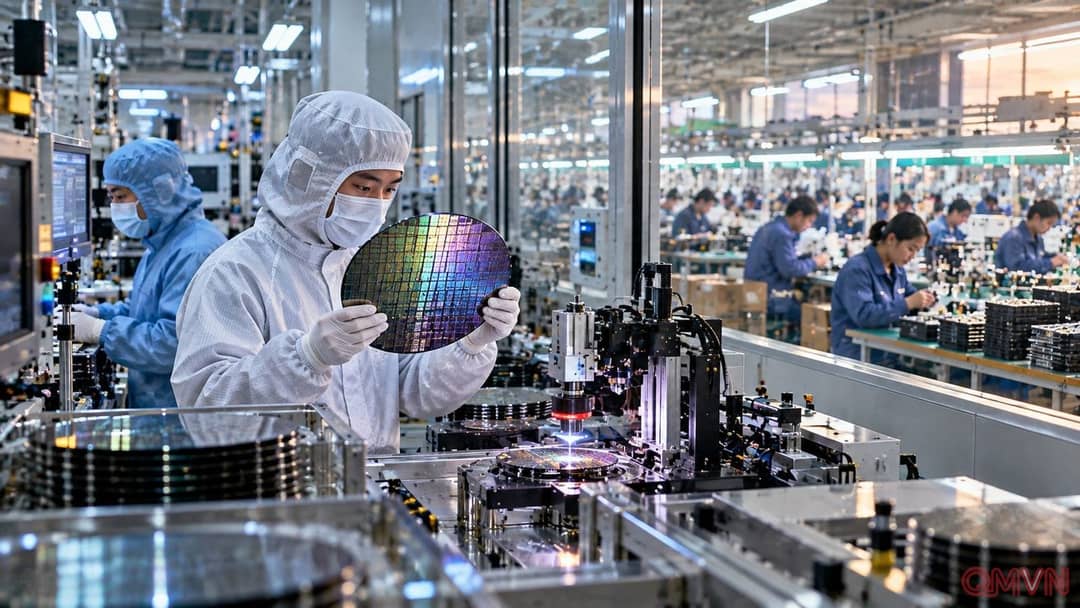
According to the statistical bureau, profits at electronic specialty-materials producers more than tripled during the first nine months, while semiconductor equipment makers posted a 51.7% increase. Fiber-optic manufacturers saw profits rise more than sixfold, and cable producers more than doubled earnings as demand for computing capacity, storage and data-center connections climbed.
Such exceptional gains illustrate the importance of each industry's position in the infrastructure buildout.
Suppliers of copper, aluminum and related inputs also benefited from expanding demand for AI infrastructure and renewable-energy systems, with the relevant raw-material producers recording profit growth approaching 45%, CNBC reported. Rising commodity prices, however, cut both ways: they reward miners and upstream processors but raise bills for downstream manufacturers. The artificial-intelligence cycle is thus creating substantial winners without automatically lifting every factory.
Consumers remain the weak link
China's economy expanded 4.5% from a year earlier in the third quarter, bringing growth over the first nine months to 4.6%, within the government's full-year target of 4.5% to 5%. September retail sales, however, increased only 1.1%. Continued weakness in housing affects purchases of furniture, appliances and other big-ticket household goods, leaving consumption-oriented businesses under pressure even as certain export and technology companies thrive.
Oxford Economics economist Shena Yue said high-tech manufacturing investment and electronic-sector capacity use were holding up better than economy-wide investment and utilization. For producers dependent on domestic households, confidence about income and housing may matter more than export orders for processors. Efforts to curb damaging price wars could improve margins in selected sectors, but they cannot fully substitute for stronger final demand.
A difficult test for industrial policy
Beijing is seeking to curb excessive price competition while promoting advanced, higher-value production. This approach could make factories more efficient and reduce dependence on imported technology. But when productive capacity expands faster than household spending, oversupply can deepen destructive rivalry, increase dependence on foreign buyers and invite trade friction. Strong results in a strategic industry do not on their own settle those macroeconomic tensions.
Nor should improving operating profits be equated with ever-rising technology share prices. Market valuations reflect expectations, funding conditions and future risks as much as today's earnings. The more revealing measures for the coming months will be whether families resume discretionary spending, traditional sectors regain pricing power and investment cash flows become durable beyond the initial AI construction surge.
Subscribe to the QMVN newsletter
A daily morning digest - only stories worth reading, no spam.