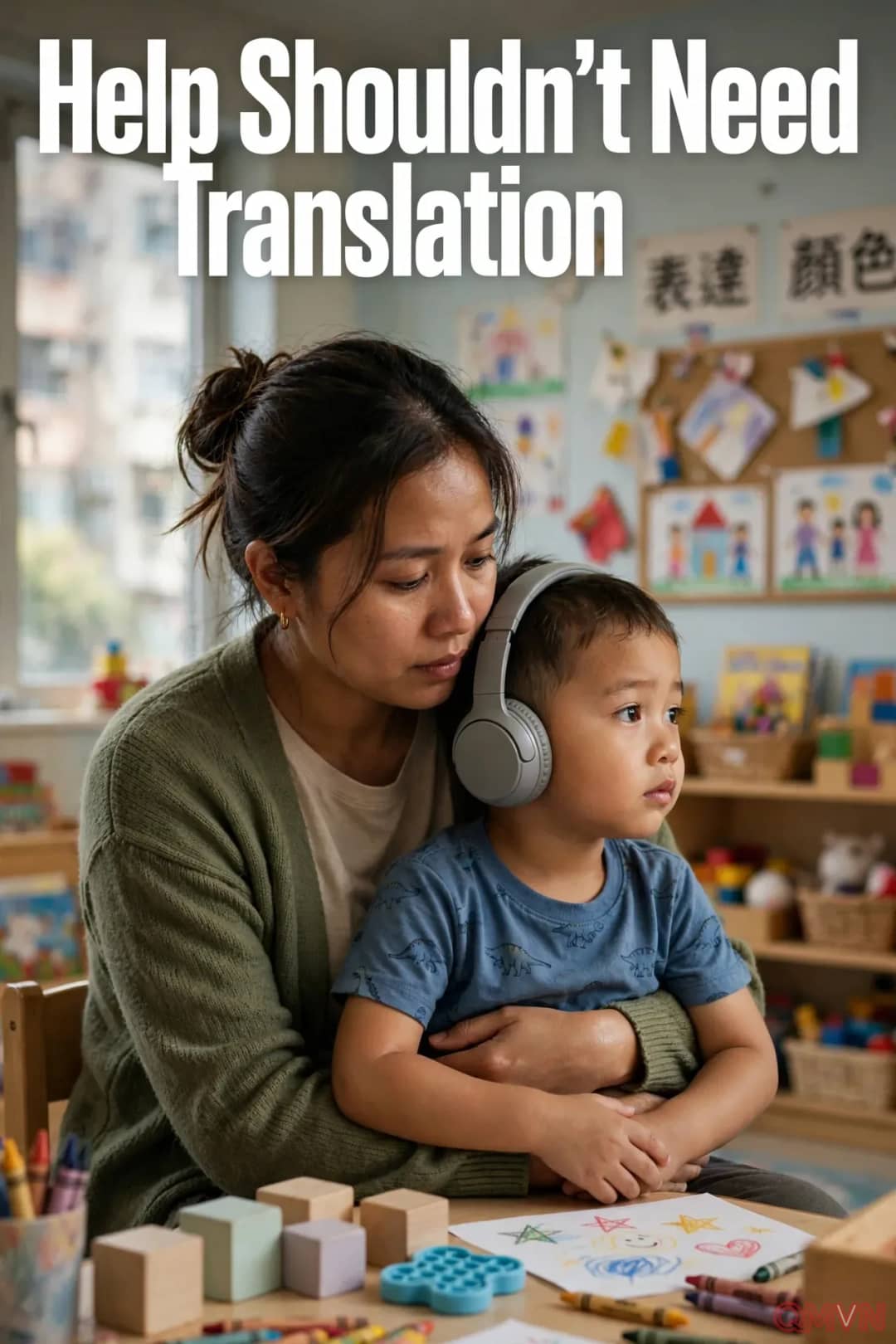
Navigating the Formidable Hurdles of Language and Financial Strain
For any household, discovering that a young child may have neurodevelopmental differences or autism spectrum disorder is an emotionally taxing experience. Yet for ethnic minority families in Hong Kong — predominantly of Nepali, Pakistani, Indian, or Filipino heritage — this journey is compounded by profound isolation and structural exclusion. The most acute obstacles stem from language barriers and an acute shortage of culturally accessible guidance within the public welfare infrastructure.
To qualify for government-funded Early Education and Training Centres or Special Child Care Centres, children must possess a formal clinical diagnosis. However, public hospital assessments routinely entail waiting times of up to an entire year, whereas private evaluations typically exceed HK$6,000 — an expense far beyond the reach of low-income families whose household earnings fall substantially below the territory's median income.
“For the ethnic minority families, the situation is even worse because of the language barriers and lack of information. They may feel helpless and not know how to help their children.” — Dr Kwok Chun-chuen