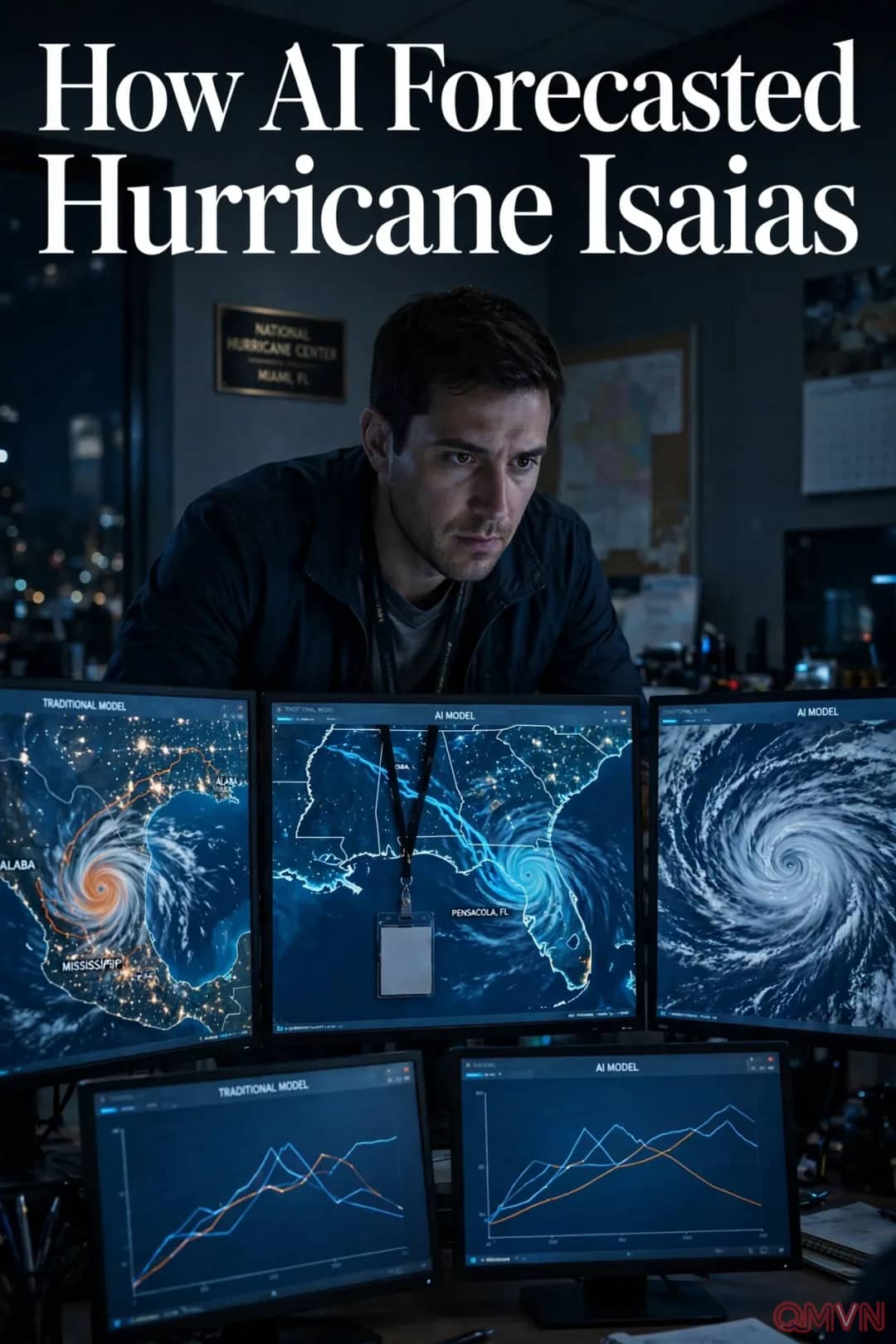
Two paths on the forecast map
According to The New York Times, as Isaias approached the Gulf Coast this week, traditional physics-based models used for decades projected a western track toward Alabama and Mississippi. Meanwhile, a suite of experimental artificial intelligence models pushed the path farther east, toward Pensacola. NHC forecasters openly noted the differences in their official forecast updates.
As landfall drew nearer, the traditional models crept closer to the AI ones, and by Friday they broadly agreed that landfall would most likely occur between Mobile, Alabama, and just east of Pensacola. On Friday night, Isaias came ashore just over 40 miles east of Pensacola, near Destin.
No “winning horse”
Jamie Rhome, deputy director of the NHC, said many people assume experts simply look at the models and pick a “winning horse.” In reality, they use a consensus approach, blending different models, and the mix of computers and human experts often outperforms any single model.
Rhome supports using AI models, including Google DeepMind’s. In his view, when a model is accurate season after season, it cannot be called luck, and it has become clear that AI is providing reliable information about storm tracks.