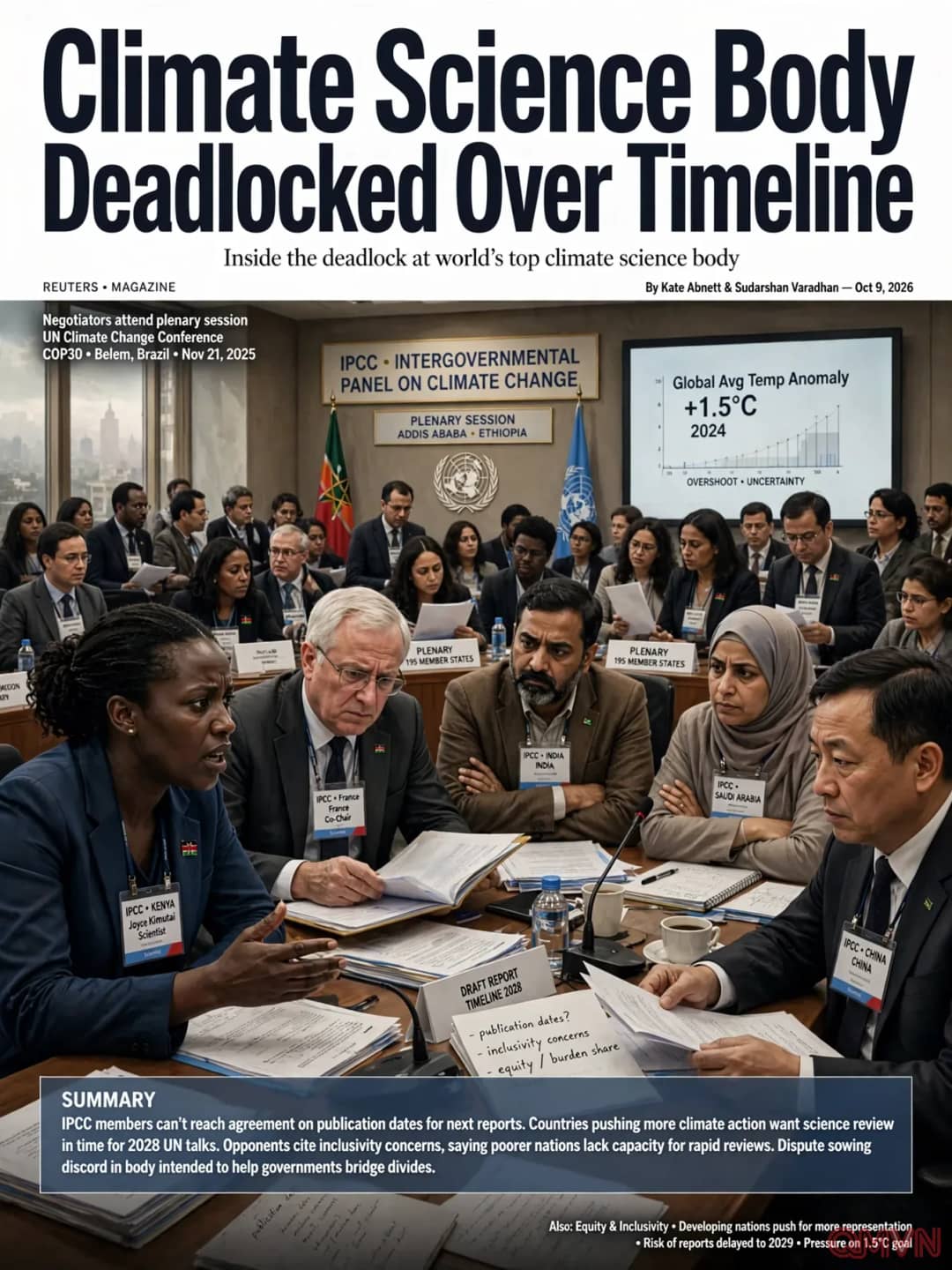
A decision expected to take minutes
According to Reuters, IPCC assessments have informed every major UN climate agreement for three decades. The IPCC does not conduct original research but reviews existing knowledge, with reports written by hundreds of international experts and approved by every member state. Its findings helped enshrine the 1.5 degrees Celsius goal in the Paris Agreement and have been cited in international court rulings.
The working group co-chairs have proposed approving all three reports, on the causes of climate change, adaptation, and options for cutting emissions, by September 2028. Robert Vautard, a French co-chair, said the proposal was based on the expected workload rather than the summit calendar, and that timelines are usually approved “in a matter of minutes”. Opponents want the second and third reports pushed into 2029.
Two camps, two arguments
The High Ambition Coalition, which includes more than 30 European, Latin American and small island states, argues that access to the latest science ensures a fair, evidence-based approach rather than one driven by interests opposed to cutting greenhouse gases. India, Kenya, Saudi Arabia, Russia and China counter that scientists in less-resourced countries struggle to publish new research in time or to take leave from their jobs for unpaid IPCC work.