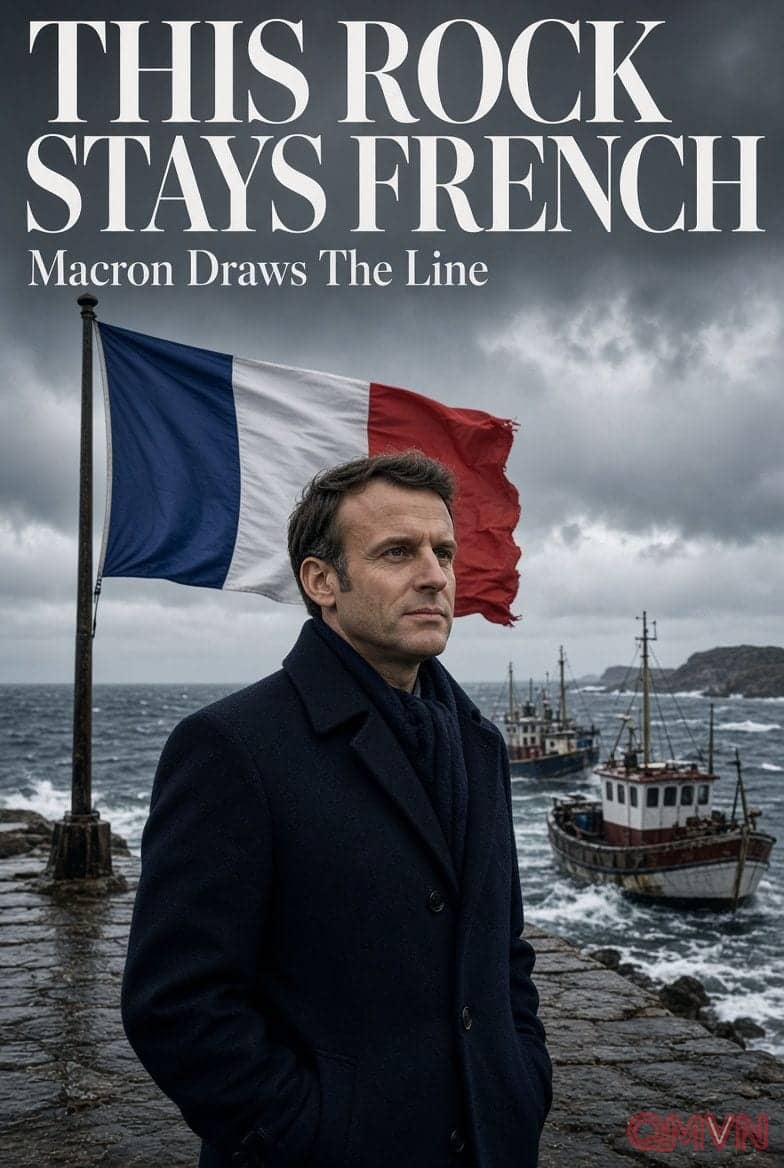
A small archipelago with a large message
Saint-Pierre-et-Miquelon is a French overseas collectivity in the North Atlantic, about 20 to 25 kilometres off the southern coast of Canada’s Newfoundland. With fewer than 6,000 residents, it may be small on a map, but it carries deep historical and strategic meaning: it is a remnant of New France, a point of French presence near North America and a tangible symbol of French territory, law, language and identity in an important maritime region.
Emmanuel Macron is visiting the archipelago for three days, from 19 to 21 September. Mark Carney joins him on 20 September, marking the first official visit there by a Canadian prime minister. The programme includes a working lunch and a wreath-laying ceremony. Such details may look ceremonial, but the leaders’ shared presence turns the meeting into a visible assertion that borders and sovereignty are not lines that can simply be erased on social media.
“Sovereignty does not live only on maps; it is defended through presence, cooperation and respect for law.” - A lesson from Saint-Pierre-et-Miquelon
From a controversial map to a diplomatic response
The visit’s symbolic momentum began with Donald Trump’s 7 September social-media post. The image showed much of North and Central America covered in the U.S. flag, including Canada, Greenland, Mexico, parts of Central America, the Caribbean and Iceland. The map also encompassed Saint-Pierre-et-Miquelon and French overseas territories including Guadeloupe and Martinique.