MAIN TEXT
An arrival marked by sirens
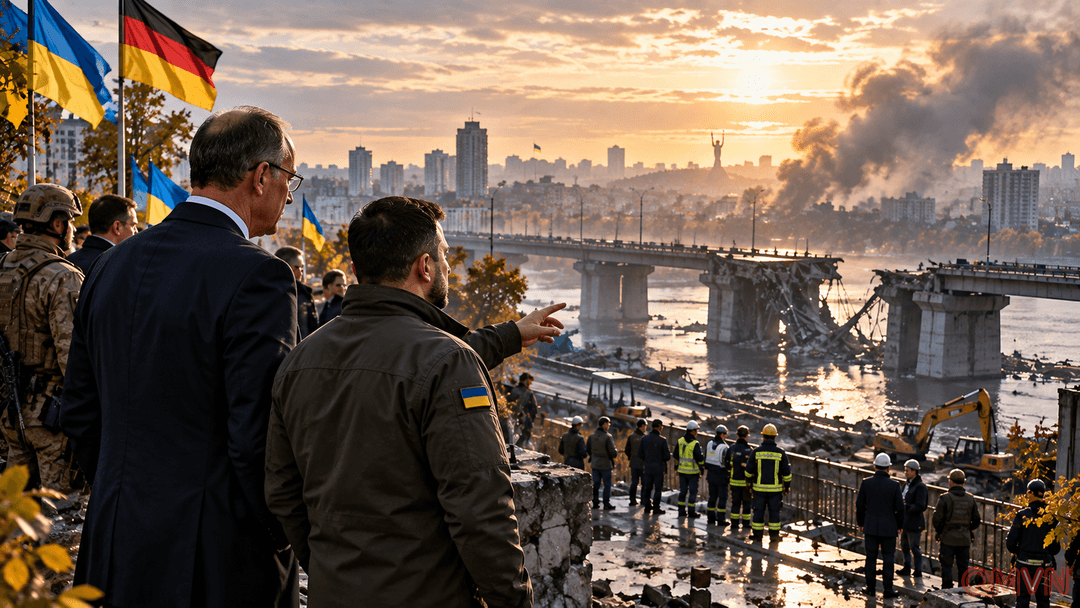
Merz traveled to Kyiv by train with Economy and Energy Minister Katherina Reiche and representatives of German defense companies. His trip was not announced in advance, underscoring the heightened security environment as Russia stepped up air attacks on Ukrainian cities. That morning, the roadway of Kyiv’s Northern Bridge across the Dnipro was struck, Mayor Vitali Klitschko reported. Officials continued assessing damage and casualties; the incident followed several recent attacks on the city’s bridges and transport links.
Merz and Zelenskyy paid tribute at a memorial to fallen Ukrainian service members before viewing damage at the National Academy of Sciences, where a building was hit in a September 28 strike. Those scenes place high-level diplomacy alongside everyday losses. Roads must be usable, laboratories must be reopened, and families require shelter, electricity and safe access to essential services. The city’s urban resilience has become an issue of strategic importance.
Aid, energy and a technological defense line
Reuters and German reporting described an assistance package of €1 billion for military needs and another €350 million for energy-system restoration. Its timing matters: generating stations, distribution networks and heating services are increasingly vulnerable as temperatures fall.