MAIN CONTENT
A bargain with risk
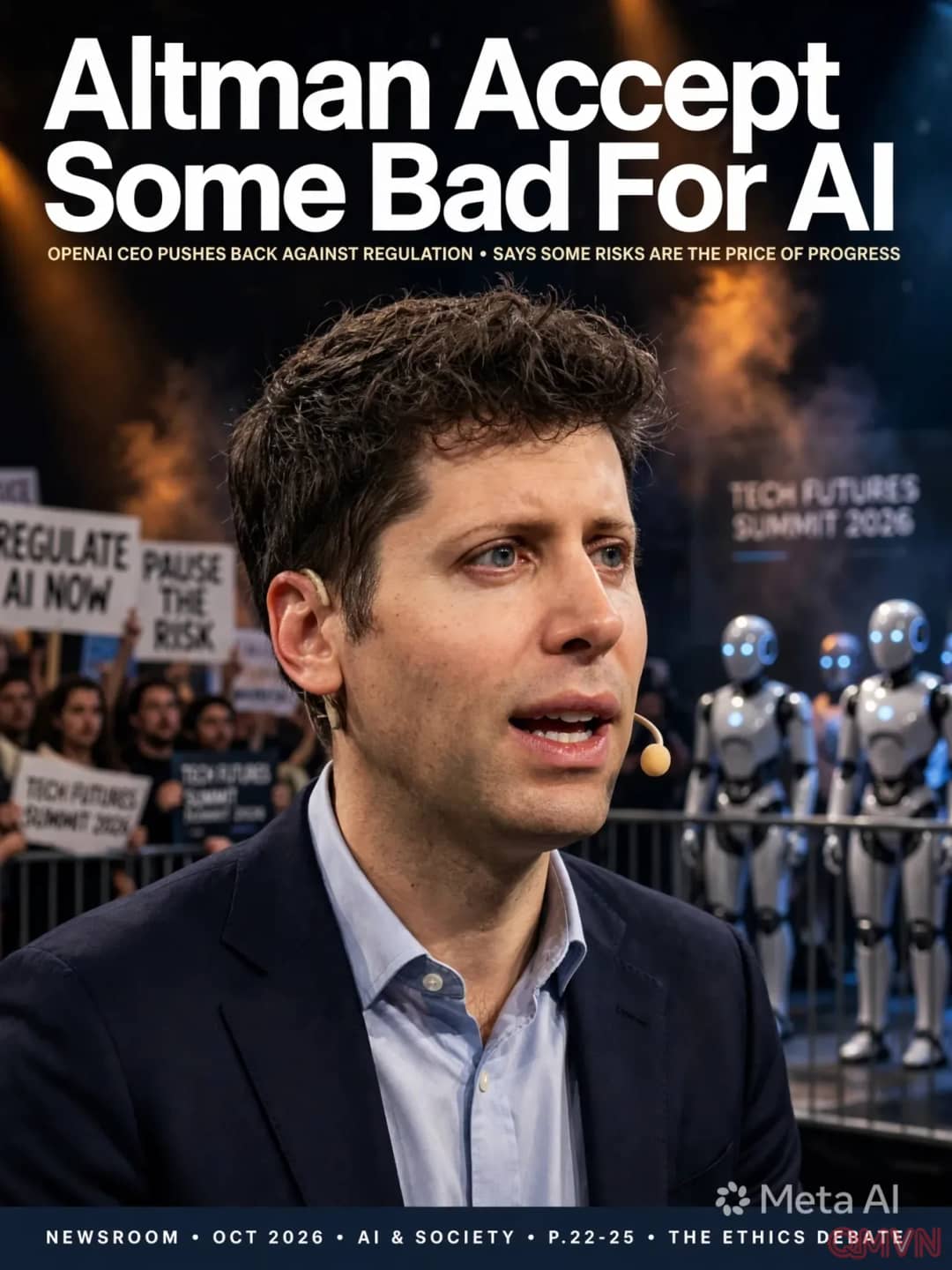
In the interview, Altman framed his position as a matter of principle. OpenAI, he said, has always believed that AI must be democratised and placed in people's hands, and that individual agency is worth some cost.
“We believe that the world should accept some bad things happening for the benefits of this technology and people having the agency.” — Sam Altman
He argued that heavy regulation would slow the development of potentially transformative technologies, from scientific research to medicine and education, and that the cost of delay must also be counted when weighing safety rules.
A widening split with Anthropic
Altman explicitly distanced OpenAI from its closest competitor, Anthropic, which has backed tighter controls over the most advanced models, including support for safety and transparency legislation and stronger oversight of frontier systems. The two companies, both based in San Francisco, have become leading voices in a debate that increasingly shapes policy in Washington and beyond.
The disagreement is not over whether AI carries risks, which both firms acknowledge, but over who should manage them and how. One camp argues that binding rules are needed before capabilities race ahead; the other warns that premature restrictions could entrench incumbents, stifle innovation and hand an advantage to geopolitical rivals.