MAIN ARTICLE
A strategic shift in a valuable waste stream
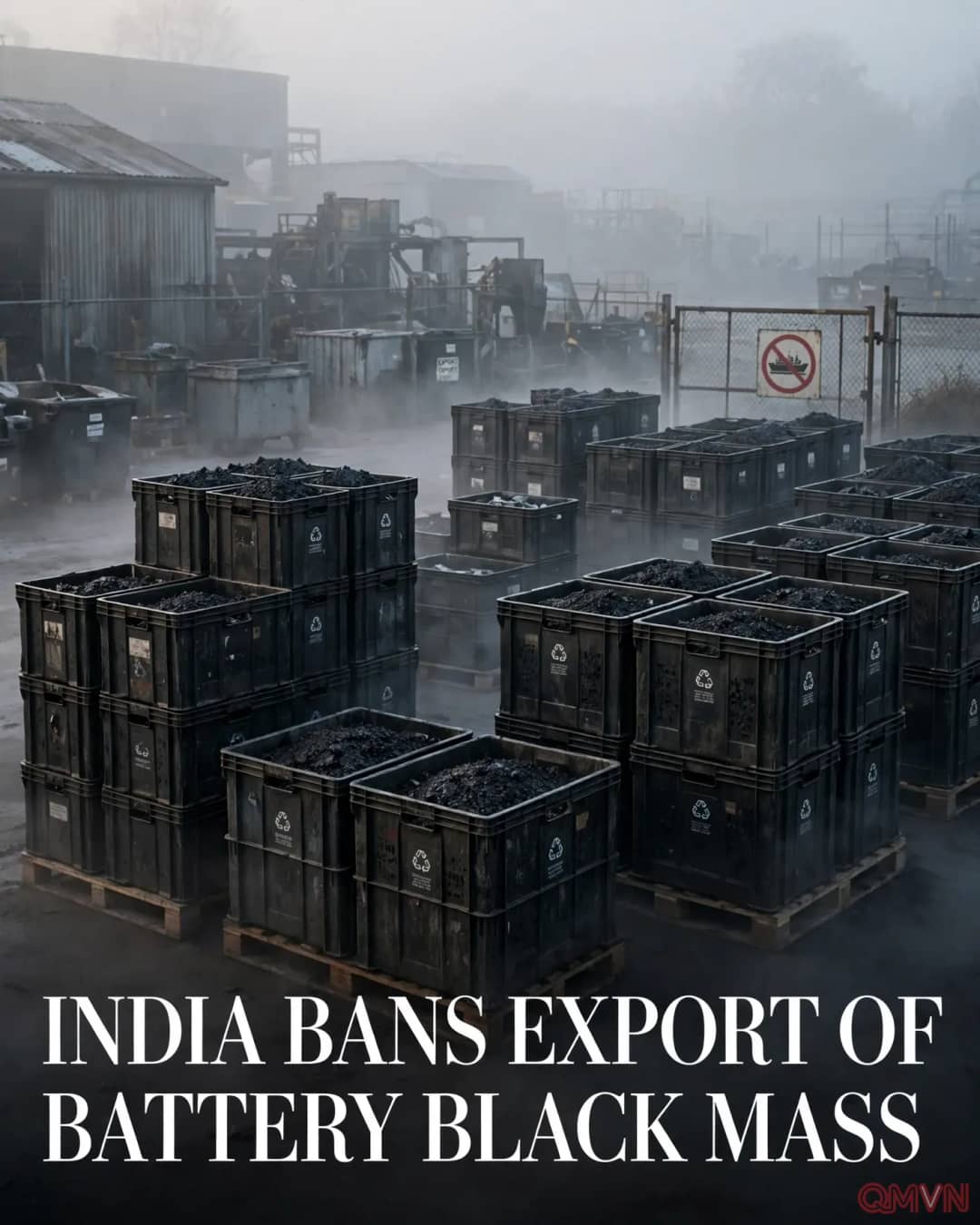
Black mass may look like an industrial by-product, but its importance lies in the metals embedded in its powdery mixture. Mechanical treatment of discarded lithium-ion batteries can recover material containing lithium, nickel, cobalt, manganese and graphite. These ingredients have different roles in battery technology, and their recoverability varies according to battery chemistry and processing method. Rather than treating end-of-life batteries simply as refuse, governments increasingly see them as a potential secondary source of strategic minerals.
India's Directorate General of Foreign Trade issued Notification No. 49/2026-27 on November 10. It covers the specified products under ITC(HS) code 85491400, shifting exports from 'Free' to 'Prohibited' until further orders. Official guidance also notes that transitional arrangements under paragraph 1.05 of the Foreign Trade Policy 2023 apply. The precise customs classification matters: the measure should not be interpreted as a blanket ban on every recycled material or on all battery exports.
From recovered powder to industrial capability
The restrictions arrive just days after India's cabinet approved ₹2,814 crore, or ₹28.14 billion, in capital support for critical mineral processing. The five-year plan, covering financial years 2026–27 through 2030–31, offers a subsidy equal to 30% of eligible capital spending to develop two lithium and two nickel processing facilities.