MAIN STORY
Casualties revised as airport operations resume
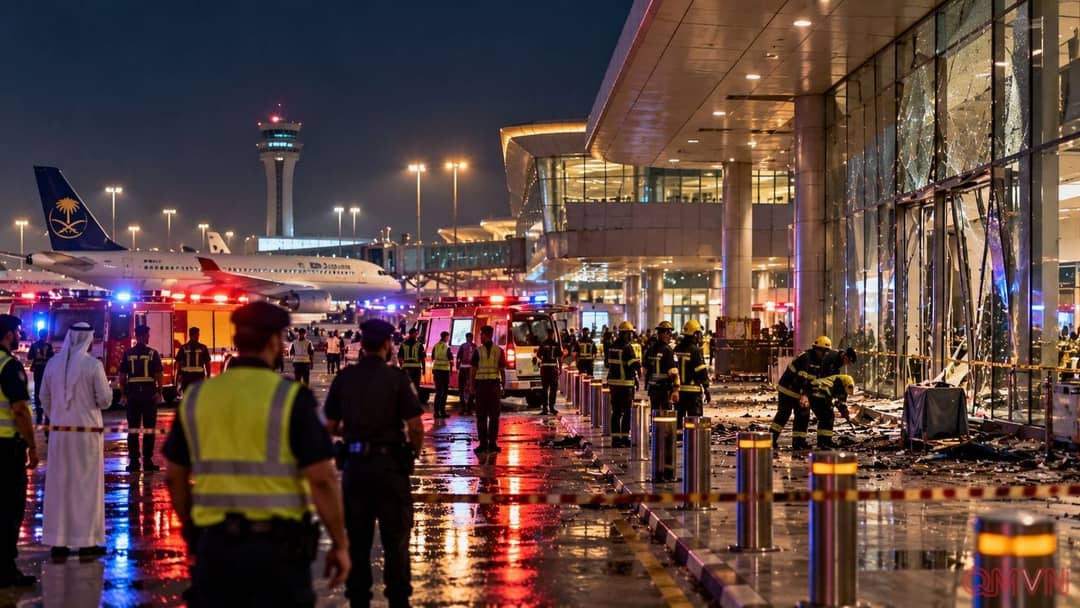
The strike occurred Wednesday evening at King Fahd International Airport, which serves Dammam and the surrounding Eastern Province. Early reports based on civil aviation statements listed one death and eight injuries. A later update raised the death toll to two, underlining why time-stamping casualty reports matters in rapidly developing emergencies.
Authorities identified the fatalities as a Saudi citizen and an Indian national. The eight wounded sustained injuries ranging from minor to serious and received medical attention. After emergency procedures, damage assessments and security checks, officials reported that normal airport operations had resumed. The resumption of flights is significant, but it should not be mistaken for a completed investigation into how the assault occurred.
Civilian infrastructure on a widening fault line
Saudi officials had not attributed responsibility for this particular incident. Yemen’s Iran-aligned Houthi movement had warned airlines about using Saudi airspace amid escalating hostilities, but the existence of such warnings does not by itself establish who carried out the Dammam attack. Keeping warnings, allegations and verified findings separate remains essential.
Airports concentrate passengers, workers, logistics and high-value equipment in a relatively small area. Even a localized incident can force diversions, disrupt connections and put response staff under intense pressure. Restoring safe operations demands more than repairing visible damage: airport management must check critical systems, coordinate with air traffic control and communicate clearly with passengers and airline partners.
The human and commercial stakes
Dammam is closely linked to the industrial and energy economy of eastern Saudi Arabia. Its airport supports business travel, the movement of workers and family visits, as well as wider regional connections. The death of an Indian national shows how violence directed at infrastructure in one country can affect families and communities far beyond it.
Consular support, accurate passenger information and timely treatment of casualties are therefore part of the response. For staff who return to work and travelers who must fly, confidence is rebuilt through credible safety procedures rather than reassuring declarations alone. The less visible damage can include anxiety among employees, disrupted plans and additional costs borne by airlines and households.
What investigators and aviation authorities must resolve
Investigators still need to establish the means of attack, its sequence, the extent of damage and the evidence behind any eventual attribution. Previous regional incidents may supply useful context, but they cannot substitute for forensic findings in a new case.
Longer-term protection requires cooperation among aviation regulators, airport operators, security services and crisis communicators. Quick reopening demonstrates resilience, but the more demanding test is whether vulnerabilities are addressed before another tragedy occurs. Civilian aviation depends on predictable, independently checked safety conditions, especially when conflict threatens to cross into spaces designed for ordinary travel.