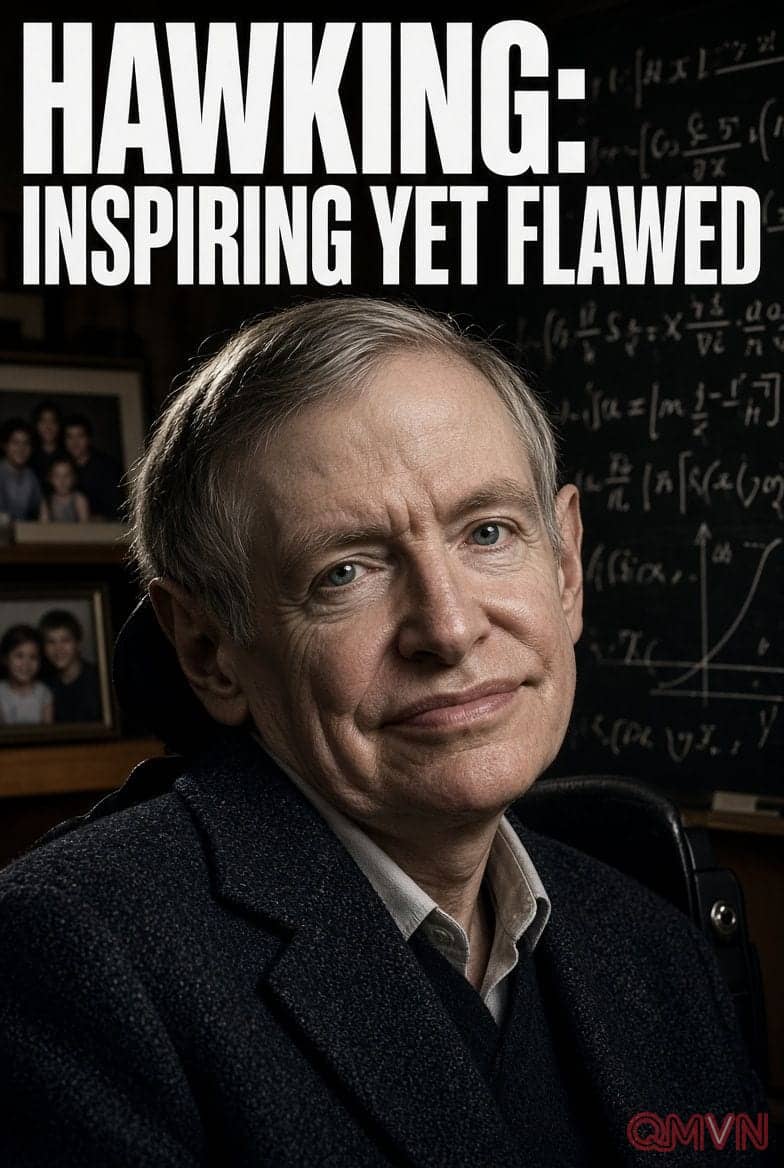
Turning a legend back into a man
Graham Farmelo is no stranger to readers who love science. A fellow of Churchill College at the University of Cambridge, he wrote “The Strangest Man”, a biography of physicist Paul Dirac that won the Costa Biography Award. For his book on Hawking, the family granted him access to archives, letters and private diaries, and the work has won praise from leading scientists such as Roger Penrose, Kip Thorne and Martin Rees.
Tom Whipple of The Times, who conducted Hawking's final interview in the spring of 2017, recalls that by then the physicist could communicate with the world only through a slight twitch of his cheek muscle. To Whipple, Hawking at that moment seemed more a symbol than a person. Farmelo's book, he writes, achieves the opposite: it returns Hawking to ordinary life.
The nearness of death becomes a reason to live
Born in 1942, Hawking was a poor student as a child and found physics too easy and dull. A school friend once bet a bag of sweets that he would never amount to anything.