MAIN ARTICLE
From speed record to a final voyage
The SS United States embodied a period when Americans imagined engineering could make the Atlantic feel smaller. Designed by naval architect William Francis Gibbs and introduced in 1952, the liner set a transatlantic crossing record on her maiden voyage. At 990 feet, or approximately 302 meters, she carried travelers, entertainers and prominent political figures between continents. To those who crossed aboard her, the ship was a floating city, combining speed, elegance and the rituals of an ocean journey.
Jet aviation eventually transformed passenger transport. The vessel left commercial service in 1969 and then spent decades searching for another purpose. Schemes to remake her as a hotel, museum, entertainment complex or mixed-use attraction repeatedly failed to produce a sustainable financial model. A landmark can command public affection yet still prove prohibitively expensive to restore, operate and maintain.
A farewell that ran into the night
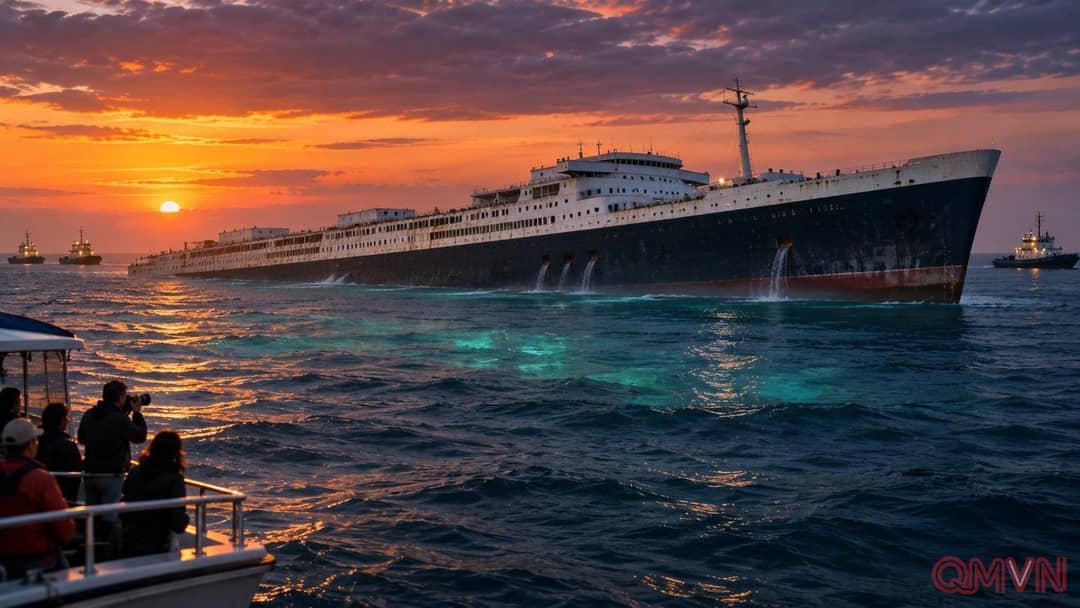
According to Reuters and the Associated Press, contractors carried out a controlled sinking off the Destin–Fort Walton Beach area, using prepared openings to flood the ship without explosives. The early stages went more slowly than expected.